
AD | Choosing your engagement ring is about so much more than simply sparkles. From unique stone shapes to creative settings, today’s engagement ring styles blend tradition with personality, giving couples more ways than ever to make their ring truly their own. With so many choices to make and such a huge range of rings to consider, here are a few tips to help you identify your preferred ring style, setting, and stone(s).
Engagement Ring Styles and Settings
From solitaires with subtle twists to bold two-tone bands, it’s possible to find an engagement ring that balances tradition with individuality, offering something unique for every hand and every story.
The Return of the Solitaire With a Twist
Solitaire rings make up 47% of engagement ring sales, and buyers pick them for practical reasons. A single stone costs less than multiple stones, and the saved money can go toward a larger center diamond. The setting won’t clash with other jewelry or go out of style in ten years.

Oval and cushion cut diamonds have replaced round stones in many solitaires, and round diamond sales dropped 10.5% last year. Cushion cuts doubled their market share from 3.7% to 6.3% between 2022 and 2024. Ovals stretch across the finger, making hands look longer whereas cushion cuts have rounded corners and larger facets that create broader flashes of light.
Jewelers often add personal touches to solitaires through custom prongs and band details. Some use claw prongs instead of standard rounded ones. Others engrave patterns inside the band or add small stones underneath the center diamond where only the wearer can see them.
East-West Settings Change the Game
Diamonds set horizontally across the band create a different look from traditional vertical settings. Emerald, oval, and marquise cuts work best for this orientation where the stone sits lower on the finger, reducing snagging on clothes and hair.
East-west settings make diamonds appear larger – a one-carat oval set horizontally covers more finger surface than the same stone set vertically. Jewelers often add small diamonds along the band or create hidden halos underneath the center stone for extra light reflection.
How Stone Shapes Work Together in Mixed Settings
Jewelers now combine different diamond shapes in single rings to create contrast and visual interest. A round center stone might sit between two baguettes, while an emerald cut could pair with trillion side stones. Some designs place a pear shaped diamond next to an oval or use marquise stones as accents flanking a cushion cut center.
These mixed-shape engagement ring styles let buyers break from standard matching sets. And the different cuts catch light at various angles, creating more sparkle than uniform stones would. Jewelers report that combining shapes also helps balance proportions on different hand sizes and can make center stones appear larger.
Marquise and Cushion Cuts Gain Ground
Marquise diamonds now account for 5% of engagement rings. The pointed ends make fingers appear longer and each marquise diamond looks bigger than a round diamond of the same carat weight because the shape spreads across more surface area.
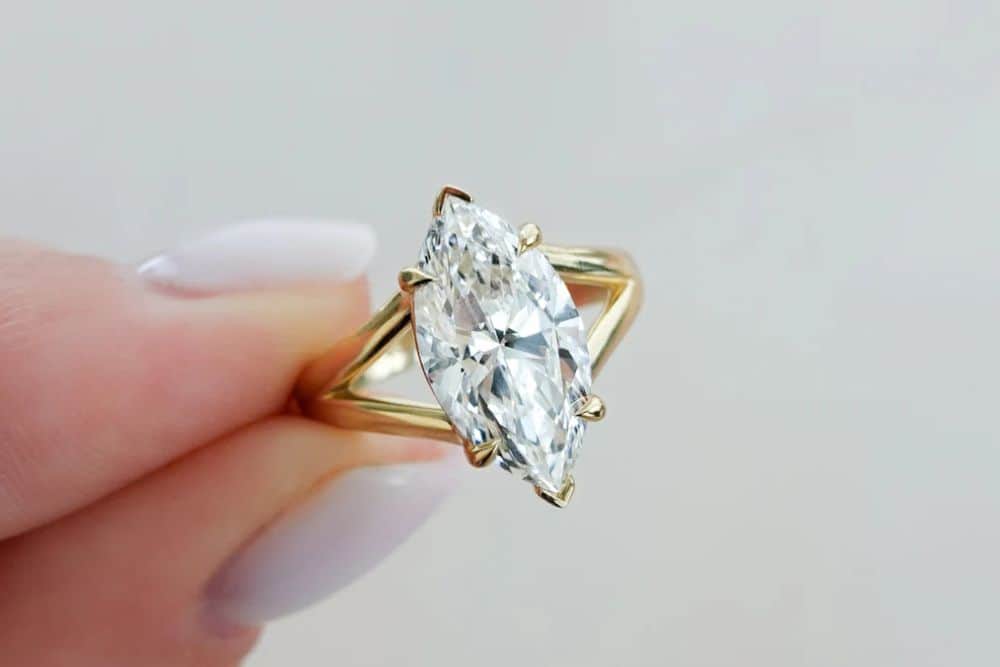
Cushion cuts combine square shapes with rounded edges and their facet pattern creates broader light flashes than brilliant cuts. Modern cushion cuts have smaller tables and steeper crowns than older versions, increasing their sparkle.
Princess cuts have lost popularity to cushions and marquise shapes. Buyers who want square stones now tend to choose cushions for their softer edges and vintage appeal.
Three Stones Tell Your Story
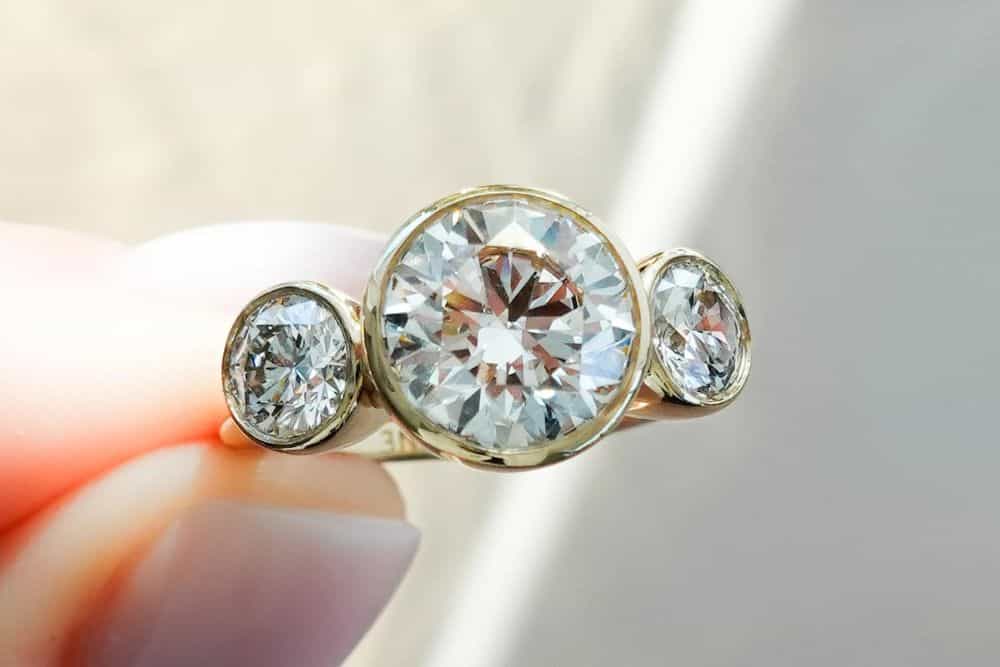
Three-stone rings let buyers mix diamond shapes and sizes. A common combination puts an oval center between two baguettes. Other styles might use pear shapes on the sides or match three emerald cuts in graduated sizes.
Jewelers set side stones lower than the center to prevent catching on fabric, and the outer stones can be different colors. Blue sapphires or pink diamonds add contrast without overwhelming the center diamond.
Brown Diamonds and Sapphires Replace White Stones
Brown diamonds range from light champagne to deep chocolate colors and they cost less than white diamonds of similar quality. A two-carat brown diamond might cost the same as a one-carat white diamond with comparable clarity and cut.
Sapphires come in pink, teal, green, and traditional blue. Montana sapphires show multiple colors in one stone whereas Australian sapphires tend toward darker blues and greens. Lab-grown sapphires offer consistent color at lower prices than mined stones.
Buyers often choose colored stones to match their personal style or birthstones with these engagement ring styles. Some pick them for ethical reasons, as colored gemstone mining often has clearer supply chains than diamond mining.
Bezel Settings Protect Active Lifestyles
Metal surrounds the entire diamond edge in a bezel setting so the stone sits flush with the band, preventing chips and scratches. Nurses, teachers, and athletes choose bezels because they won’t catch on gloves or equipment.

Bezels use less metal than prong settings but require precise craftsmanship. The metal rim must fit perfectly around the stone’s edge as poor bezel work leaves gaps that collect dirt or allow the stone to loosen.
Wide Bands Make a Statement
Bands between 3mm and 6mm wide have replaced ultra-thin 1.5mm bands. Thicker bands not only support larger stones without bending, they also provide more surface area for engraving or pavé diamonds.
Wide bands also suit men’s engagement rings and women who prefer substantial jewelry. The extra metal adds weight but increases durability as a 4mm band will last decades longer than a 2mm band under daily wear.
Wavy and Asymmetric Designs Break Traditional Rules
Organic band shapes follow natural curves rather than perfect circles. Some bands might twist around the finger, others have irregular edges that look hand-carved.
Asymmetric settings place the center stone off to one side, and the band might be thicker on one edge or curve in an S-shape. These designs work best with elongated stones like ovals or pears that balance the irregular band shape.
Two-Tone Metals Add Contrast
Mixing yellow and white gold in one ring creates visual separation between the band and setting. Rose gold prongs on a platinum band warm up the diamond’s color, whereas yellow gold bands with white gold bezels make the center stone appear whiter.
Two-tone designs cost more than single metal rings due to the extra labor involved. Jewelers must carefully join different metals to prevent weak spots and the metals must have similar hardness to wear evenly over time.
Lab-Grown Stones Change the Budget Math
Lab diamonds cost 30% to 40% less than mined diamonds. A buyer’s budget for a one-carat mined diamond might buy a 1.5-carat lab diamond with identical optical properties. And chemical tests can’t distinguish between lab and mined diamonds. Useful when you have a wedding to plan and budget for!
Buyers tend to pick lab stones for price and sourcing transparency. Lab diamonds have traceable origins and consistent quality, whereas mined diamonds vary more in color and clarity within the same grade categories.
Putting A Ring On It
From stylish solitaires to bold mixed metals, today’s engagement ring styles are all about choice. And with jewelers reimagining timeless settings, experimenting with diamond shapes, and incorporating colored gemstones and lab-grown stones, whether you want classic elegance, modern flair, or maximum sparkle for your budget, these tips will help you find the right engagement ring that tells your story – and will look stunning doing it too.
What cut and setting would you choose from the ones listed above?
* This is a collaborative post – please see my Disclaimer.


I loved all of your creative ideas for selecting just the right engagement ring. I found recently that choosing an oval diamond can often be cheaper than a round diamond,. So this could be a smart way to get a larger stone for your money!
That’s a great tip, Heidi, thank you for sharing!