
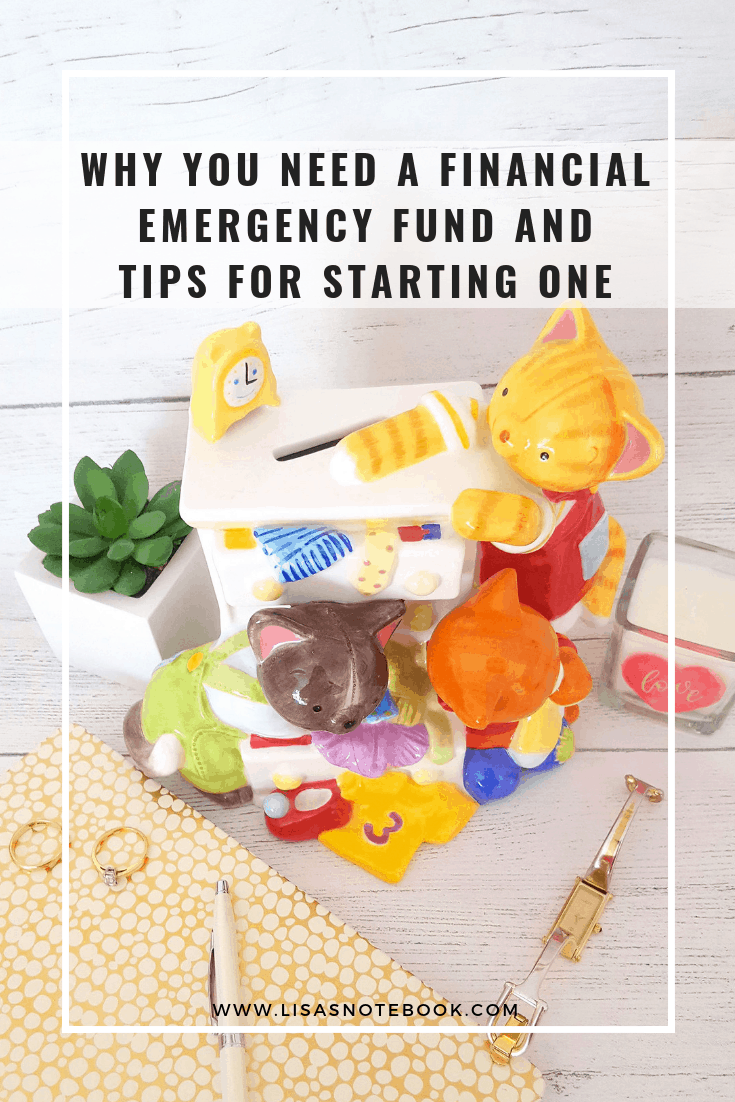
AD | When I was a little girl, my mother drummed it into me how important it was to save money, not just for things I wanted to buy, but for a “just in case” rainy day scenario. She gave me a Leeds Building Society plastic money tube that took ten pence pieces and I can still remember how giddy I felt when I’d saved up a whole £10. (Bear in mind I was only eight years old at the time). It’s a lesson I still abide by because, cute money boxes aside, (thank you to Flora for the loan of hers for the cover pic) sometimes all the planning and budgeting in the world just isn’t enough. You never know when a financial emergency is going to happen, that’s how they work.
Why should you have a financial emergency fund?
Really, the question is why wouldn’t you have an emergency fund? Because bills. What would you do if you lost your job? Or, worst case scenario, if you had to cope with the death of a loved one, who had also been the main income earner? How would you pay your mortgage or rent? How would you pay your utilities bills? How would you eat? As a freelancer, this is something that’s never very far from my mind, especially when I have to chase my invoices.
If you don’t earn mega bucks or have a financial cushion, an unexpected car repair bill can be devastating. A few years ago, I wrote off our Audi. Having to pay for a courtesy car and then a replacement car decimated my savings, but it had to be done. Rural bus services are useless when you have a toddler to get to nursery.
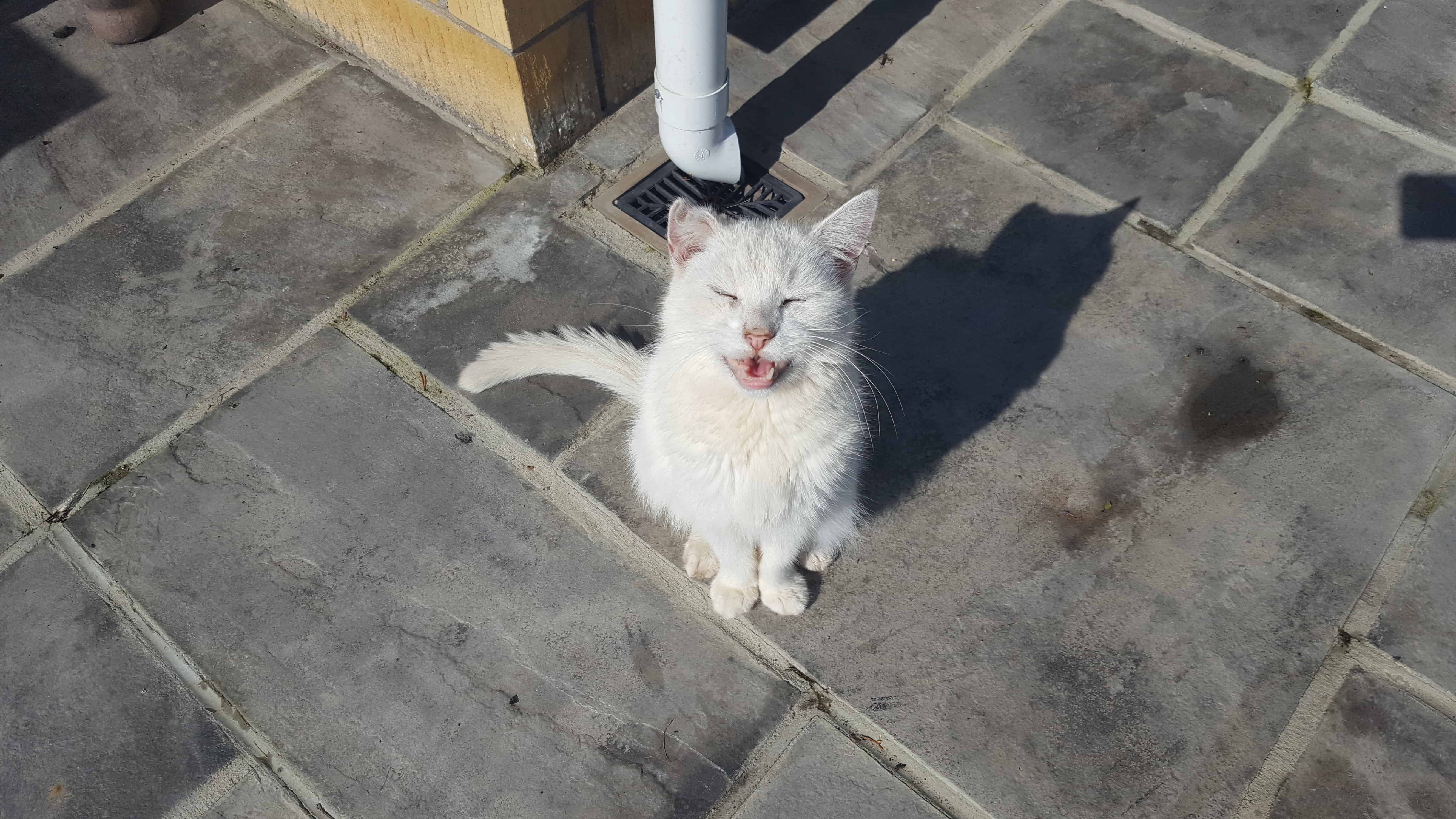
Similarly, when our beloved senior cat, Jester, needed surgery to save his eye, our pet insurance only covered so much. We had to find the rest ourselves, which of course we did. I don’t think any responsible pet owner would do otherwise. But pet bills can be astronomical, there’s no NHS for them.
Then there’s the unexpected home repair bill. My father only ever gave me two pieces of useful advice: the first was to always take a holiday, and the second was to get the boiler serviced annually. Do you know how much the average boiler costs to replace? It can run into several thousand pounds, usually at the coldest time of the year too.
How much should you have in your financial emergency fund?
So these are just a few reasons why a financial emergency slush fund is a good idea. But how much should you aim for? Received wisdom says a golden rule is to have at least three months of expenses in a savings account. But obviously, the more you can stash away without too much of a struggle the better.
Four ways to start your own slush fund
#01. The best way is to start with a small direct debit from your bank to a savings account. That way, you’ll not miss the money from source and by automating the process you’re far more likely to save regularly.
#02. Try cutting down on your expenses by living frugally. Do you really need a gym membership? Could you go for a brisk walk in the park instead? Or buy a DVD and exercise in the comfort of your own home. If you buy a sandwich for lunch every day, why not make your own packed lunch? Even with meal deals, it’s easy to spend between £5-£10 a day on food, depending on where you live. Don’t forget about buying second hand, and searching for the best deals on voucher sites when you purchase anything online like clothing, accessories, shoes, furniture, hotel booking, etc. Work out how much money you’re saving and commit to putting that into your savings account too.


#03. It is a truth universally acknowledged that we spend what we earn. The more you earn, the more you spend. Diverting some of a pay rise to your savings may not give you the same warm fuzzy feeling that treating yourself to a spa day does, but it’s another way to build up that financial emergency pot.
#04. Side hustles are another way to earn money for your emergency slush fund. Entrepreneur has a great article on how to make a lucrative side hustle. And you only have to look on Google or browse Pinterest to find a plethora of ideas: online surveys, renting out a room in your house, affiliate marketing, proof reading, eBay selling, or dog walking (see, no gym membership necessary!)
What if you need money in a hurry?
What do you do if, for example, your tax bill is larger than you were expecting and you have a payment deadline or face further HMRC penalties? If you haven’t any savings to dip into or relatives who could help, then you might consider a short term loan through an online broker like CashLady * (click here for more details). Do make sure you read the small print though, and understand all the terms as late repayment can cause you serious credit and money problems further down the line.
One last thing: if you do ever have to tap into your emergency pot for any reason, remember to start building it back up again as soon as you can. Saving for a rainy day event that might not happen isn’t the most exciting thing in world, but not being able to help yourself out of a financial hole definitely isn’t either!
Do you have a slush fund like this? If not, have you ever thought about how you’d cope in a financial emergency? What tips do you have for putting money aside?
* This is a sponsored post.



A joint goal for myself and Neal in 2019 is to be more careful with our money. We, thankfully, haven’t found ourselves in a situation where we needed an emergency fund, but I don’t want to keep pushing our luck! We’ve had a couple of years of being a little too careless, and now it’s time to start thinking about the future, and making better choices. Thanks for sharing your tips, Lisa! I’m sure they’re going to come in handy for us!
I know what you mean about pushing your luck! I’m so glad this post may have been helpful, and knowing how organised you are, I’m sure you’ll easily achieve your joint goal – good luck! x
These are great tips, Lisa! Having an emergency savings fund has saved me many a time when I found myself out of work or just wanted to have a last minute holiday (ha ha, I don’t think they are designed for that though). This year, I want to get better at saving and cutting down my expenses is something I’m working on too. Making lunch at home is such a good way to save money and going for walks is such a fab way to exercise for free. My goal this year is to read more books so instead of buying anymore I’m just going to make use of the local library and see what I can find 🙂 Brilliant post, thank you for sharing! <3 xxx
Oh, I don’t know, sometimes a holiday can be classed as an emergency pick me up, haha. Seriously though, going for walks and using the library are such good ways of saving money. We’re lucky to have a very good one in Frome, although that doesn’t seem to stop Alan from raiding all the charity shops! I’m glad these tips might be useful 🙂 xx
This year I definitely want to try and save more this year. I already pay into a pension and at age 30 I will be setting up a private pension also. But I am not good at general savings! These are great tips you have shared and are definitely going to help me when I am trying to save! Thank you for sharing Lisa xx
Oh, it’s really good that you’re paying into a pension though, a lot of people I know still don’t. I started a private pension when I was in my early twenties, but it’s not going to be anywhere near enough to keep me going in old age, eeep! Good luck when you do start saving, I’m glad these tips might be helpful 🙂 xx
Great tips, Lisa! An emergency fund is always a good idea. Online surveys are a great way to make a bit of extra pocket money, I use a few sites and have had some success with them!
Jenny
http://www.jennyinneverland.com
Thank you, and also thank you for the online survey tips, I’ll have to look into that! 🙂
I always have a rainy day emergency fund, just in case anything goes wrong, it’s always handy to have!
Love, Amie ❤
The Curvaceous Vegan
It really is, isn’t it? Once bitten, haha 🙂 x
Such great advice! I always like to have x amount in the ‘don’t touch this’ fund just in case! The boiler comment hit me hard, ours went off for 5 weeks throughout November and December last year and after that long it did look like we’d need a new one (gas man finally found a way to fix it, £200 well spent). Obviously it would have needed replacing straight away as we were coming into winter. Emergency fund would have been essential! x
Sophie
http://www.glowsteady.co.uk
Five weeks, oh my goodness, that’s horrendous! I’m so glad your gas man found a fix, what a relief. And I like the “don’t touch this” label too, very apt! X
I haven’t ever needed an emergency fund yet, but I know it’s only a matter of time. Blair and I are really trying to sort out our finances this year – we’ve cancelled all unnecessary bills and are working on spending less day to day. I’d love to have three months of expenses saved up but that does seem a bit like a pipe dream haha! Thank you for the tips though, hopefully we’ll be more sensible this year.
Beth
It’s very hard but cancelling unnecessary bills is a great start. I currently have one month’s income saved, so I have a way to go yet, haha. Good luck with your finances this year 🙂 x
My mom did the same thing as yours and started teaching me about the importance of saving early on. Now, at 22, I’m so glad she did. I put most of my money aside when I was still working an office job so I could go back to university without having to take out any loans. I had no idea about the recommended amount of savings, the three months you mentioned. I just save whatever I can, even though I have no income at all right now, hahaha.
x Envy
Wow, you saved enough to put yourself through uni, that’s amazing! Having no loans hanging over your head is a wonderful start to your career. Saving what you can when you can is good, something I need to do more of too 🙂 x
This is something I think about a lot but never do enough about so thank you for the reminder and the kick up the backside with this 🙂
You’re welcome, haha! 🙂
oh man this post just did me in, i don’t have anything in my savings and i love pay check to pay check. i always know i need to save but for some reason..never do. honestly i think i need to do as your daughter does and make a little piggy bank just for savings. I was always told to save but i was never really taught HOW to do so, but it’s time i teach myself. great post lisa, something i really needed to read x
mich / simplymich.com
Oh, Mich, thank you so much, what an amazing thing to say. I hope this post was helpful, the hardest part is always getting started, but I’m sure you can do it! X
This is fantastic and so relevant right now (January is such a cruel month in many ways but especially financially) we hit a pothole on boxing day and suddenly right after Xmas had to pay for two new tyres and realignment (hoping to get some compensation back from the council for this) but thankfully our savings were there to help. We don’t have a big disposable income and we scrimp and budget a lot, but we put a bit aside because we want to get our living room redecorated and I think the past has proven it’s best to have something saved, even if it isn’t a lot it’s the best we can every month. I’m trying to teach the kids some financial responsibility and saving is a crucial part of that. Thanks for this inspiring post to keep me going saving and less spending.
Ouch, realignment is sooo expensive, I’m sorry to hear that. What rubbish timing too. I think it’s wonderful you’re teaching your children the importance of saving, certainly it’s something I’m very grateful my mother instilled in me. And thank you so much for your lovely comment x
I have an “emergency fund” and every since I live on my own it has saved me so so many times: vet visits, oops turns out the gas heater is older than me and leaks water (that was a big one – yikes), I love your tips on how to achieve it. I also take part in paid surveys which is not a lot of money but every little counts 😉
Yay, you have an emergency fund, that’s fantastic. I really need to look into paid surveys, this seems like a great side hustle! 🙂
Such an important lesson – I really think this should be taught to children in school… We teach a lot of abstract concepts but often skip over some of the most important life lessons!
Britt | http://alternativelyspeaking.ca
I think financial respinsibilty is creeping into the UK curriculum but I agree, it’s best to learn the lesson as early as possible! 🙂
These are great tips hun! This is something my mum always told me so I’m very careful with the money I spend. It’s always good to be prepared, great post as always x
New Lune | http://new-lune.com
Thank you, I’m glad it struck a chord, it sounds like our mothers had a lot in common 🙂 x
Great post! Storms do happen. It’s not a matter of “if” it’s a matter of “when.” It could be something small like an appliance stopped working or something life changing.
Jennifer
Thank you, and yes, sadly, it is a matter of when, as I’ve found out to my cost! 🙂
Ooh poor Jester, what a cutie! This is such a helpful post for people who struggle with money- and after talking to friends (or even my partner) so many people do. I’ve always known the importance of saving and like you, started young. It’s just essential in case of those emergency situations which are sometimes inevitable.
Soph – https://sophhearts.com x
Ah, he’s OK now, luckily! Thank you, I’m so glad you think this is helpful. I hate to admit it but my mother was right about saving (as she usually was on many other things) so I’m only passing her wisdom on 🙂 xx
These are some great tips Lisa. I know I need an emergency fund but am struggling to save at the moment. I have debt after leaving my ex and am currently focused on paying that off before I start ‘paying myself (so to speak). I think popping a little each month into a savings account at the start of the month is doable though. Thanks again for the tips and showing how important it is to have one. I wouldn’t know what to do if I lost my job!
Thank you, Kim, I’m so glad this post was helpful. Sorry to hear about your ex and the debt, I do hope you get this paid off as soon as possible so you can start focussing on you though xx
These are great tips! I’m always afraid something will happen and I won’t have the money to deal with the issue that I’ve always put money aside monthly, my goal for 2019 is to manage to put a little more aside each month though, that way I can also use that money to treat myself to a nice holiday or something like that 🙂
Oh, that’s such a good idea – and having something to look forward to is always more of an incentive. As one of my clients says, we respond to encouragement much better than fear 🙂