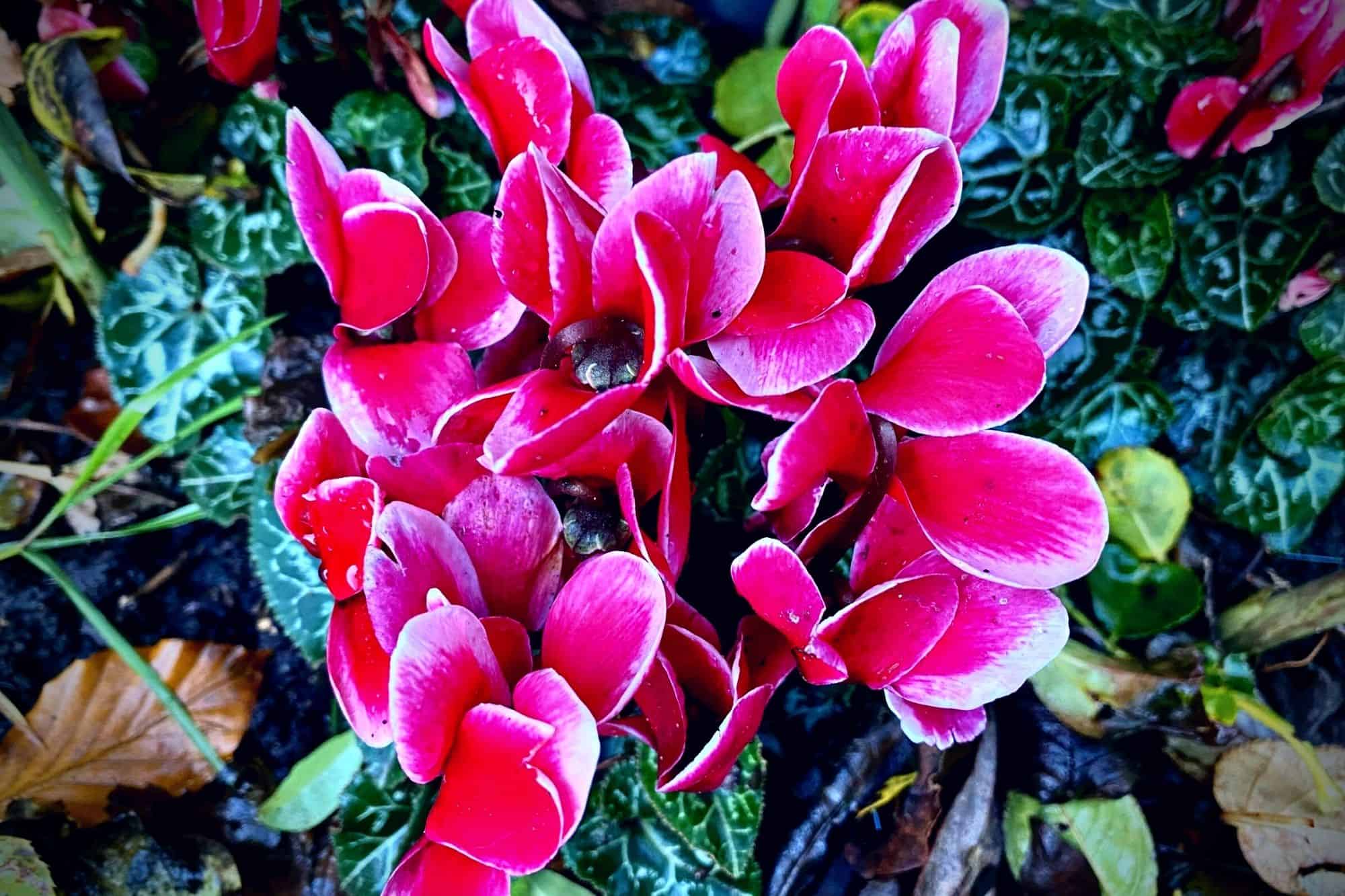
“In rattling showers dark November’s rain, From every stormy cloud, descends amain…” Well, that’s certainly true of November this year. The storms have wreaked havoc all over the country, although our orchard and garden in November seem to have come through relatively unscathed – so far at least. Welcome to this month’s garden update, let’s take a look at what we’re enjoying, as well as what to do in your November garden.
What To Do In The Garden In November
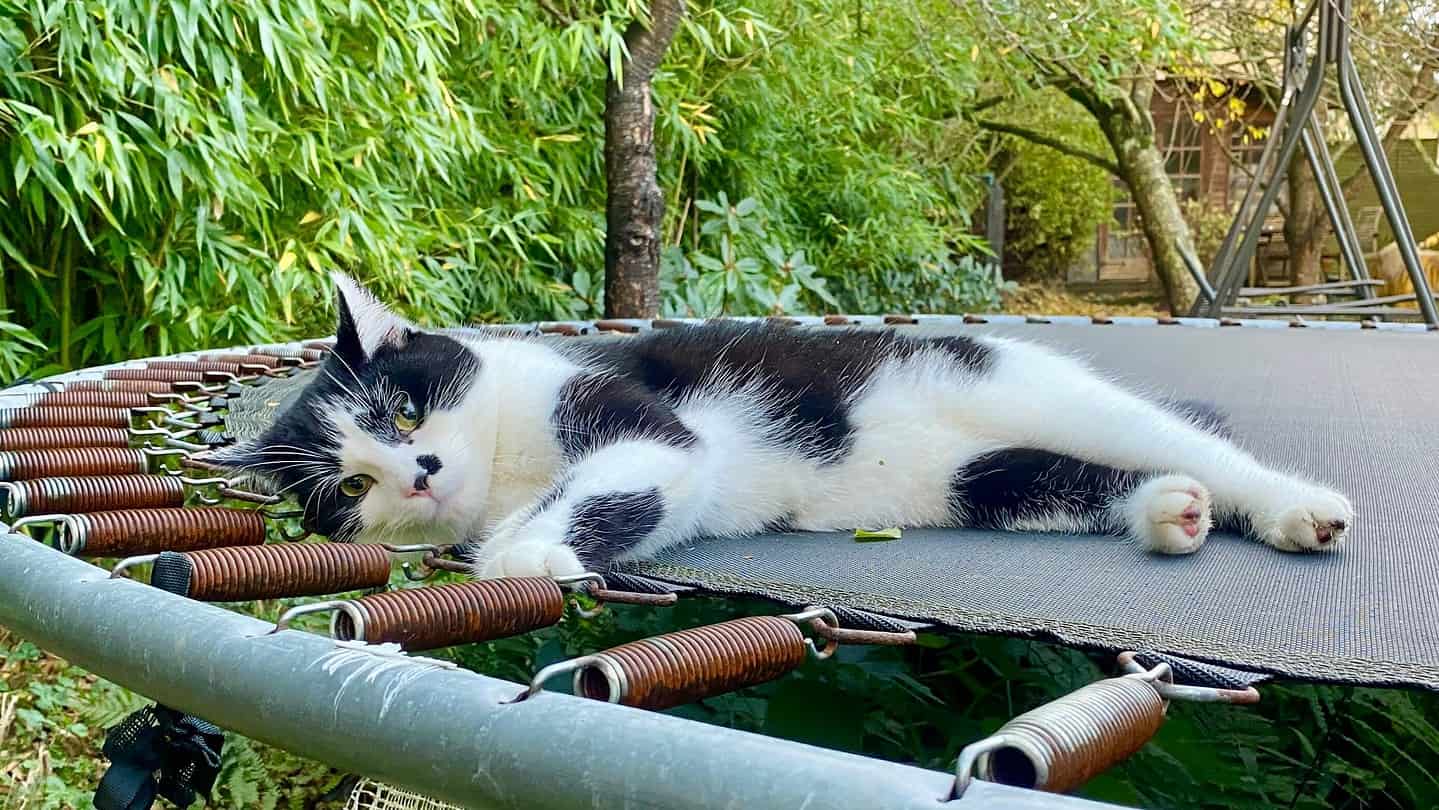
I’m breaking down this monthly garden update into sections: flowers, vegetables, fruits, jobs, wildlife, including my favourite November gardening tips. Please feel free to skip down to whatever you’re most interested in, depending on what things to do in your garden in November you’re most keen to know about. Tip: get yourself a cat to supervise your efforts, the disdain is instructive, if not especially encouraging.
The Flower Garden in November
Annuals
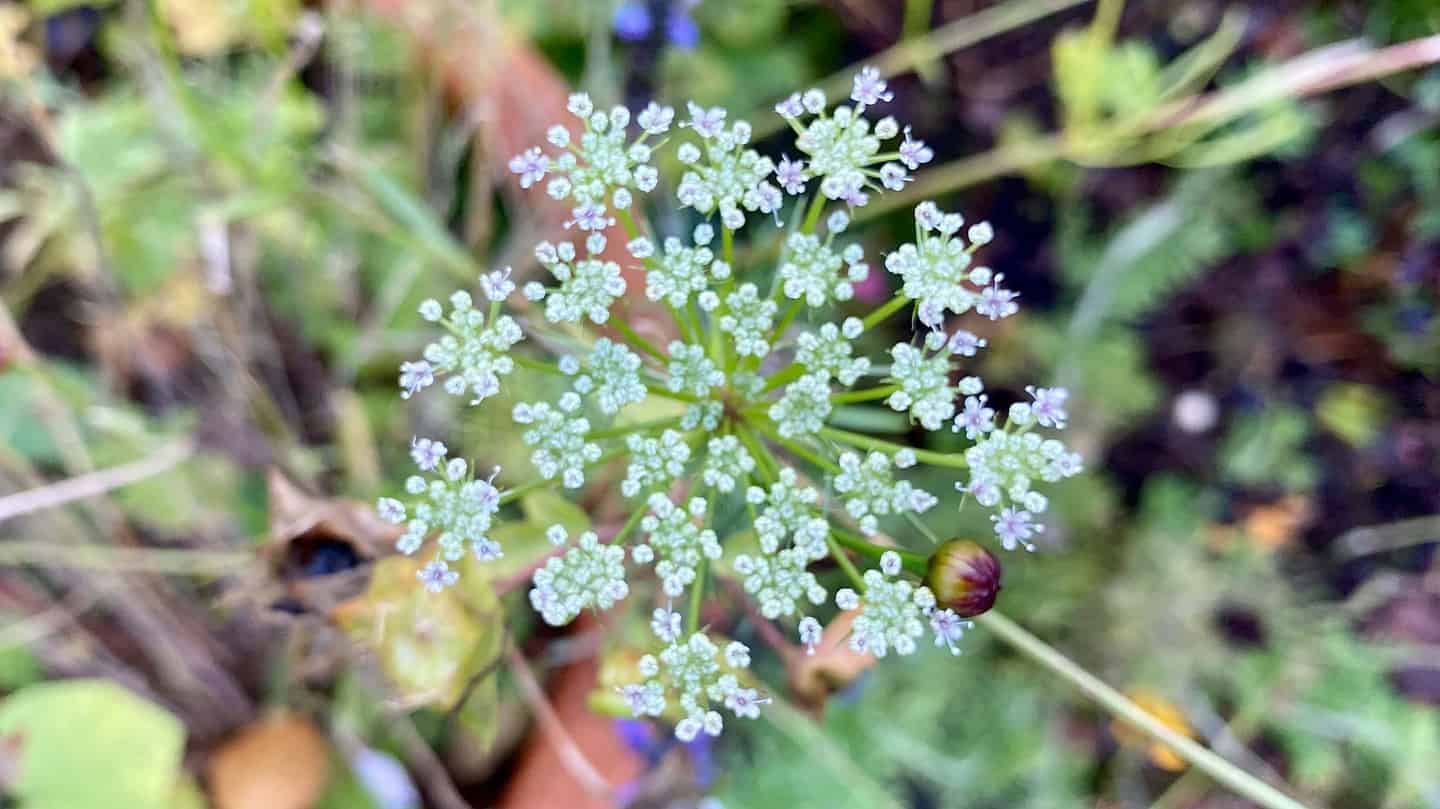
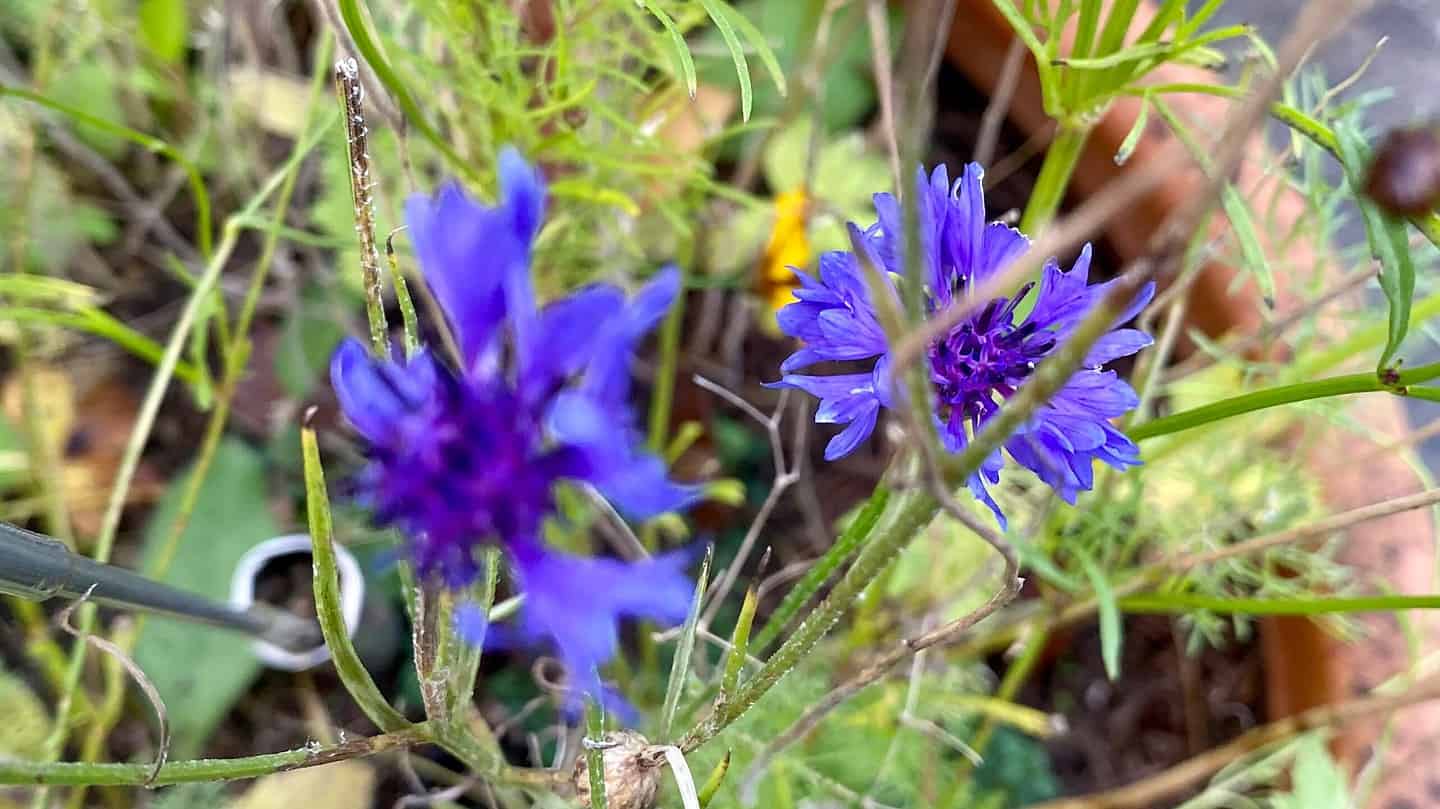
Annuals are plants that grow from seed, flower, set seed, and then die, all within one year. And you might not think there would be very many November flowers or much leafy green growth to see. That’s true of the annuals, we only have the delicate lace-effect Amni and blue Cornflowers left in a couple of pots.
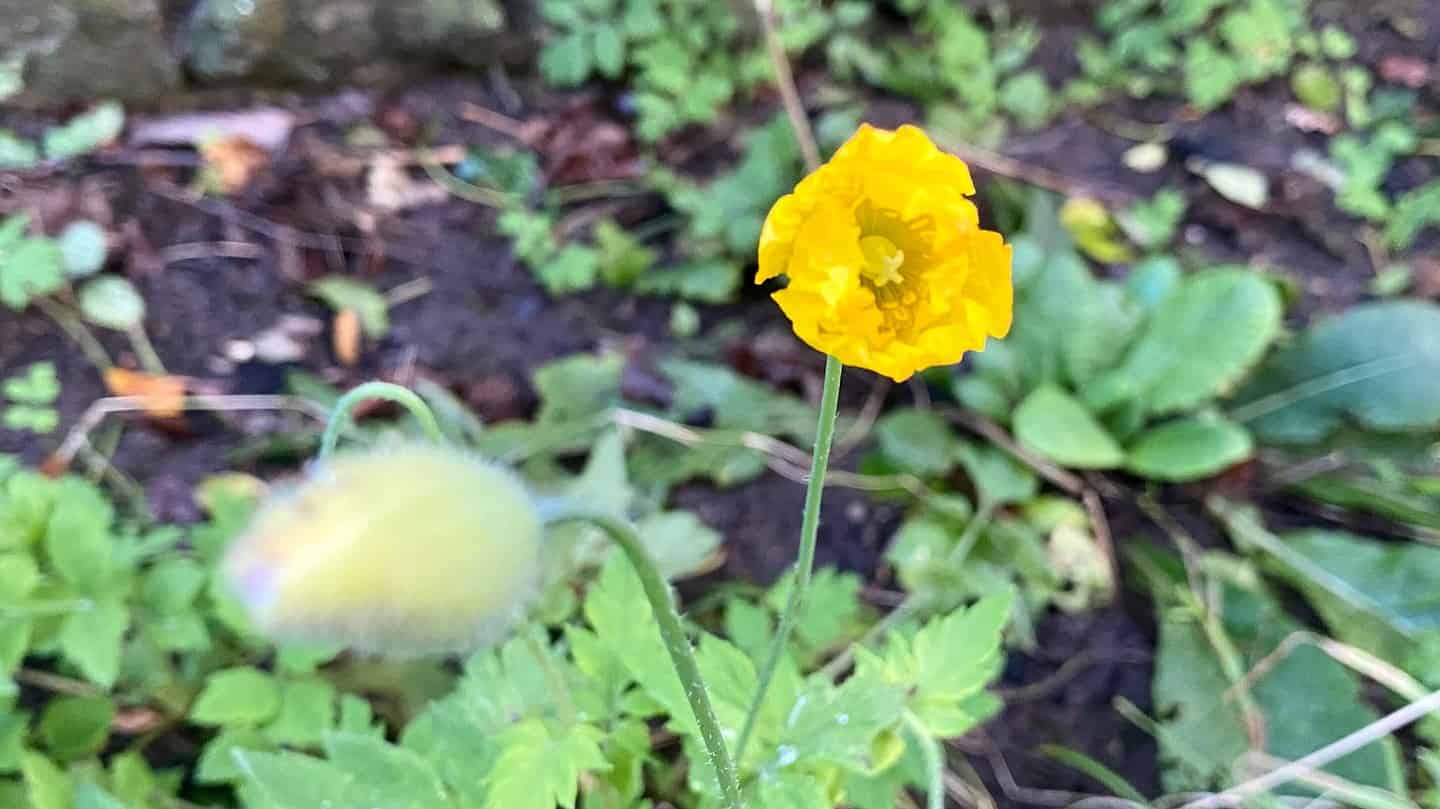
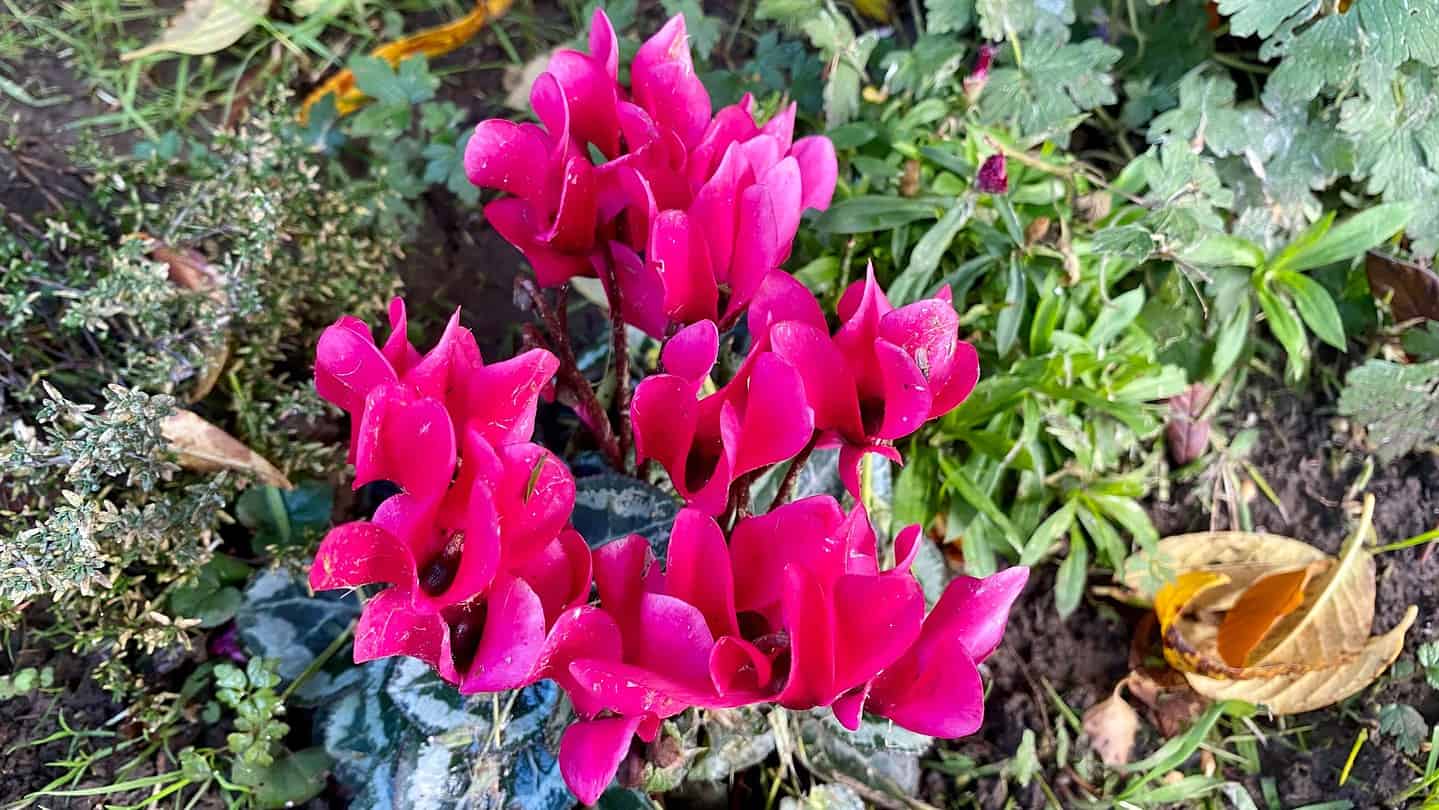
Also brightening up our borders we have some self-seeded yellow Welsh Poppies and some newly planted vibrant Cyclamens in pink, magenta, and red (this month’s featured photo).
Perennials
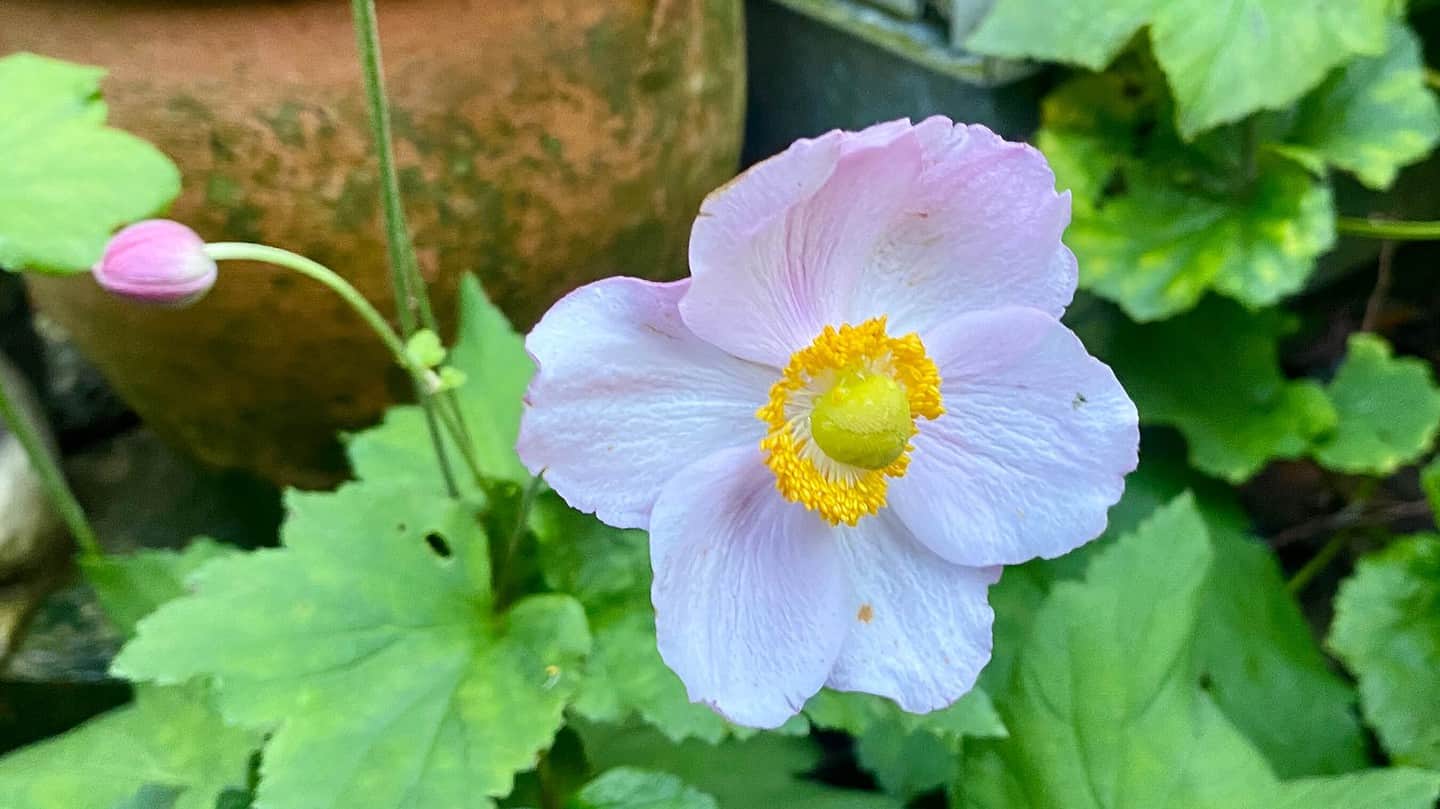
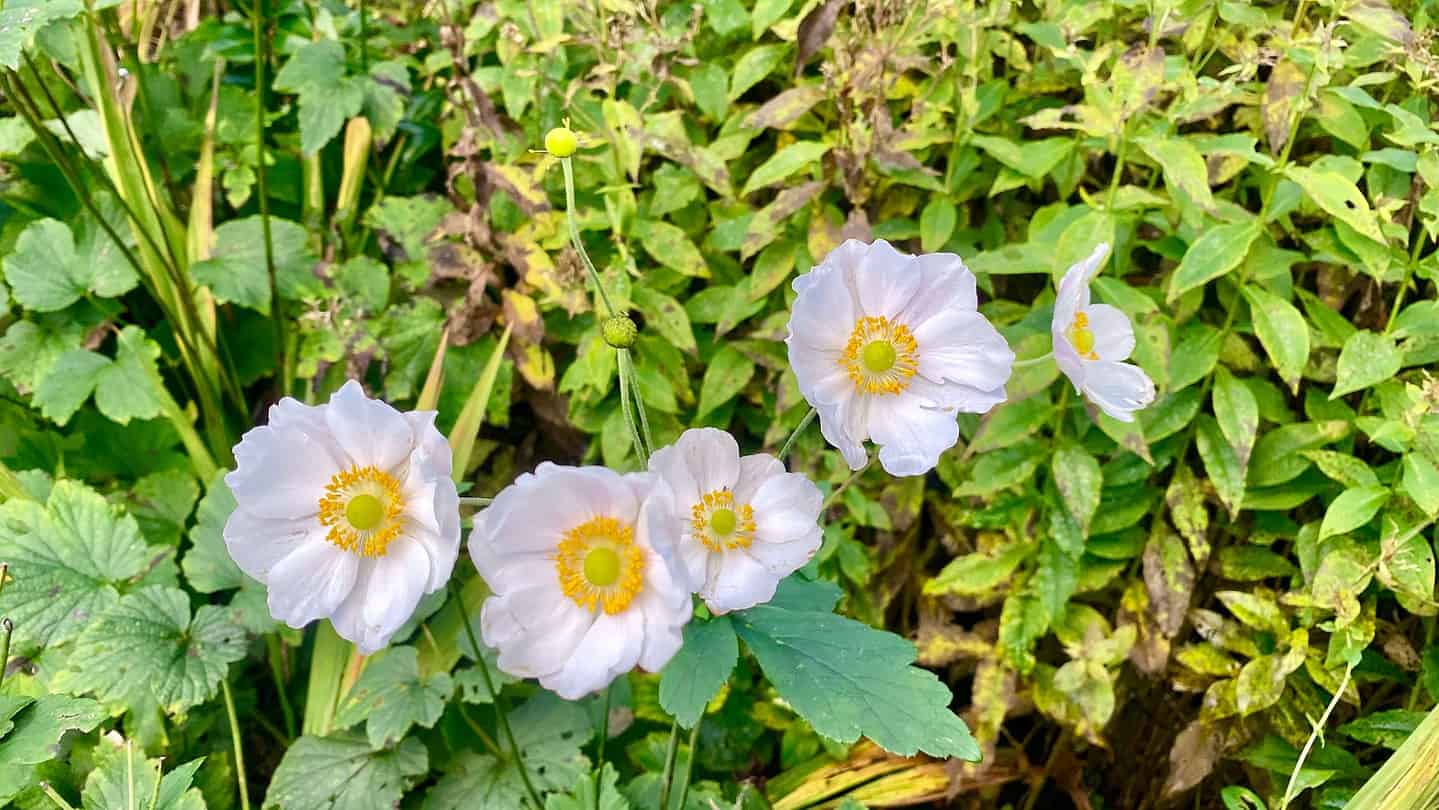
Perennials are plants and shrubs that die back in Winter and come back again the following year. And they’re great value garden essentials because they require very little effort but yield so much. Like our reliable pink and white Japanese Anemones who are still flowering.
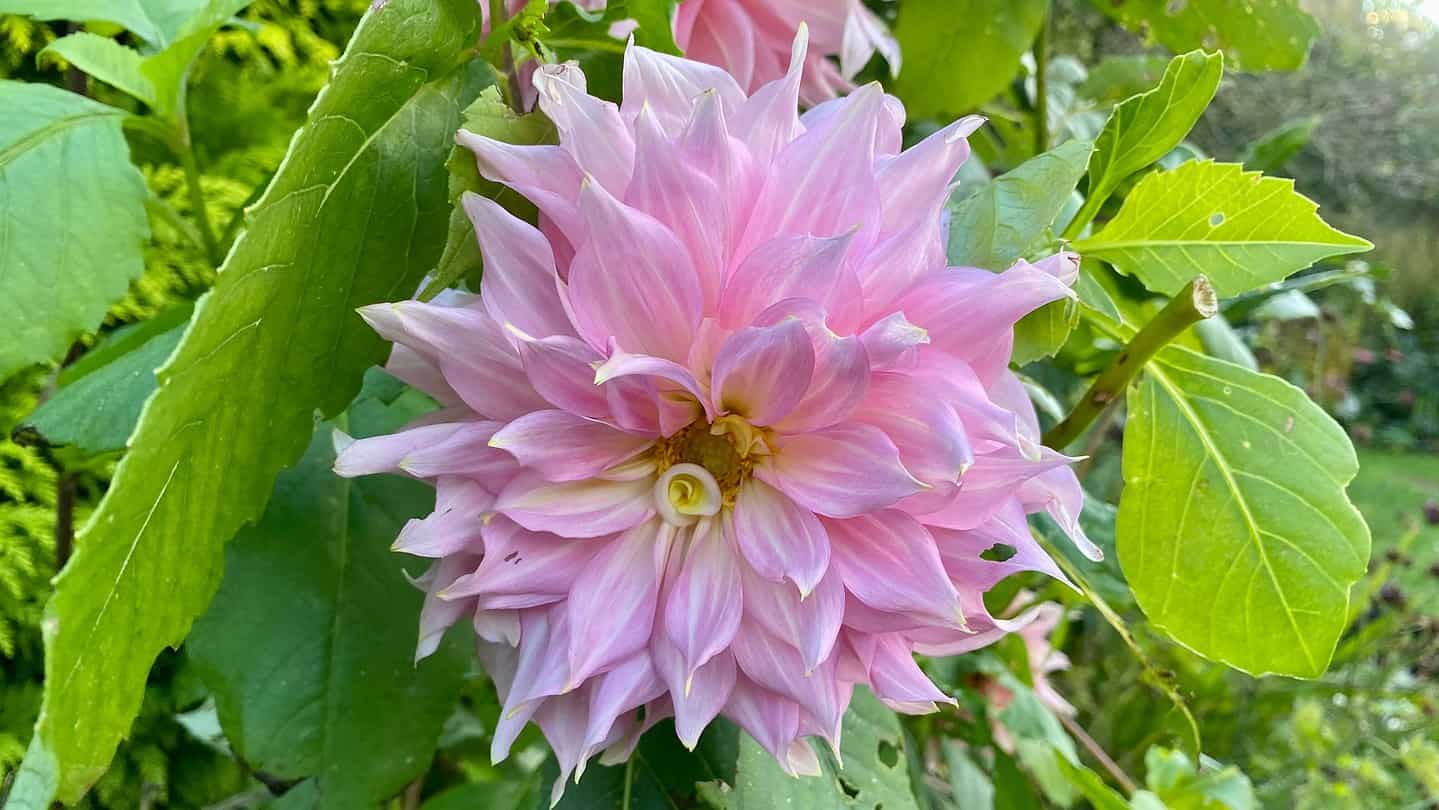
Vivid November garden colour is STILL coming from my gorgeous Penhill Watermelon dahlia with her huge pink blooms. She’ll keep on flowering until the first frosts, when everything will blacken and die. Then I’ll cut her back to ground level and mulch heavily over the top. Tip: last year I covered her with a large plastic pot, pinned in place with bamboo canes, as I couldn’t be bothered to dig her up. It clearly worked, so I’ll be doing the same this year too.
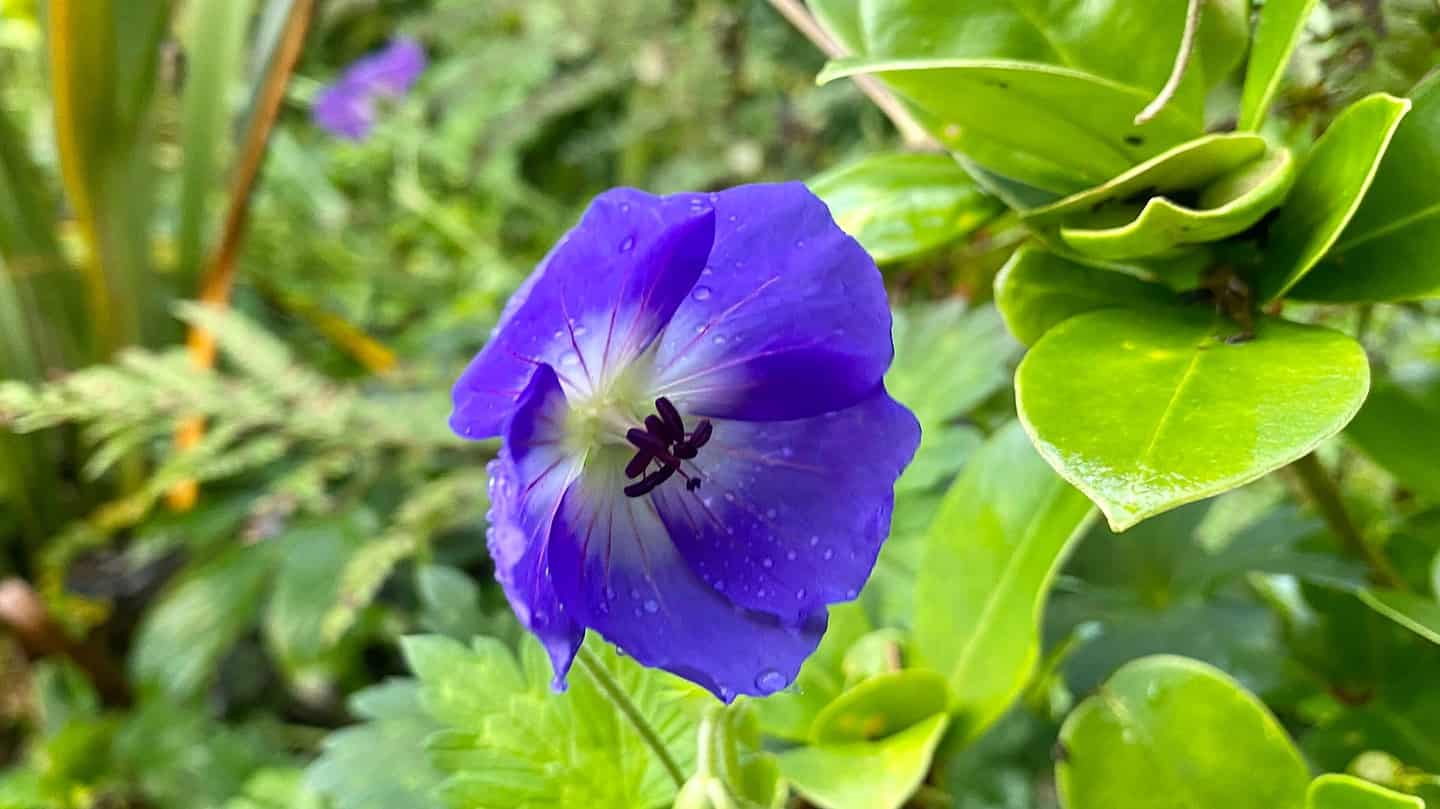
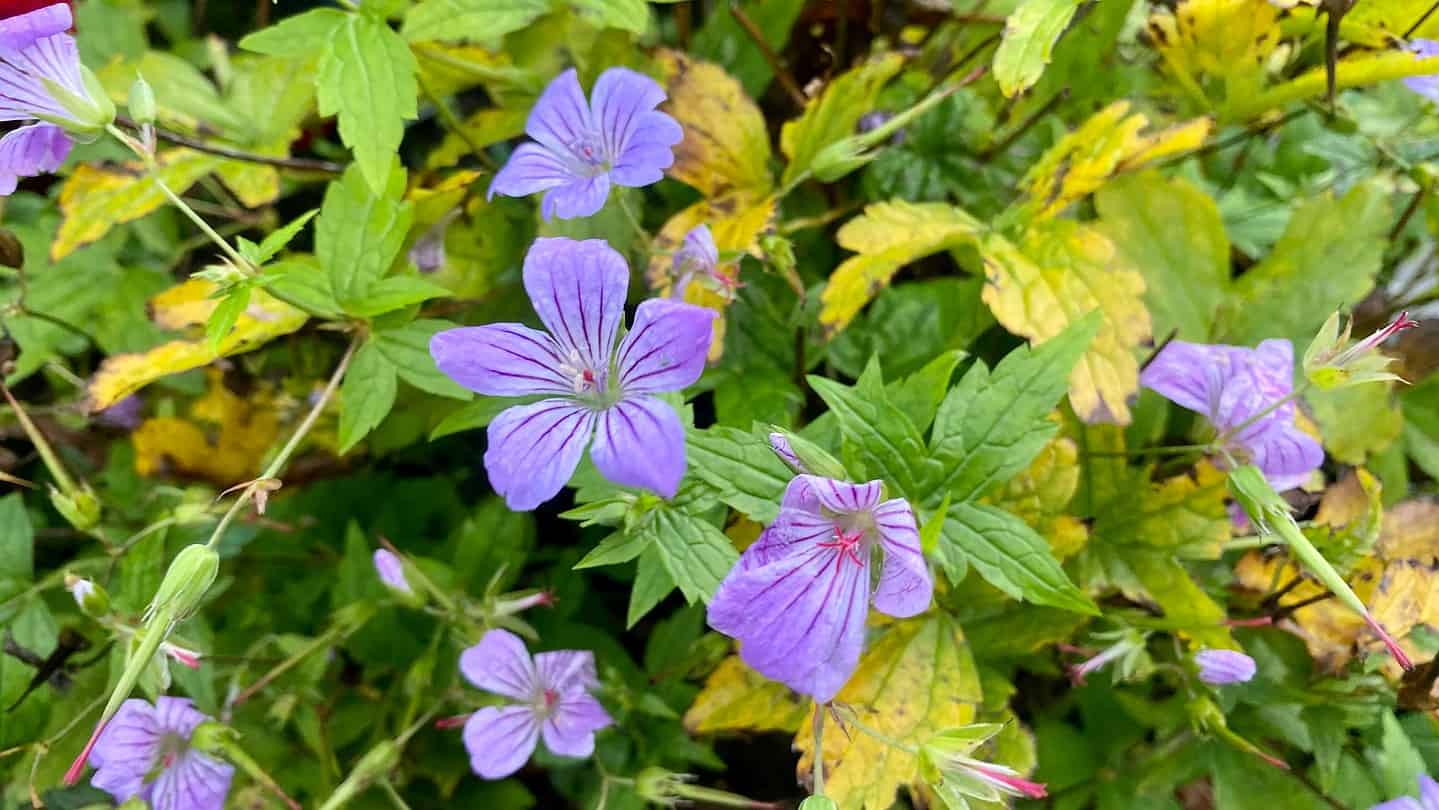
Regular readers will know of my love for hardy Geraniums and here’s why: our beautiful deep purple Geranium Rozanne and little mauve Geranium Nodosum are brightening up some of the shadier parts of our garden in November.
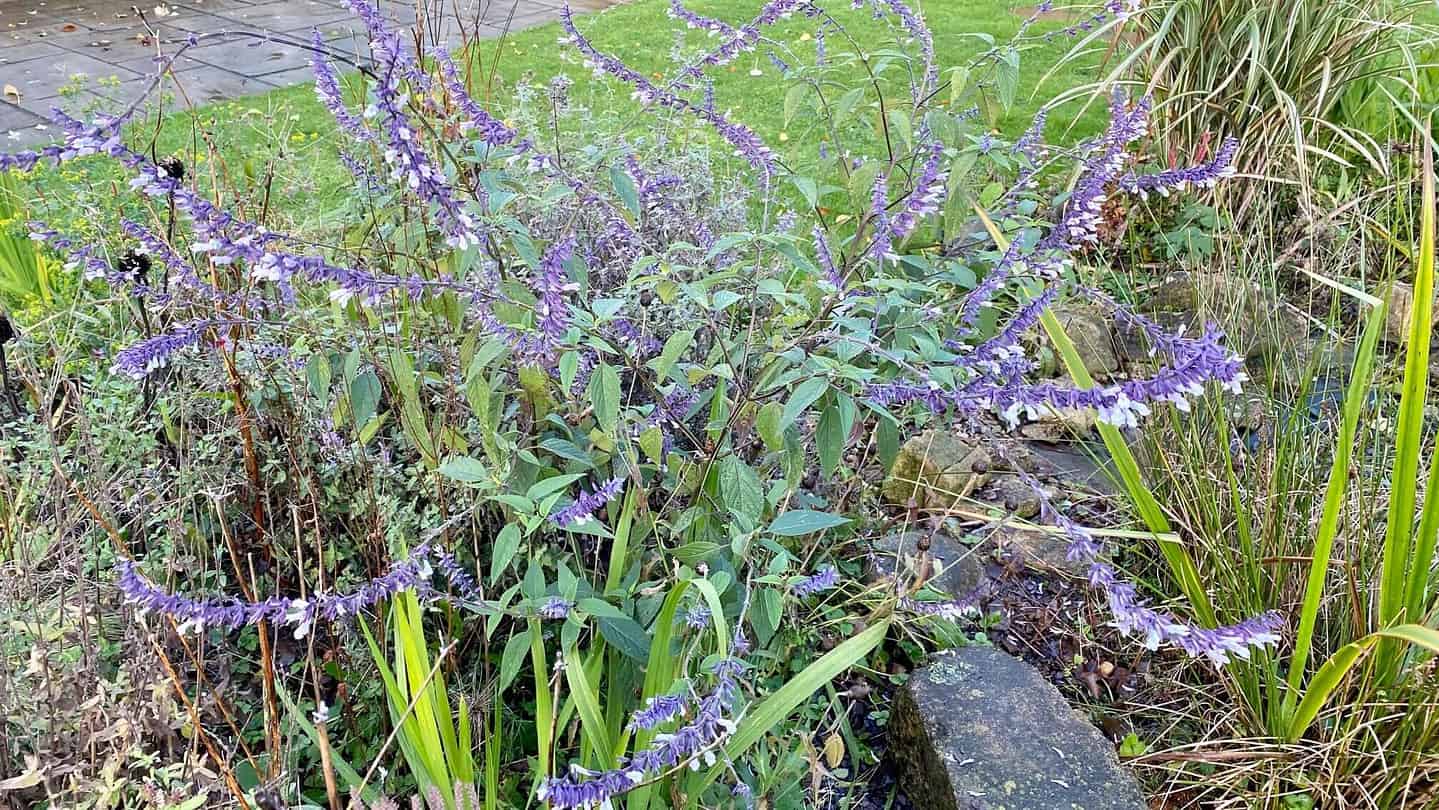
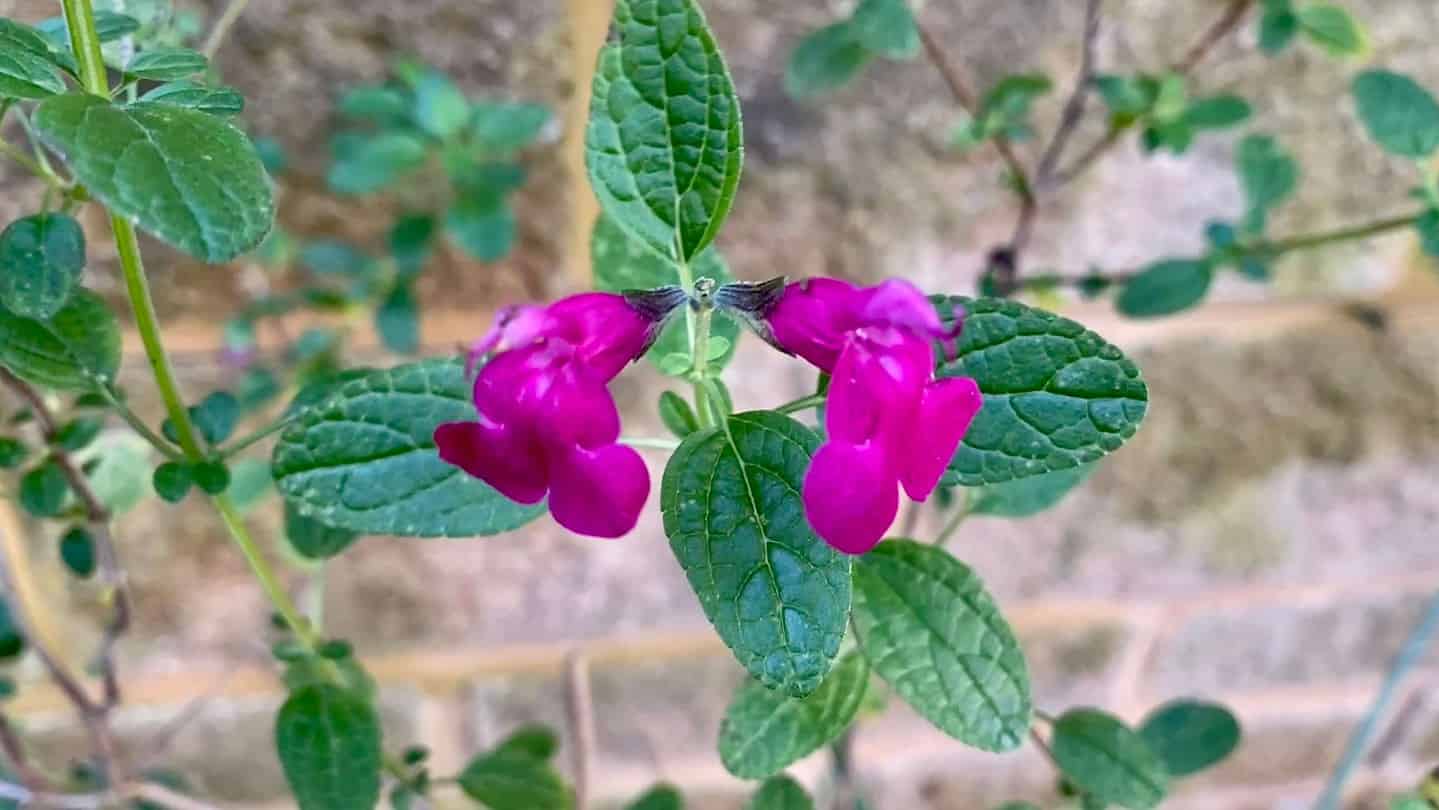
Salvias are classed as tender perennials but ours seem to be great survivors. They’re drought tolerant, and repeat flowering if lightly pruned so keep dead heading them to encourage fresh flowers and they should last until the first frosts. Tip: it’s not too late to take cuttings to make new plants for free. Don’t they look striking in their jewel-bright tones?
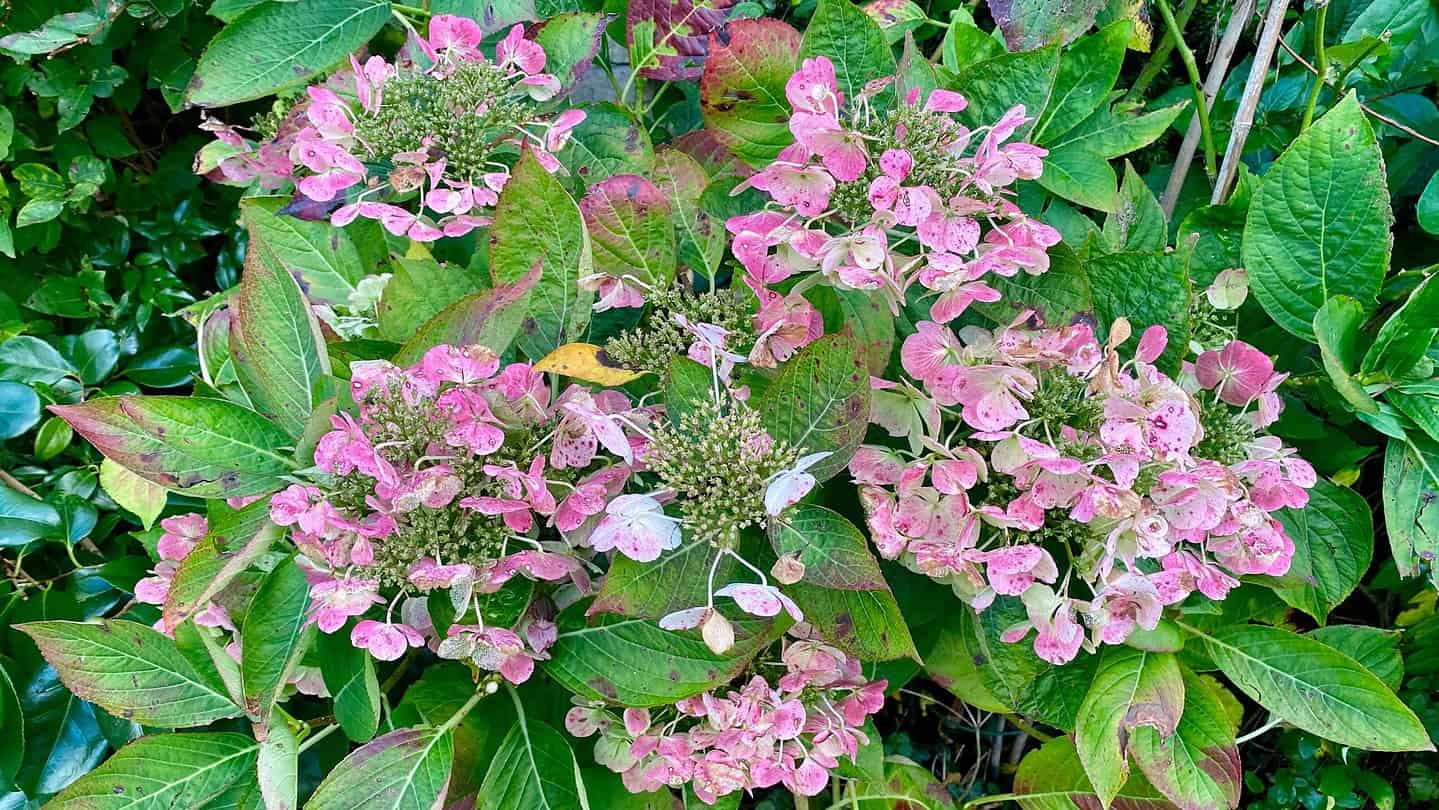
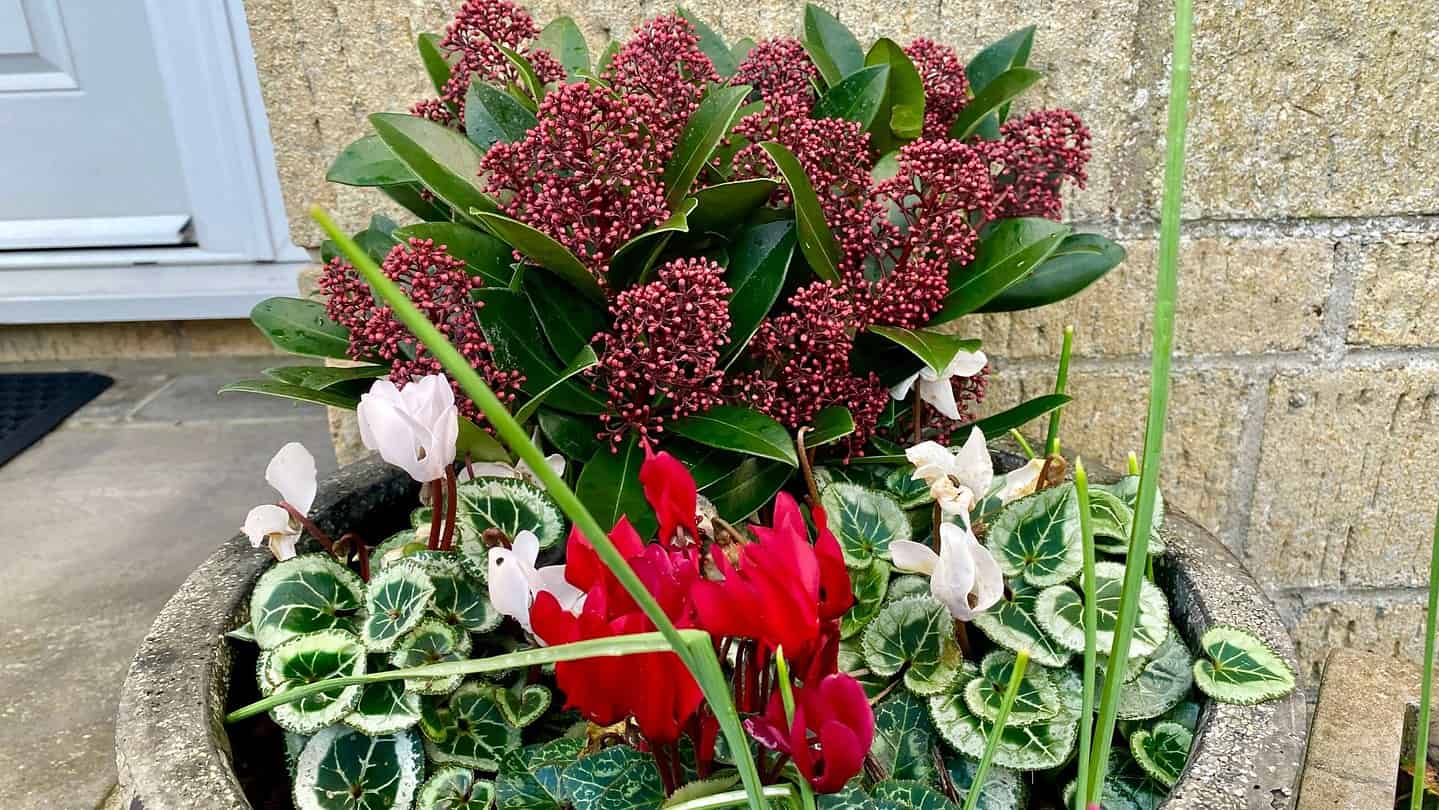
My favourite Hydrangea by the front door has fully morphed from brilliant white to speckled pink now. And more colours come from the newly planted up Christmas pot with Skimmia and Cyclamen. The Cyclamen are all annuals, but I can transplant the Skimmia to a garden bed when she outgrows the pot.
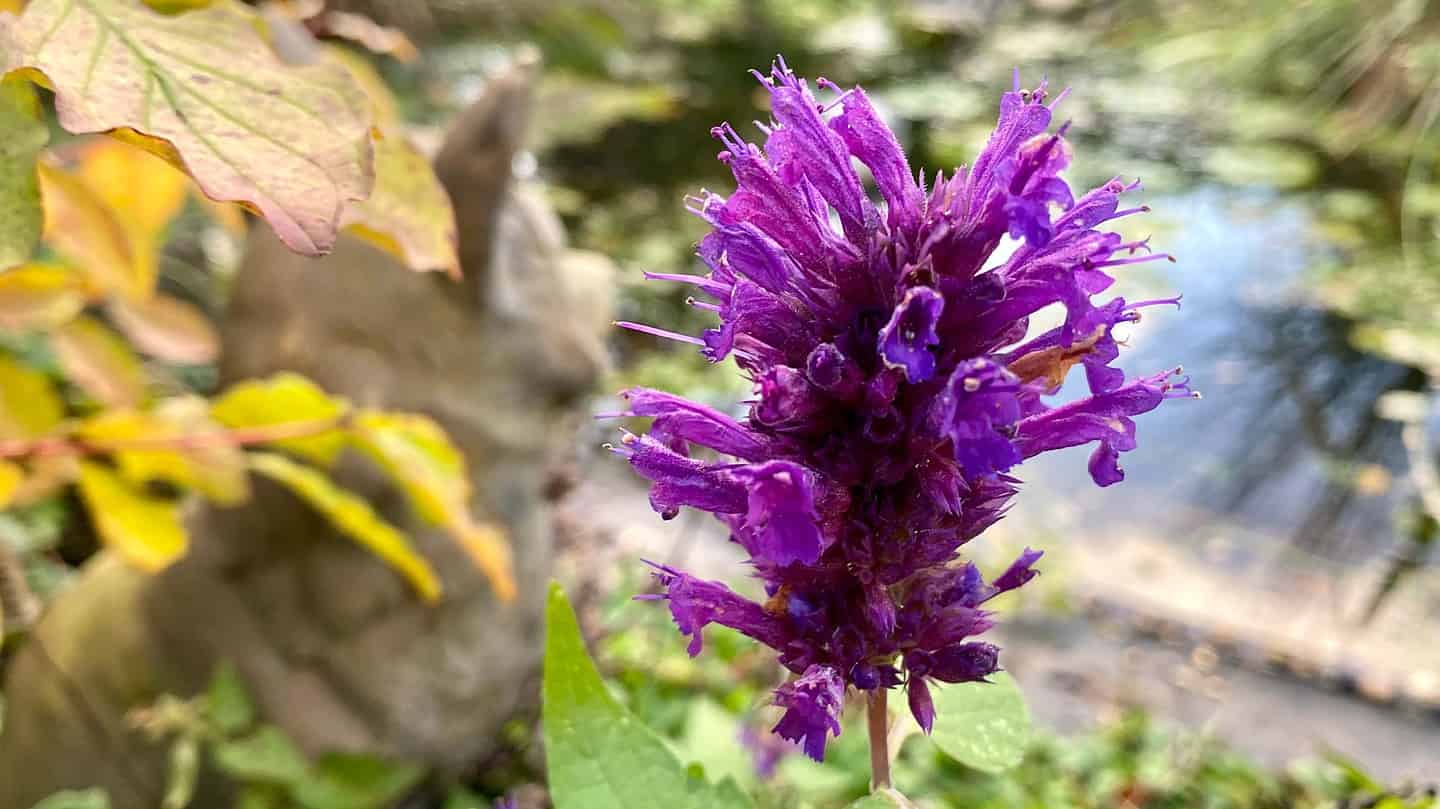
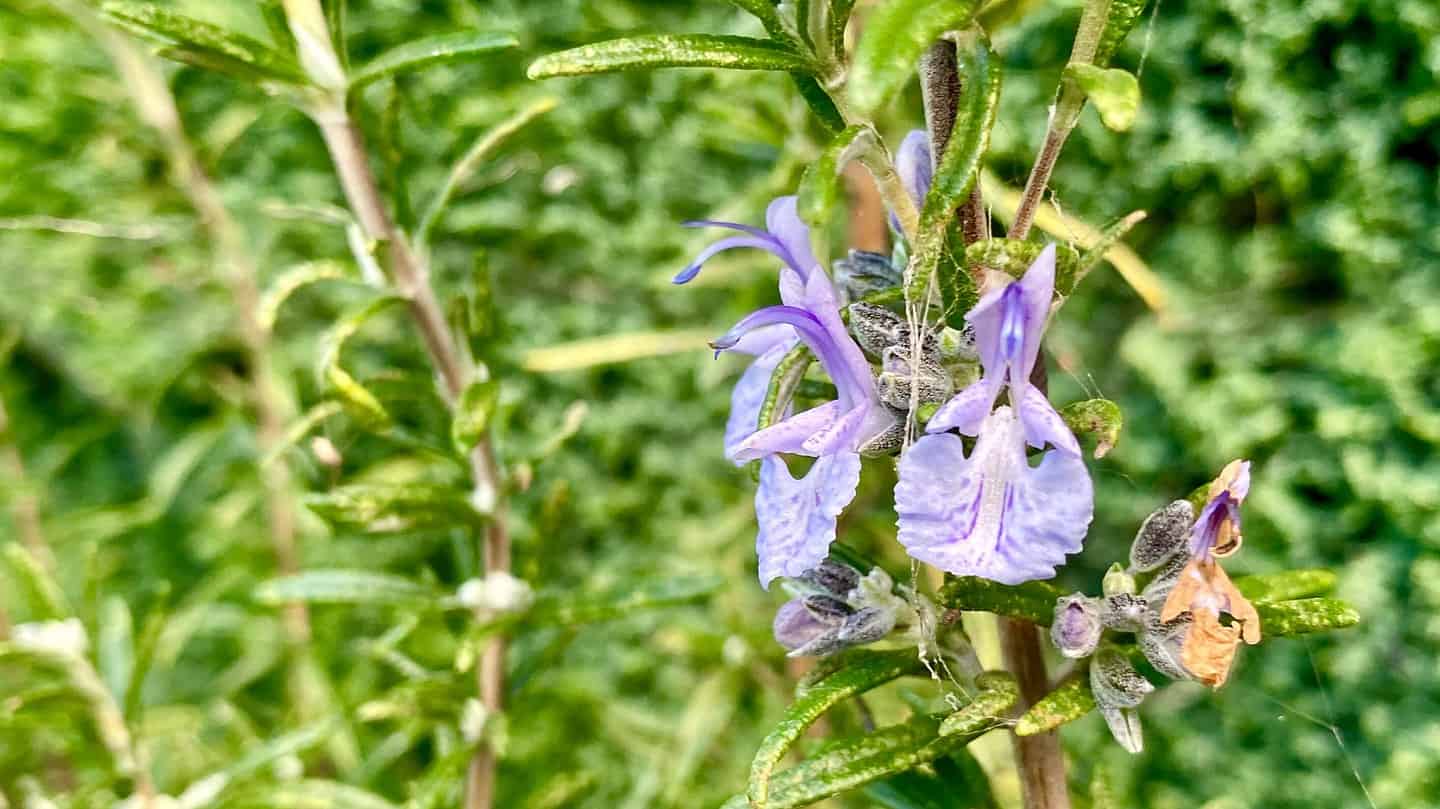
Old perennial favourites still blooming include our Agastache (Giant Hyssop, related to Mint) with her aniseed-scented leaves and tall purple flower spikes. And the paler blue flowers of the Rosemary are providing food for some hungry bees.
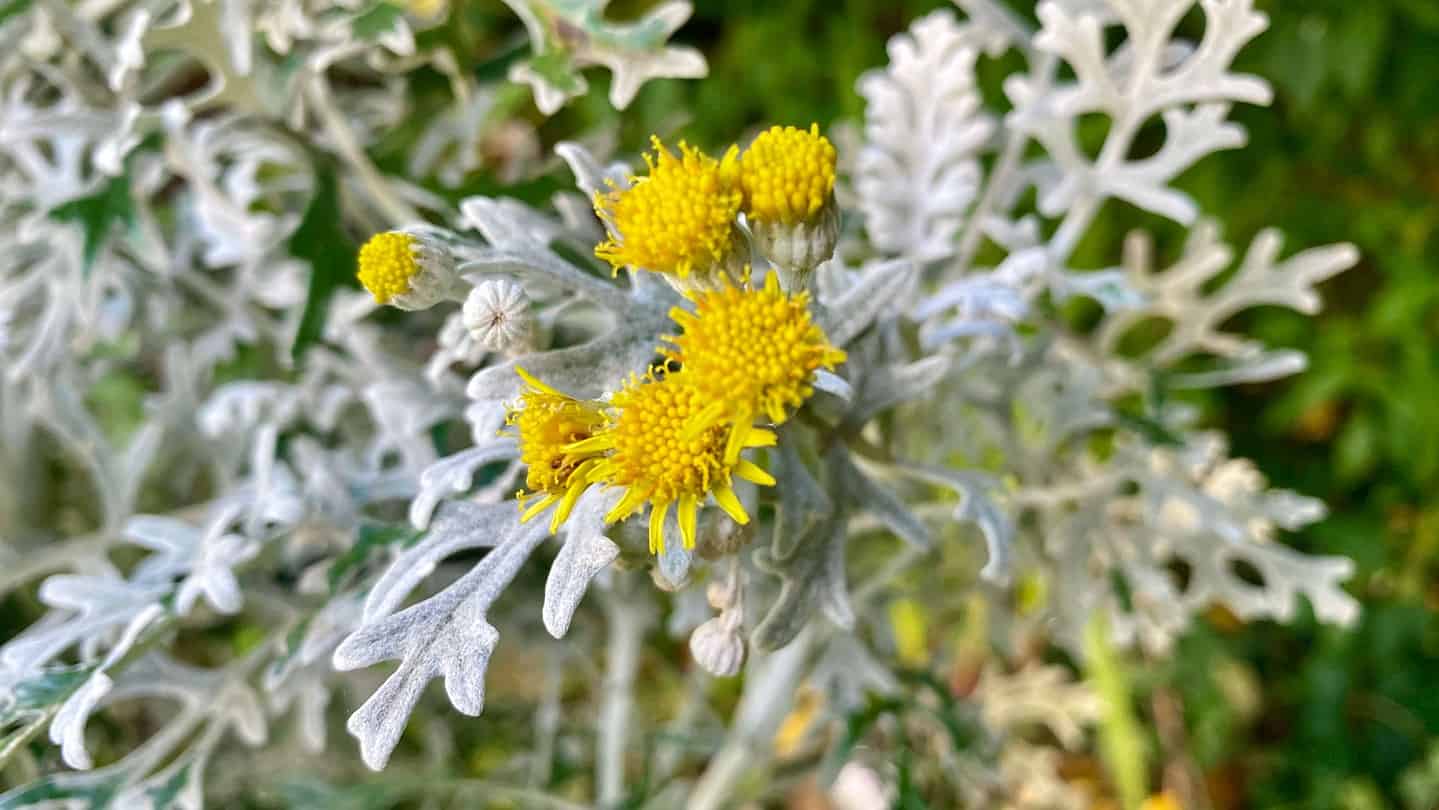
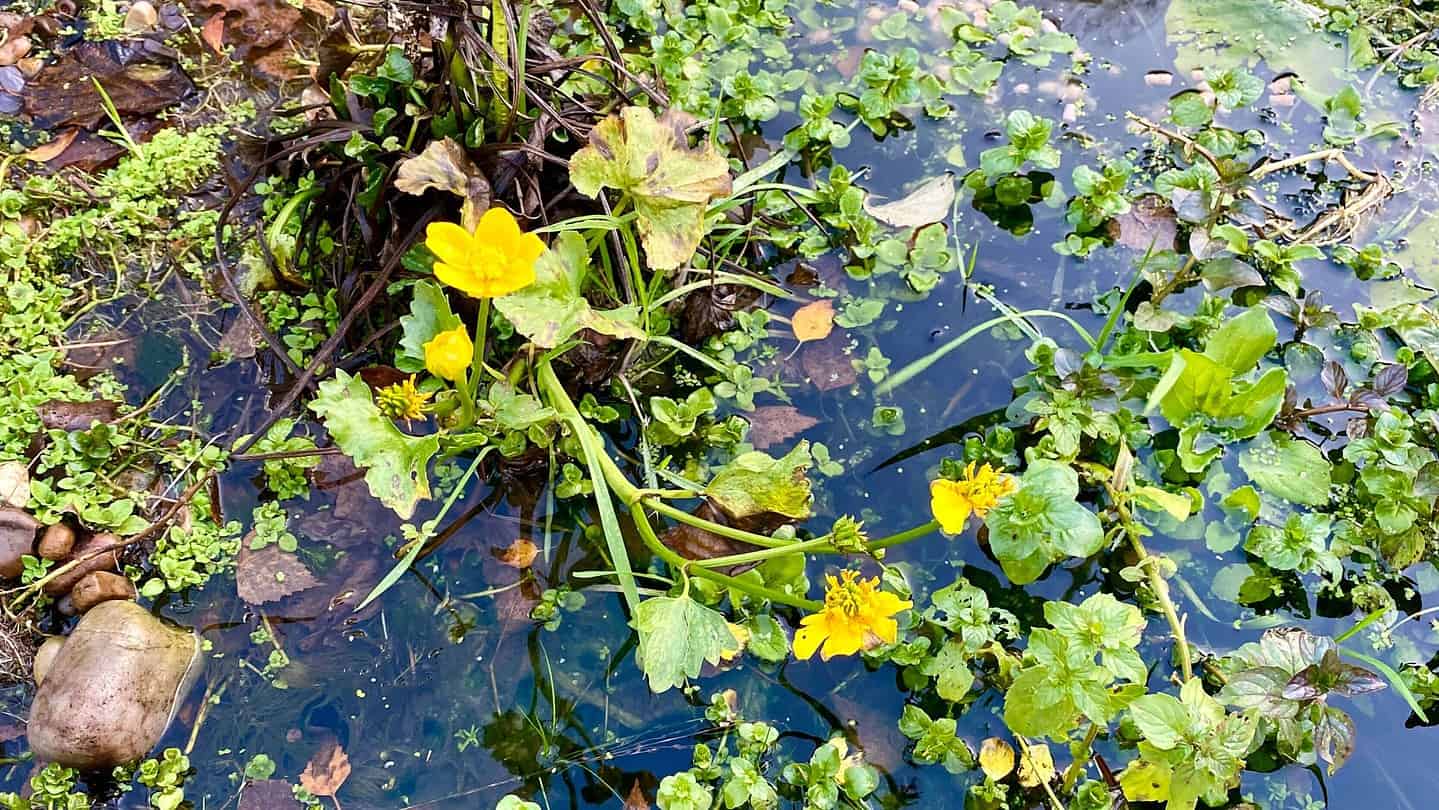
Yellow plants also offering some much-needed nectar for pollinators in our garden in November are the Silver Ragwort under the trees and Marsh Marigold in our wildlife pond.
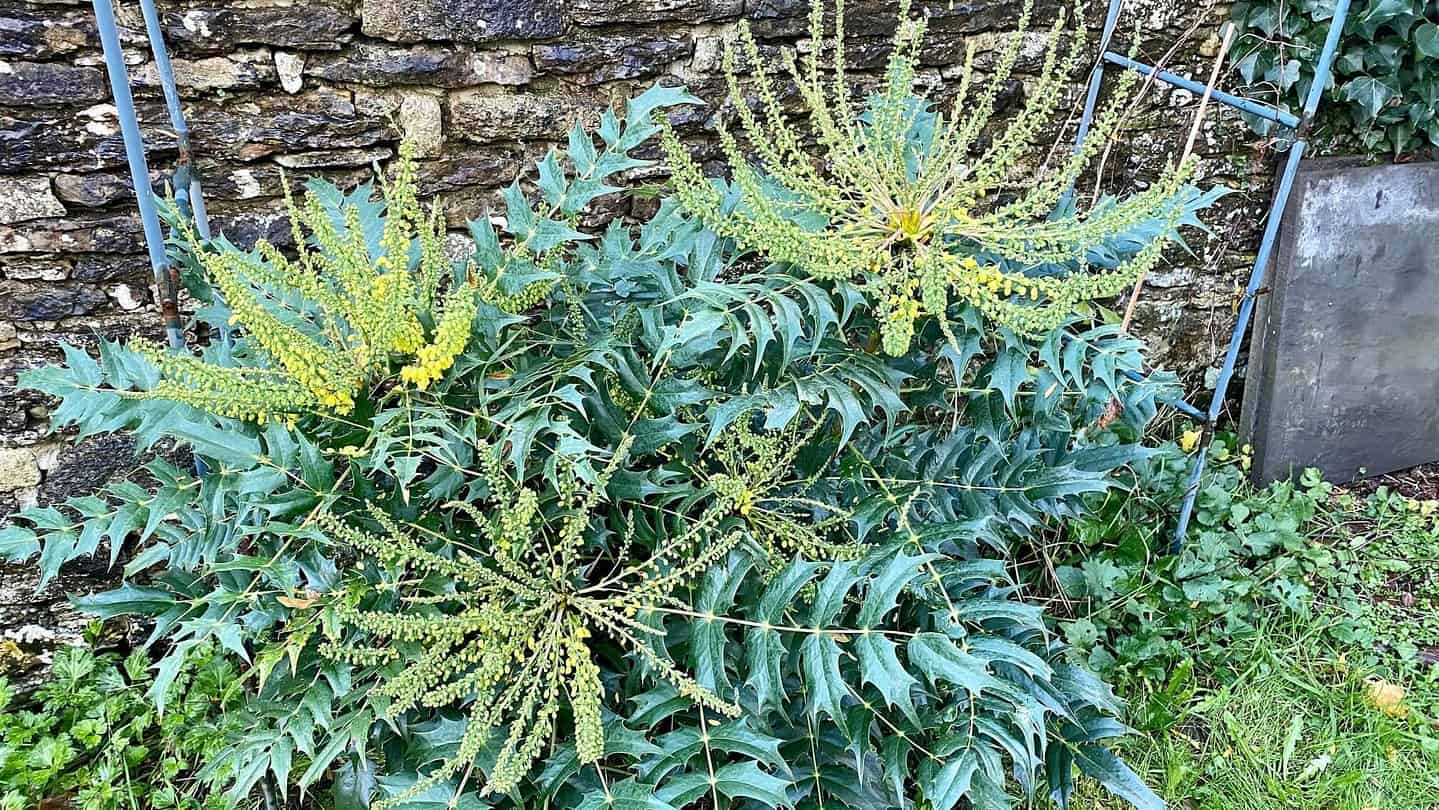
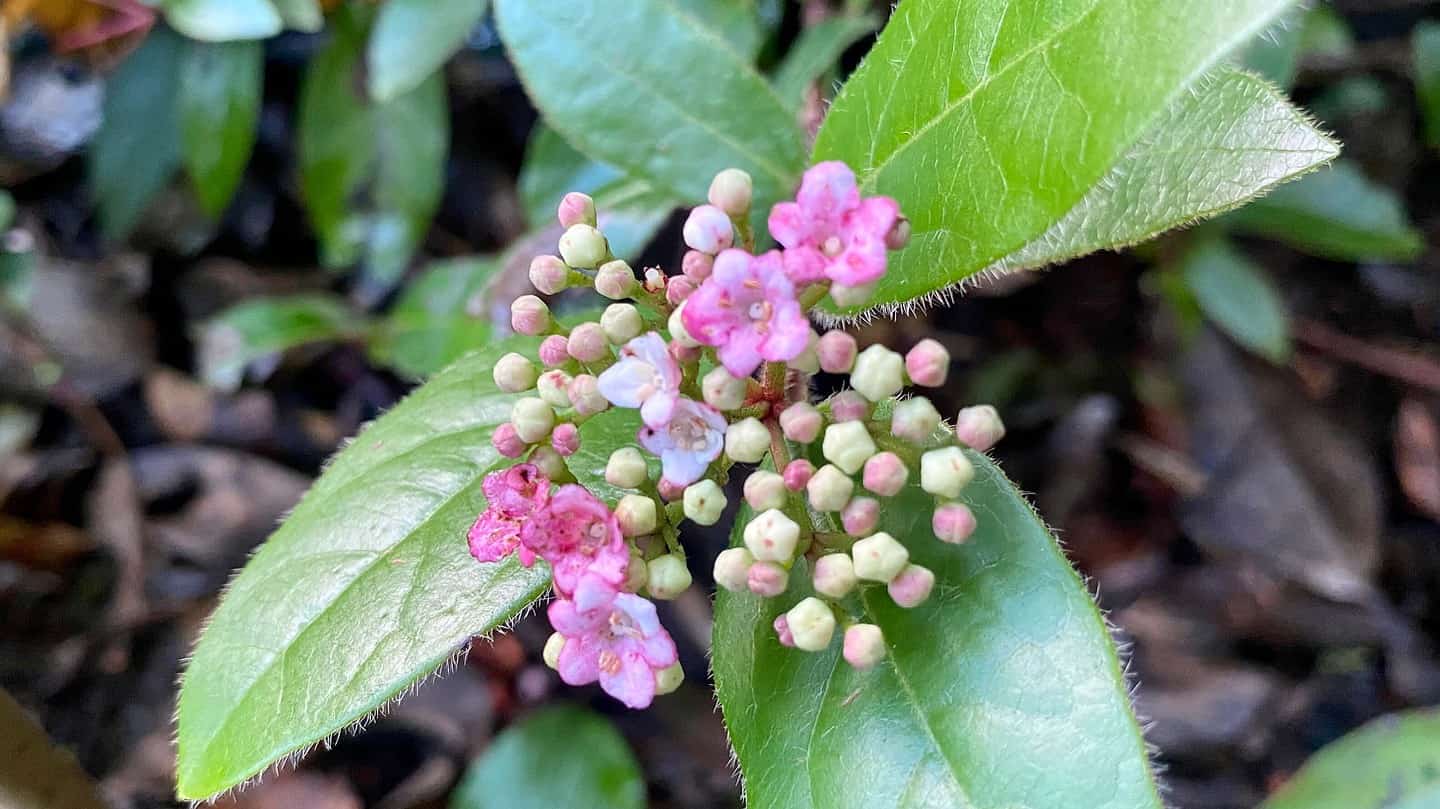
It’s so important to have something that smells good in your garden, no matter the season. And we have a gloriously sweet-scented yellow Mahonia doing just that. As she grows bigger, our little pink and white Viburnum should do the same in a shadier part of one of the borders too.
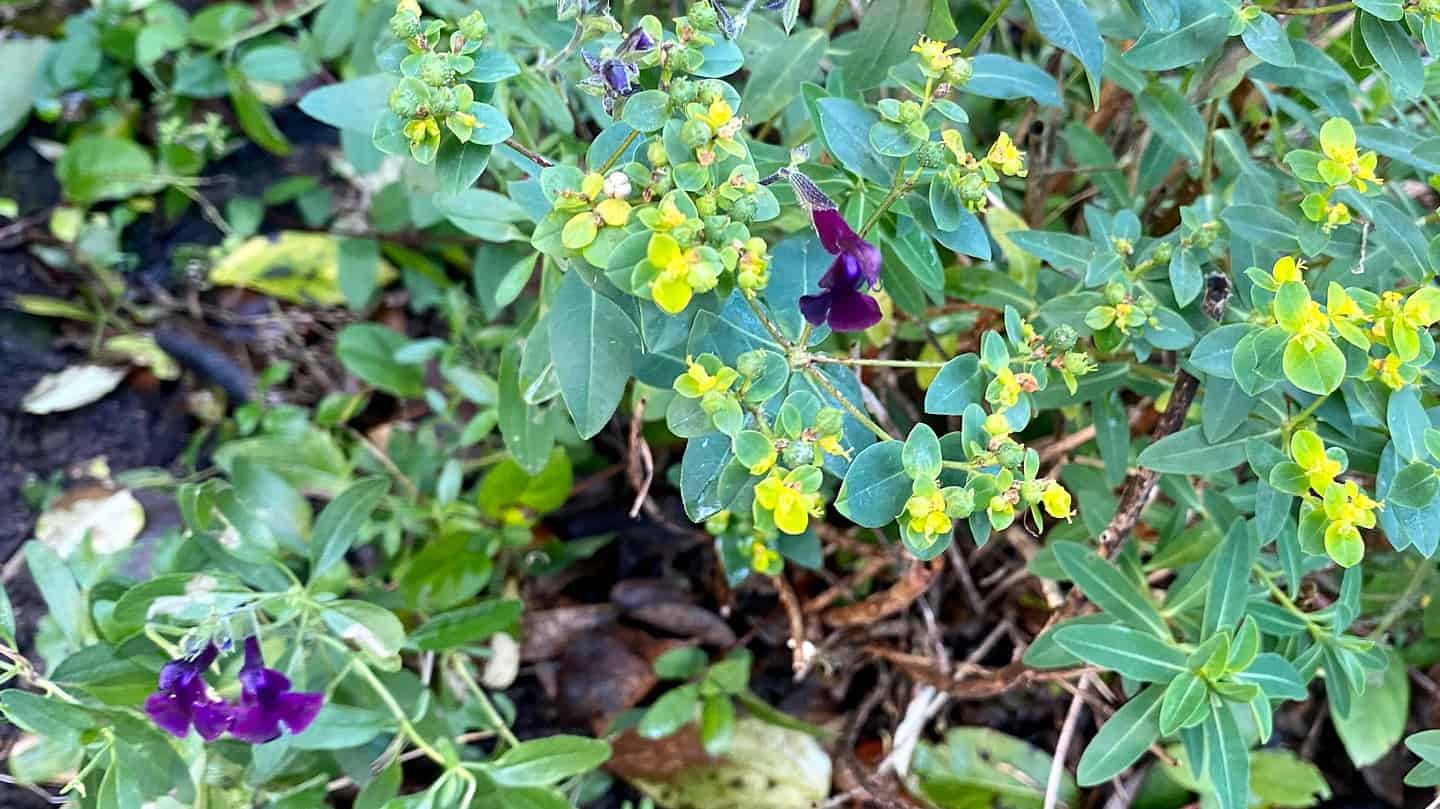
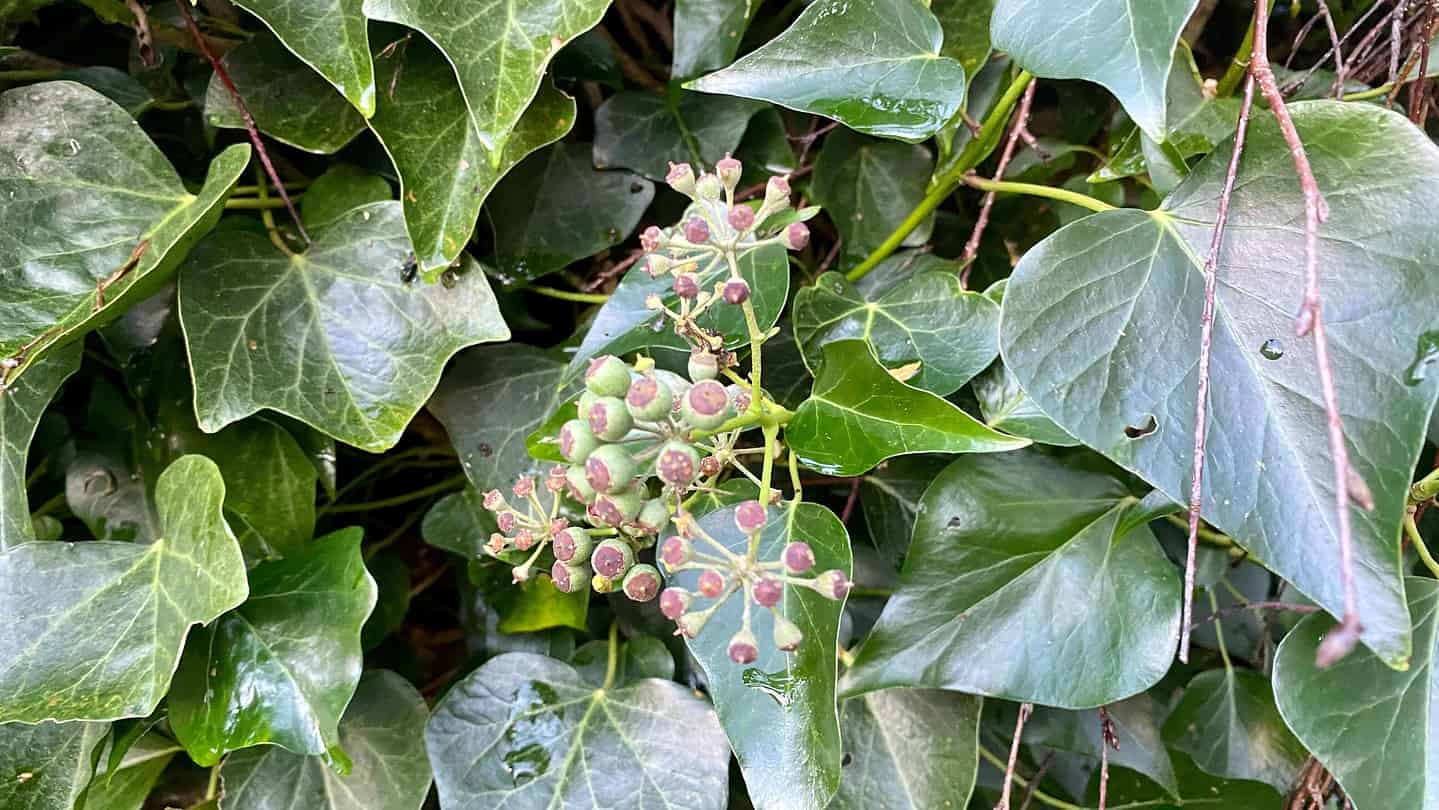
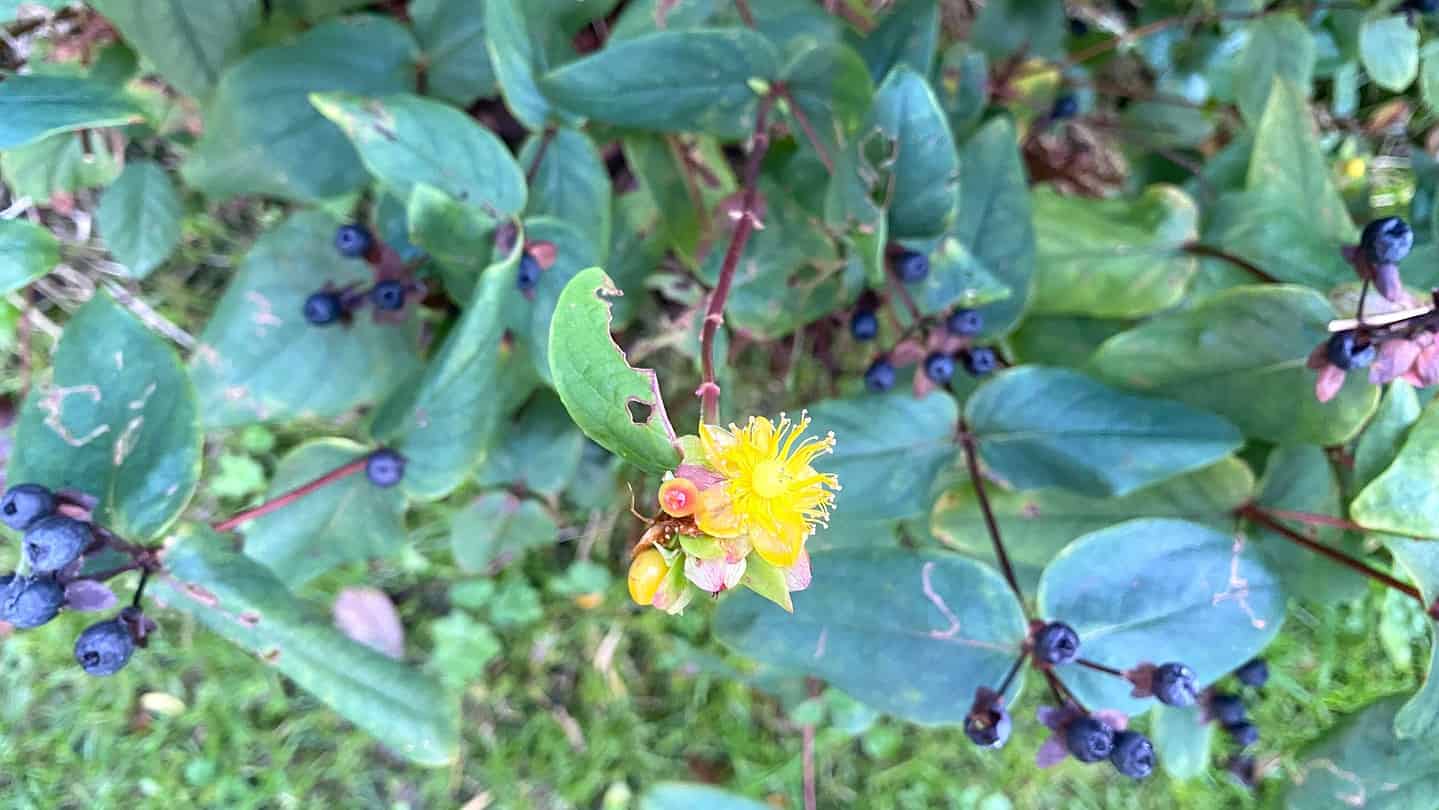
Ivy is one of the most underrated plants in any garden. She offers year-round shelter for bugs and birds, artfully disguises ugly fences and walls, and her flowers provide plentiful nectar for the bees. And the Hypericum is still thriving underneath the shade of Flora’s trampoline in the orchard. Also known as St John’s Wort, her berries are toxic to humans so we leave them for the birds instead.
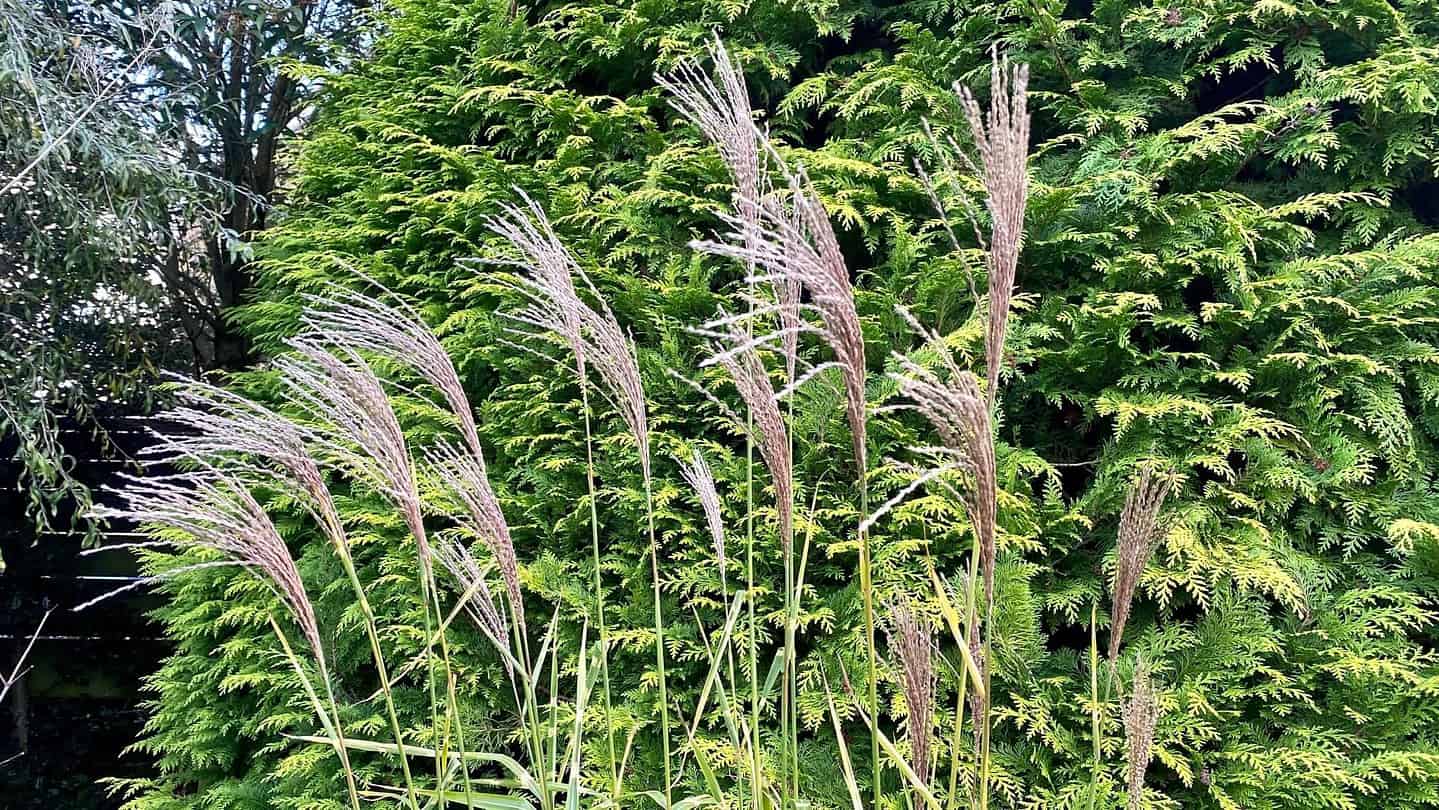
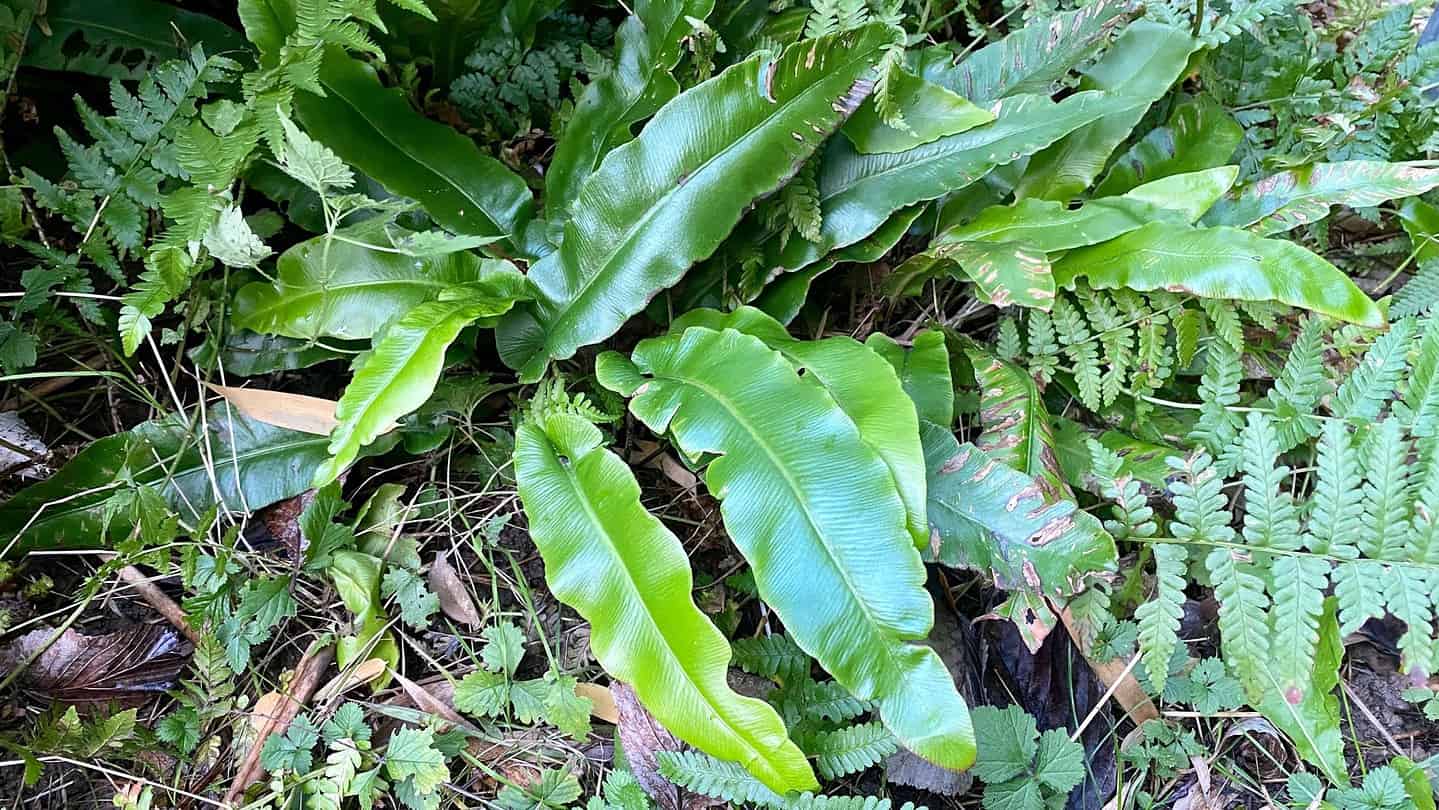
Lastly, our gorgeous Grasses are affording some striking structure, as well as being very hardy and drought tolerant. And the colony of self-seeded Ferns also underneath Flora’s trampoline continues to thrive.
The Vegetable Garden in November
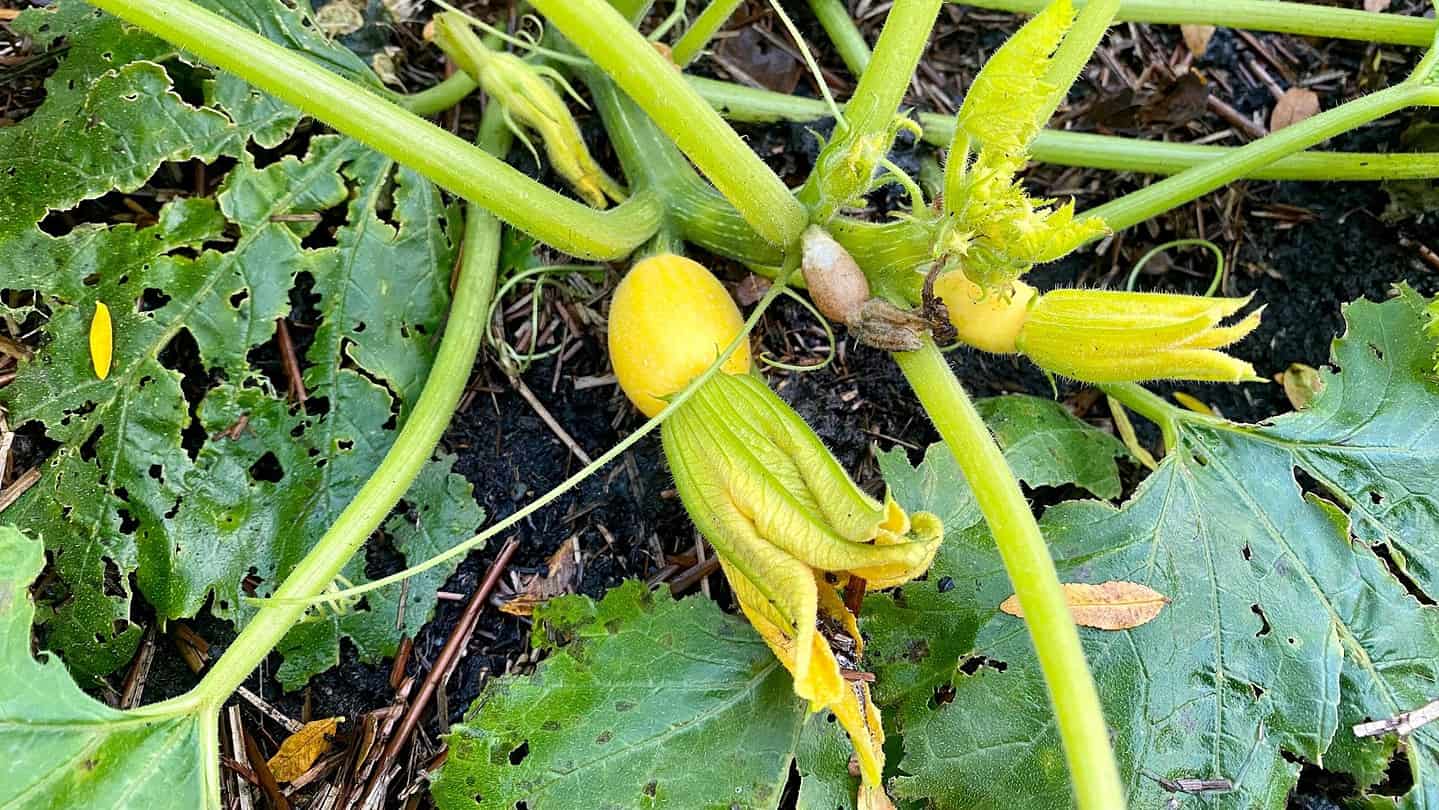
My first experiment with Companion Planting earlier this year yielded masses of Courgettes* and French Beans* although not as many Sweetcorn* as I’d hoped for. Unbelievably, a few baby Courgettes are still growing and I don’t have the heart to pick them yet, just in case, and against all the odds, they get any bigger.
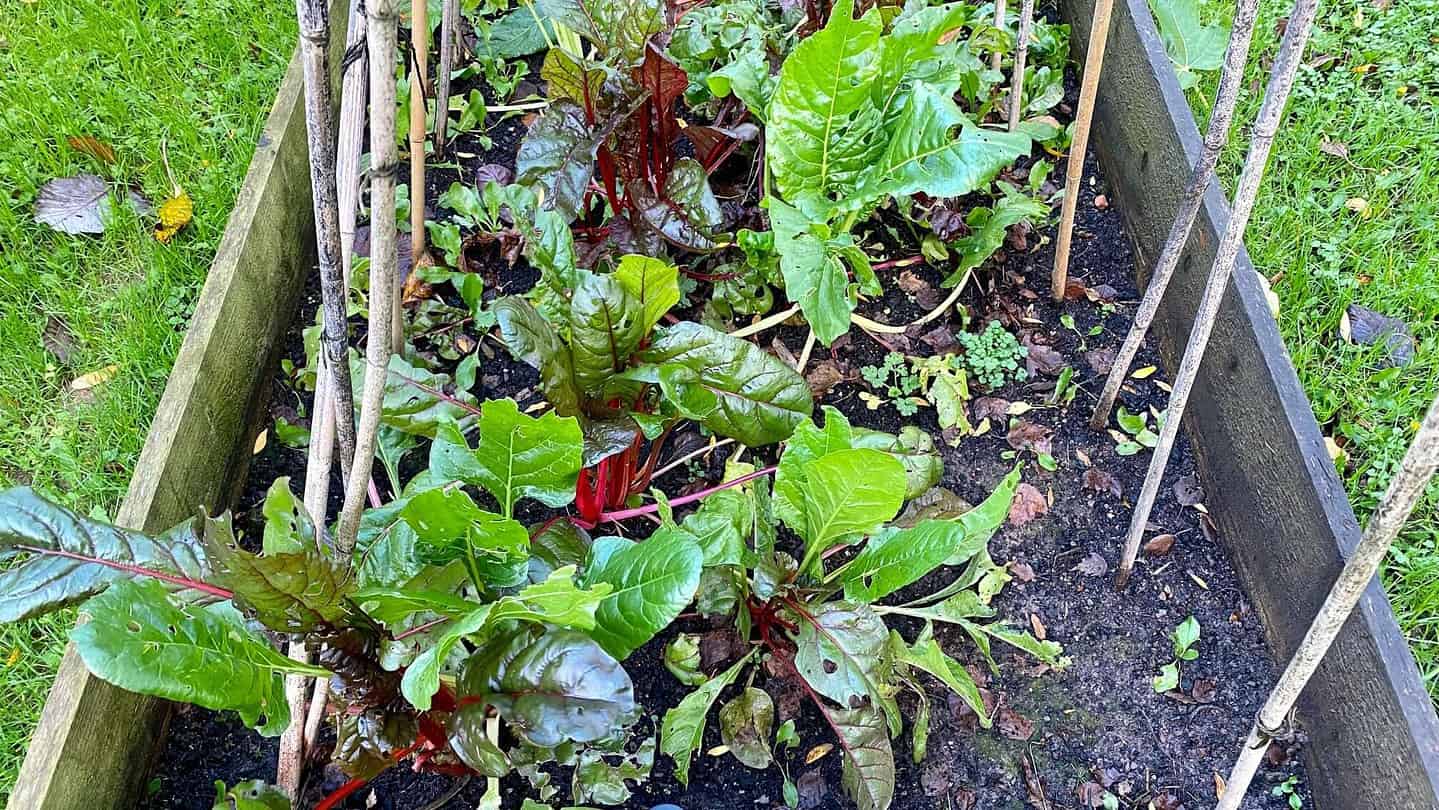
And we have a LOT of Rainbow Chard* and Carrots* still to harvest – both are hardier and can withstand the odd frost, fortunately. Other vegetables you could plant in November include Garlic, Shallots, and Onions in free-draining soil or raised beds.
The Fruit Garden in November
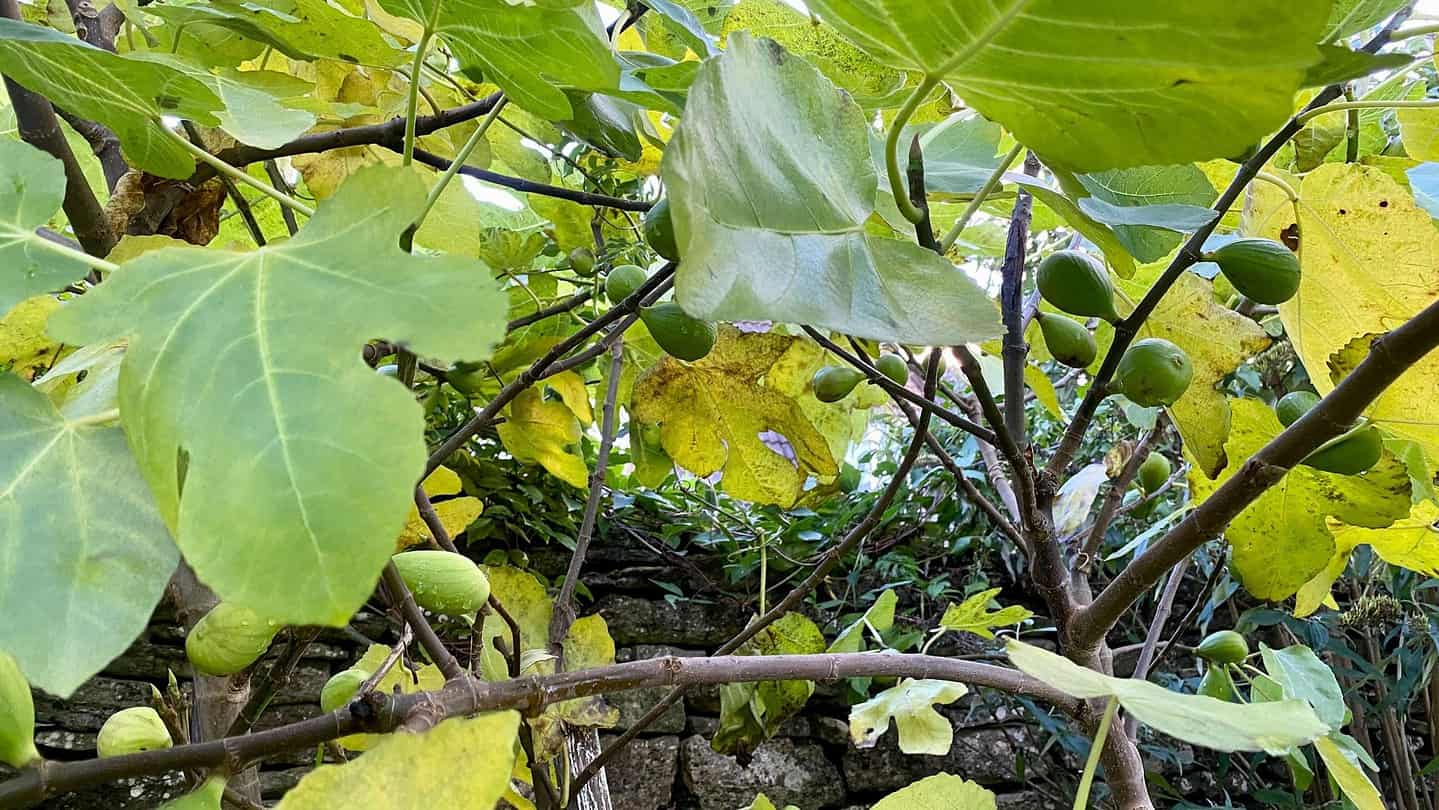
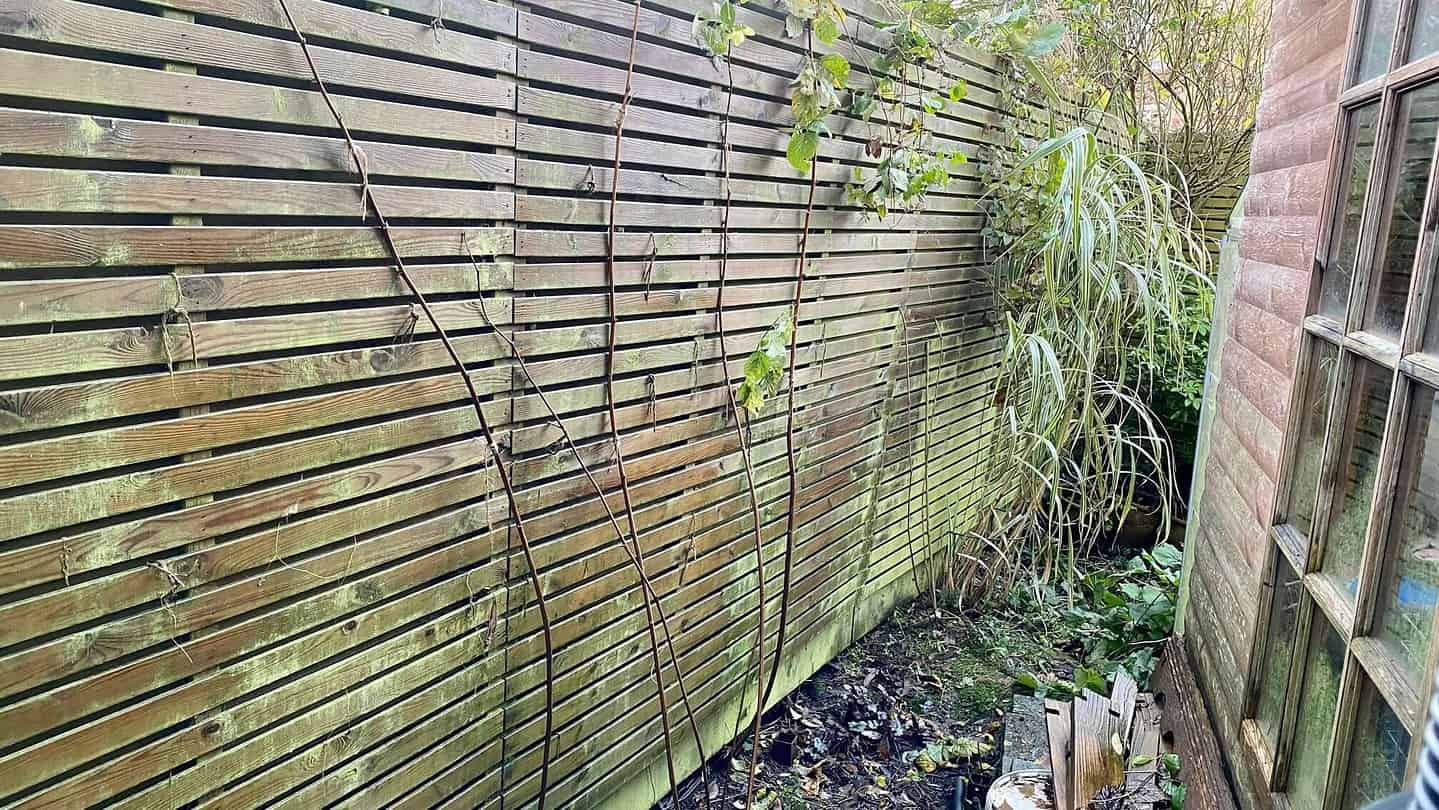
Over in our orchard our Figs aren’t going to ripen, but I haven’t had time to pull off all the large fruits and leave the tiny pea-sized ones to develop for harvesting next Autumn. However, I have hacked away all the Brambles and tied in next year’s Raspberry canes. Tip: now’s a great time to plant bare-root fruit trees, bushes, and canes while the soil is moist and warm, before the ground freezes.
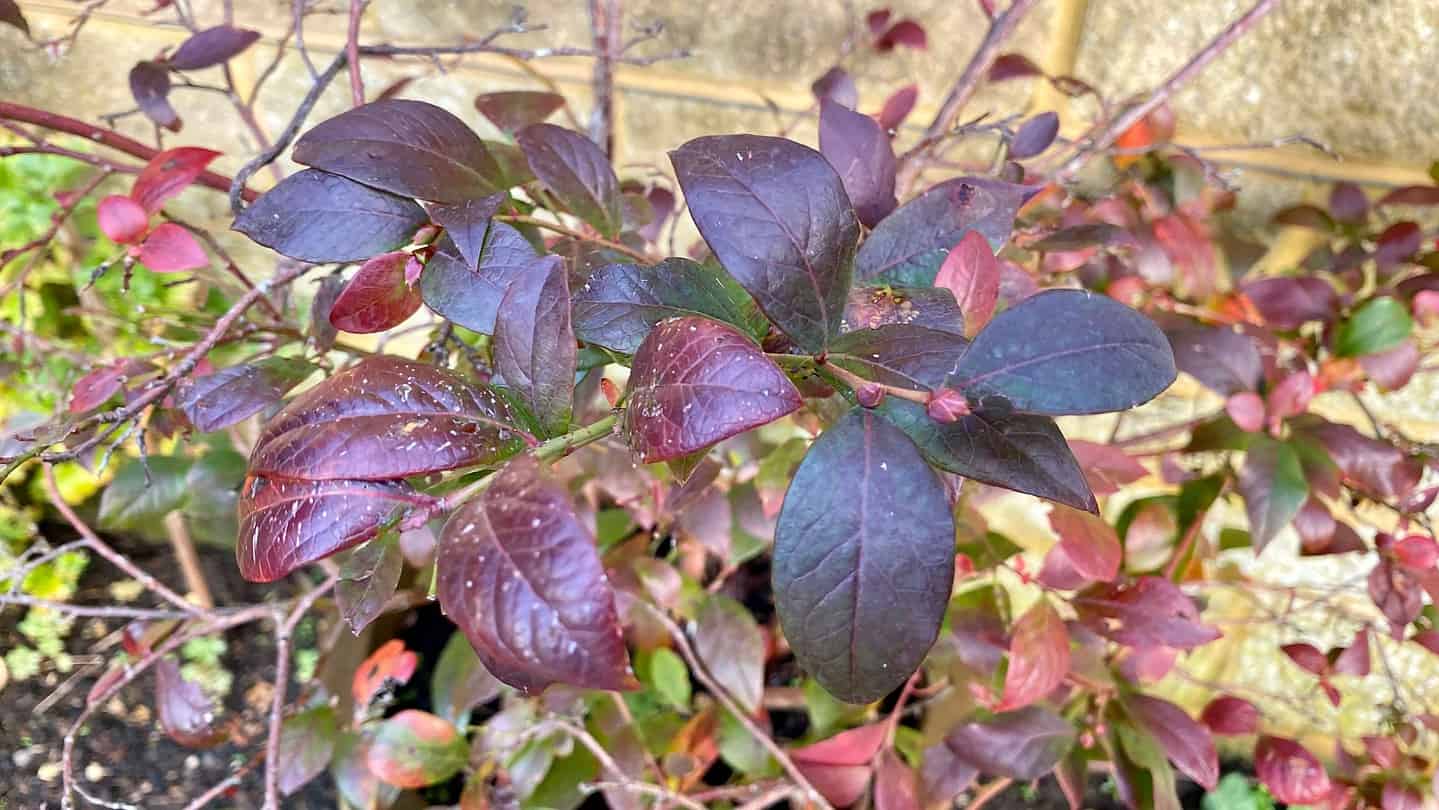
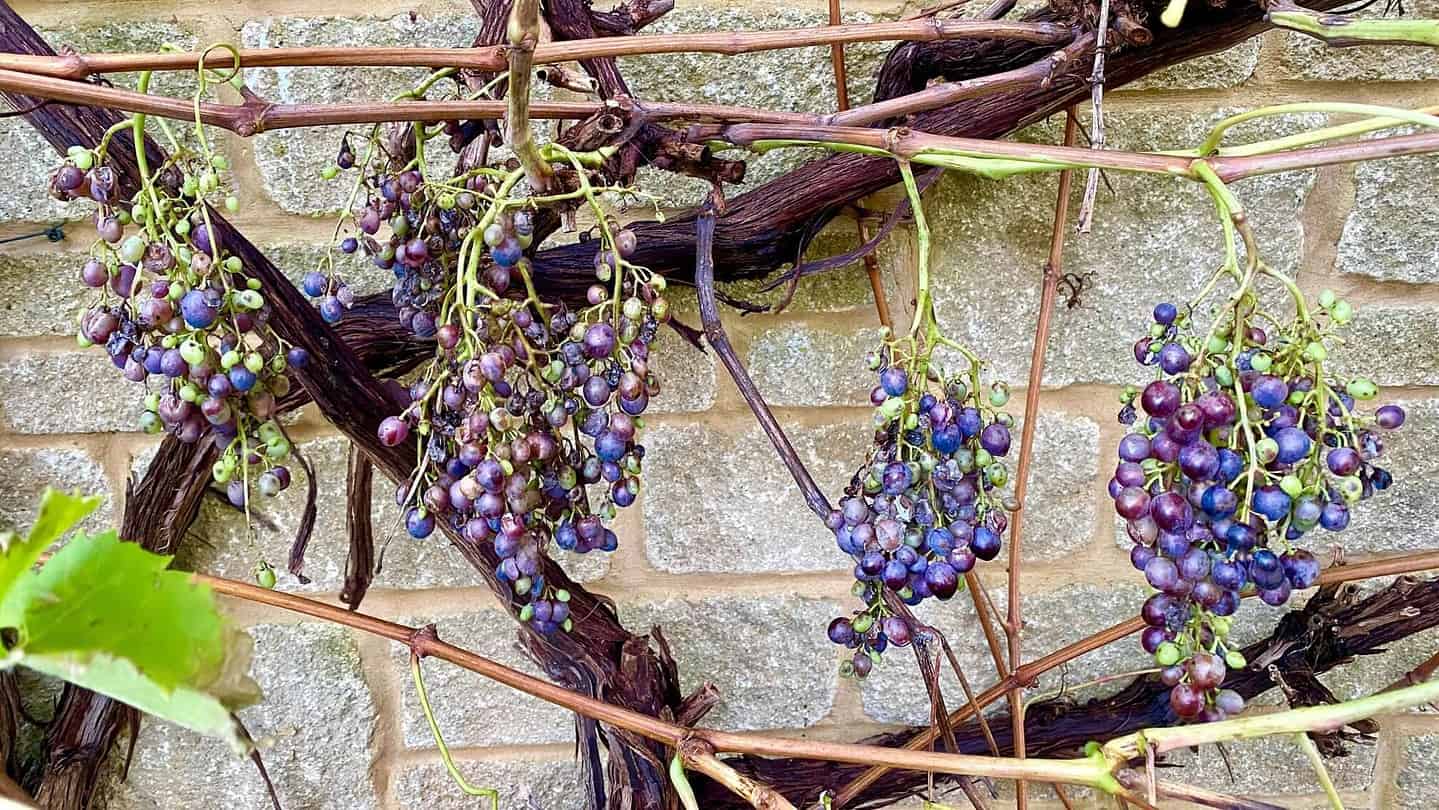
All our Blueberries are over now, we’re just left with the most glorious vermilion foliage. And now the storms have stripped most of the leaves away, we’re leaving all the gazillions of Grapes on our grapevine for the birds. They may be sweetly edible but we don’t enjoy spitting out all the little seeds.
Gardening Jobs To Do in November
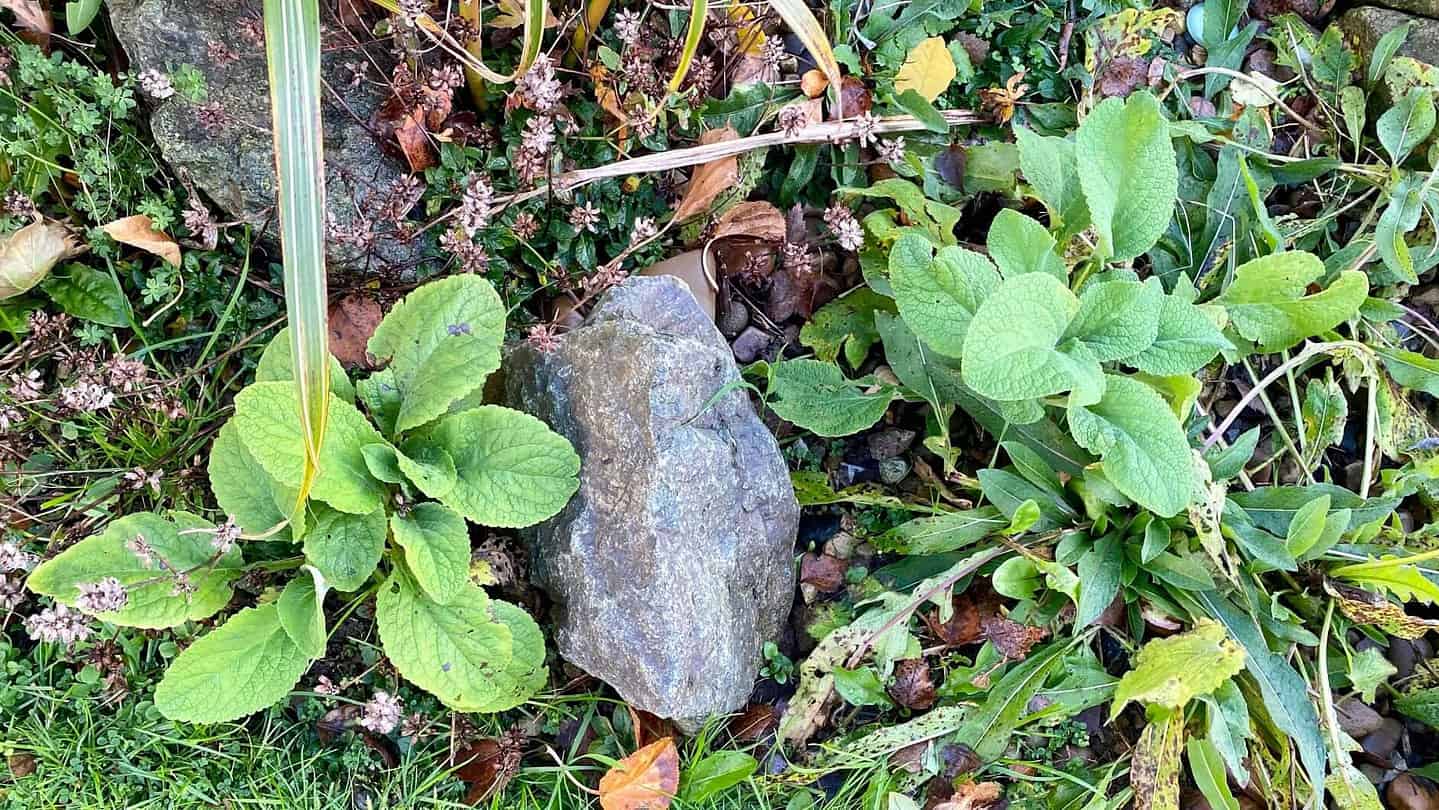
Gardening in November sees us mainly clearing away fallen leaves and other dead plant material to allow light to get to the grass and newly emerging plants – like these baby Foxgloves which will bloom next year.
We split the leaf piles between our compost bins and biodegradable leaf sacks* to rot down into leaf mould, a fabulous and free soil conditioner for your garden plants. Although we’ll still leave a few piles in corners of the orchard, for the hedgehogs and other creatures to have somewhere to hibernate safely. And if you’re making bonfire piles, PLEASE check for hibernating animals before you light any fires. After all the storms and winds, we have a LOT of leaves to clear away!
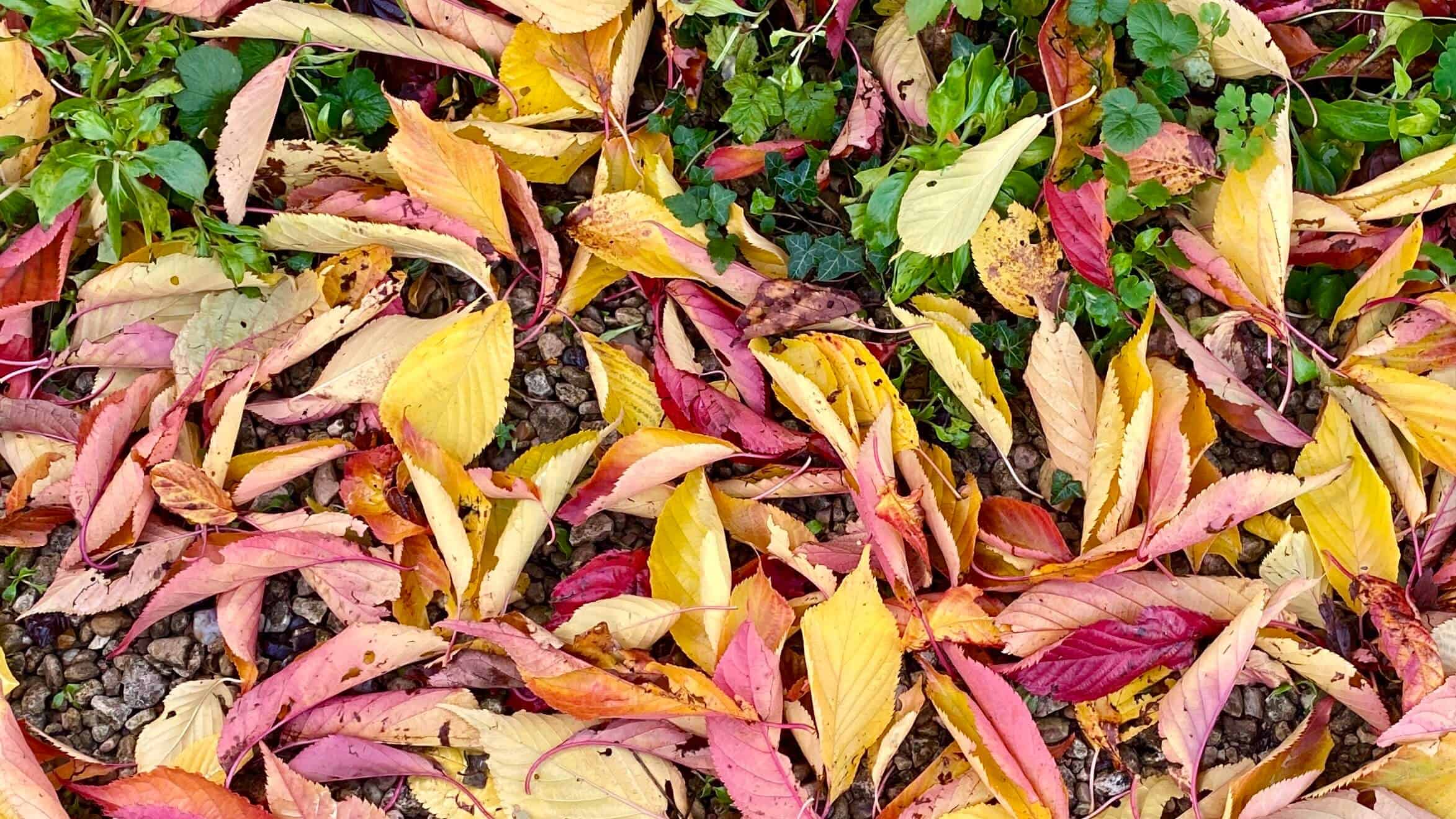
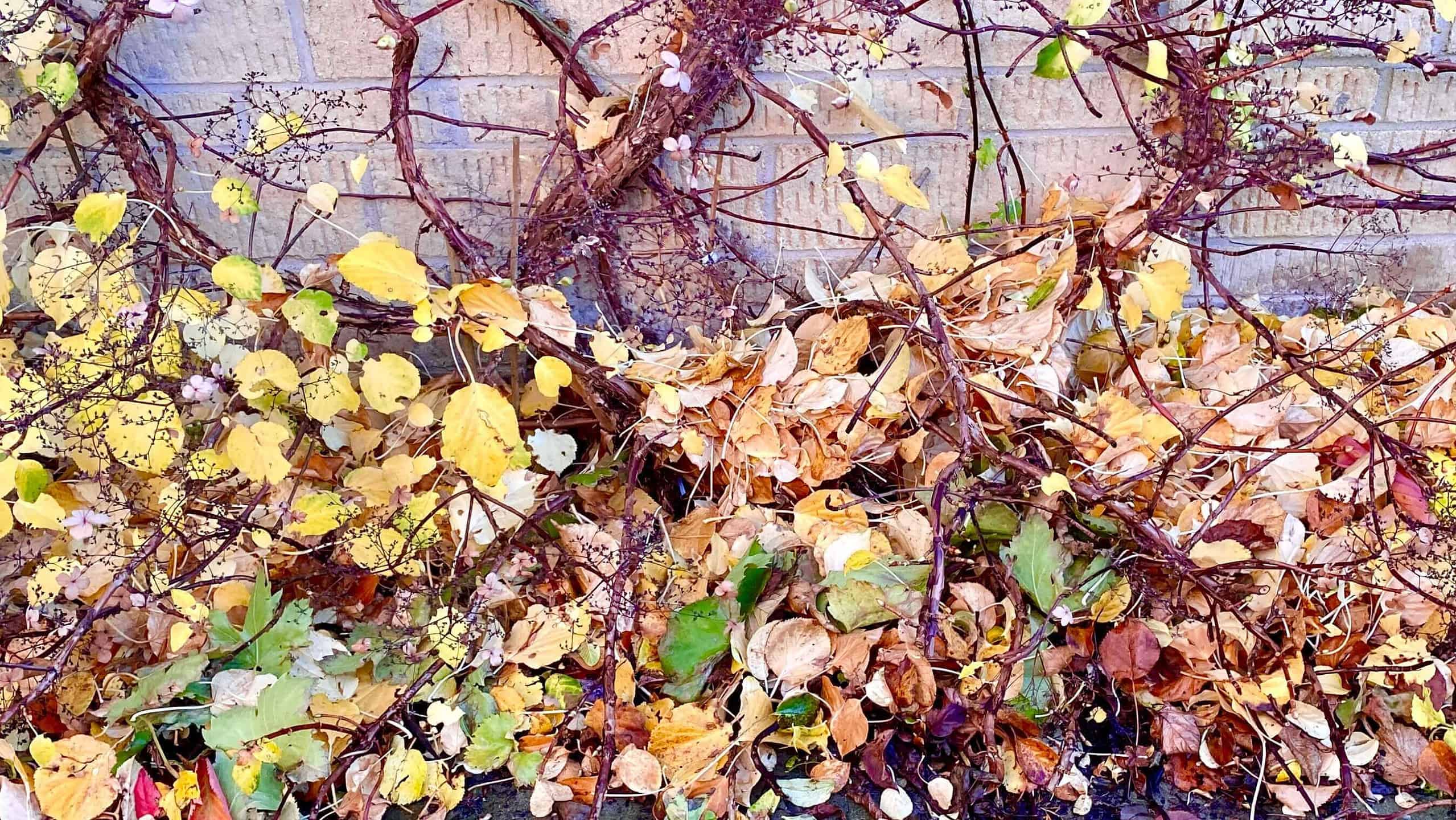
And I still haven’t planted out my Spring flowering bulbs yet either. I have a few hundred Crocuses, Tete-a-Tetes, Muscari, and Iris Reticulata waiting reproachfully in their boxes, and I’m feeling very grateful for my long handled bulb planter*. The best bulbs to plant in November are Tulips, ideally after the first frost to avoid them rotting. But I’m so far behind I won’t be planting any this year. Tip: if you’re planting in pots, don’t let them get waterlogged over Winter, either keep them raised up on a ledge or pop them onto bricks so they don’t sit in puddles.
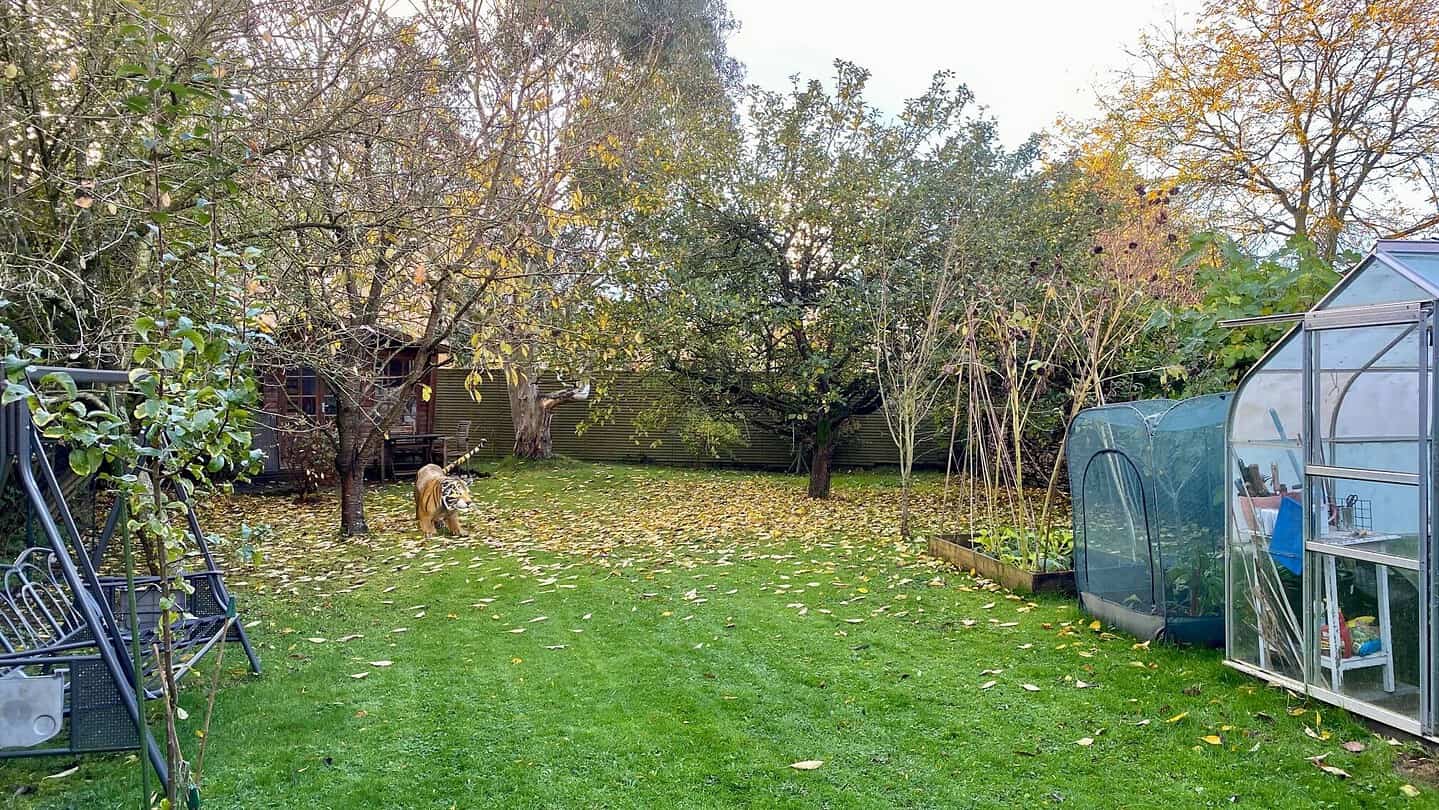
November garden maintenance still includes cutting the grass, albeit on a higher blade setting. And our baby frogs are STILL hopping around, so we’re leaving the section behind the greenhouse and vegetable beds alone rather than murder them.
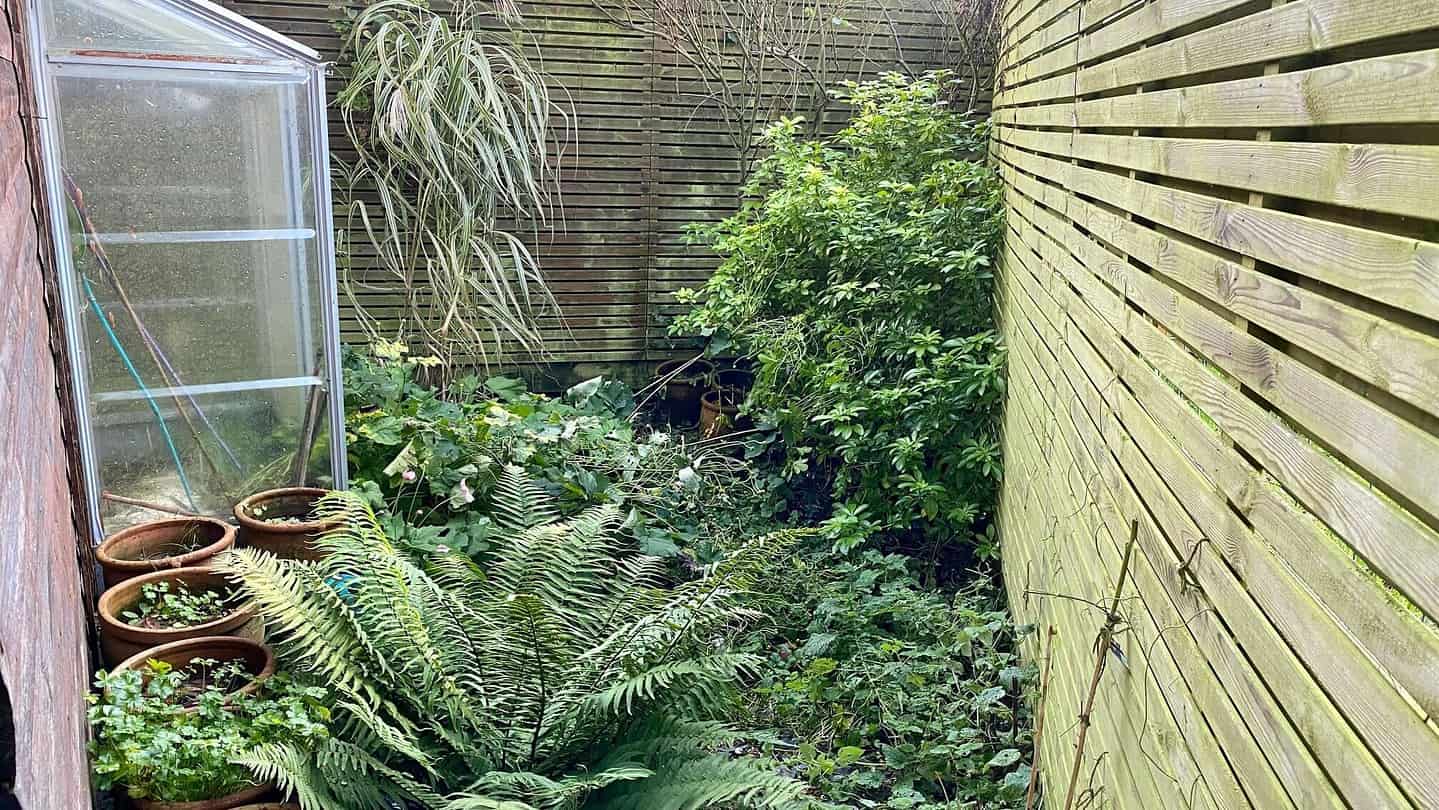
Now’s also the perfect time of year to lift, divide, and move herbaceous perennials like the huge Fern at the front of this photo as the soil is still warm and they can get their roots down ahead of Winter. Tip: many perennial plants need dividing every few years, partly because they get too overcrowded in their pots or borders, and partly to reinvigorate their roots. Once planted, you can mulch around them with some garden compost or a thick layer of my favourite Strulch*. Straw + mulch = Strulch.
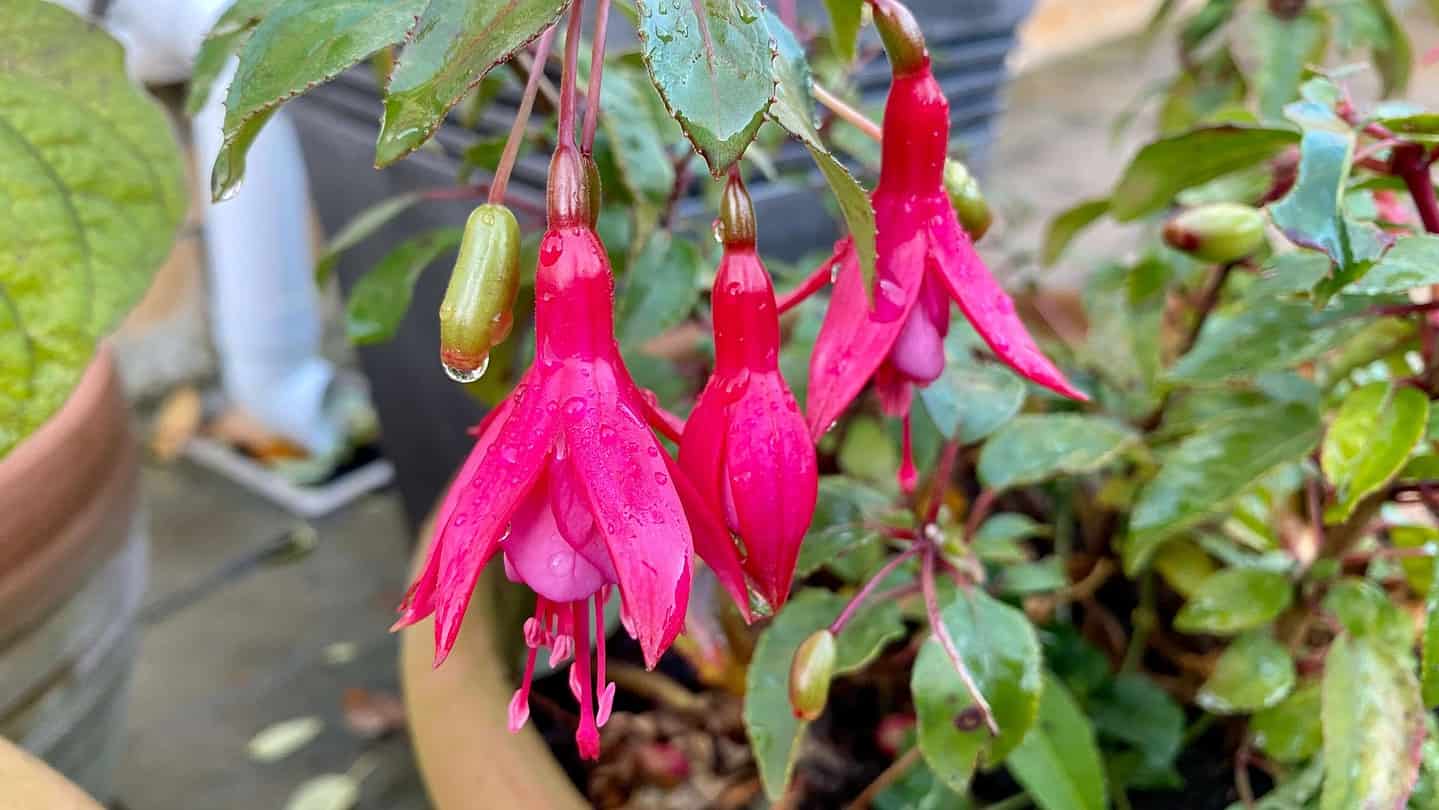
It’s also nearly time to move any tender plants inside the house (Pelargoniums and Physalis) or into the greenhouse (potted Fuchsias) to overwinter in peace. And to carry out some lawn edging to neaten up all our herbaceous borders and garden beds.
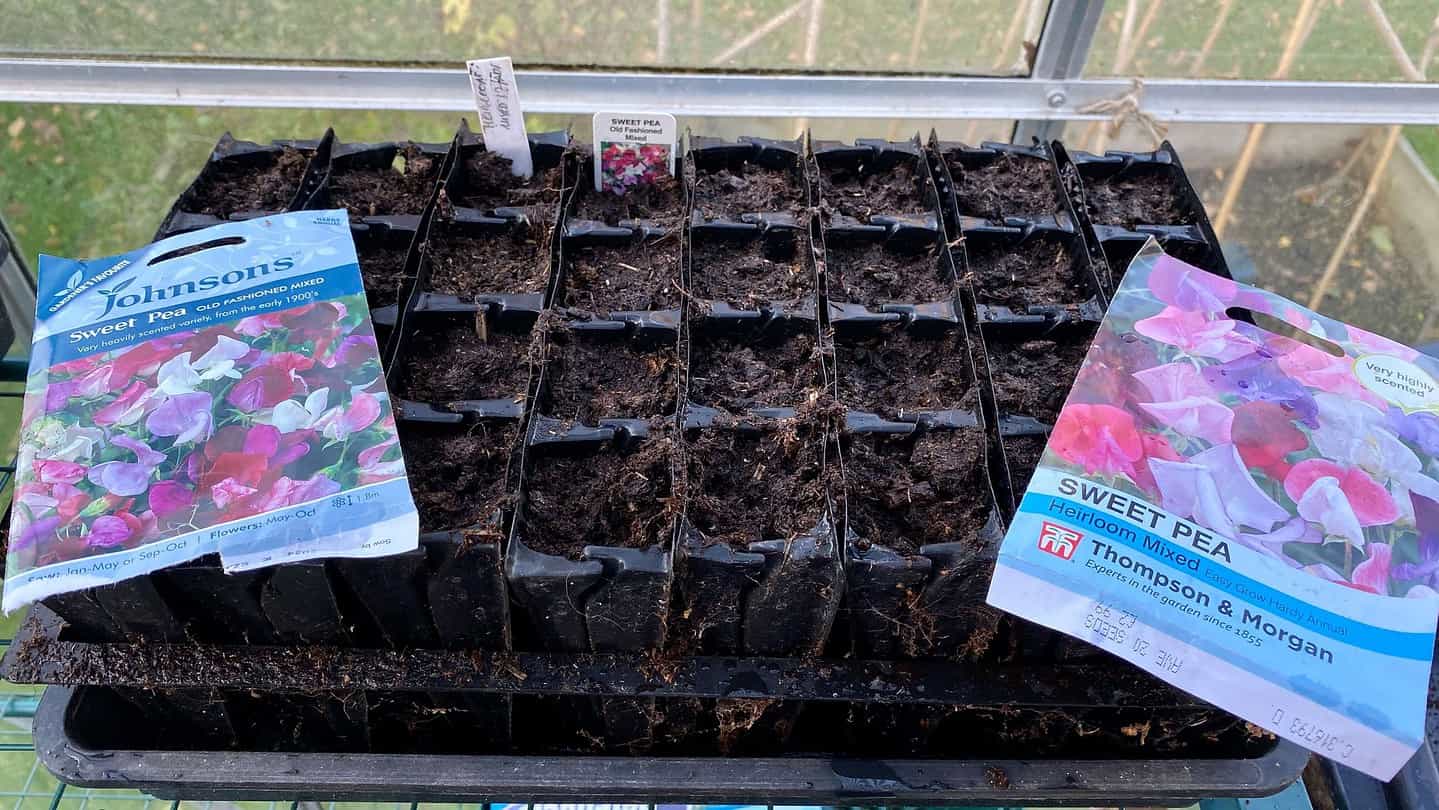
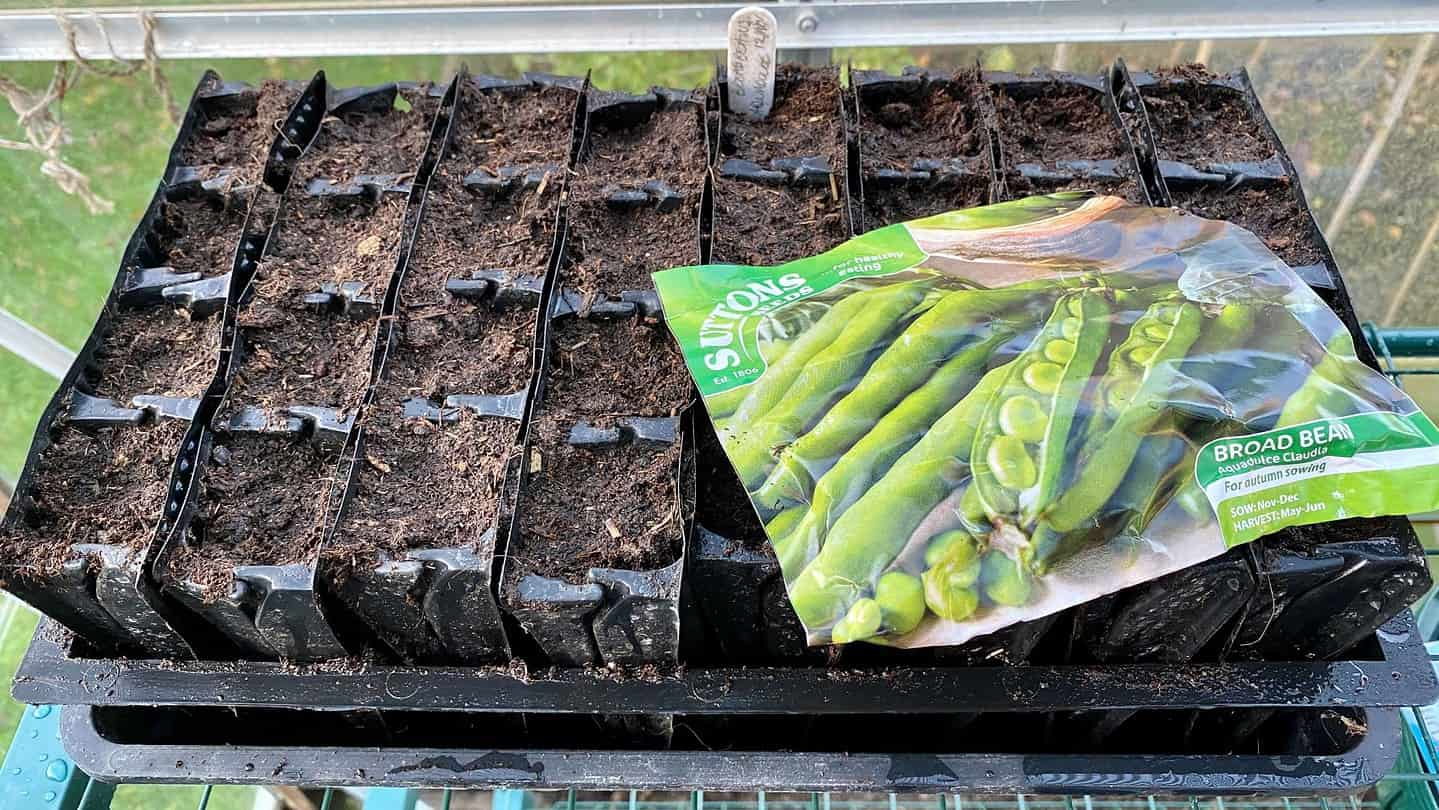
I’ve sown some seeds to overwinter in the greenhouse. Sweet Peas*, two seeds per cell in compost in some Rootrainers*, so they can get their roots down now, then grow away faster in Spring, producing earlier blooms. And some Broad Beans* one seed per Rootrainer cell, for early crops next Spring. Depending on how big they get, I may plant them out early next year and cover the tender new plants with cloches*, polytunnels*, or horticultural fleece* to protect them from frosts.
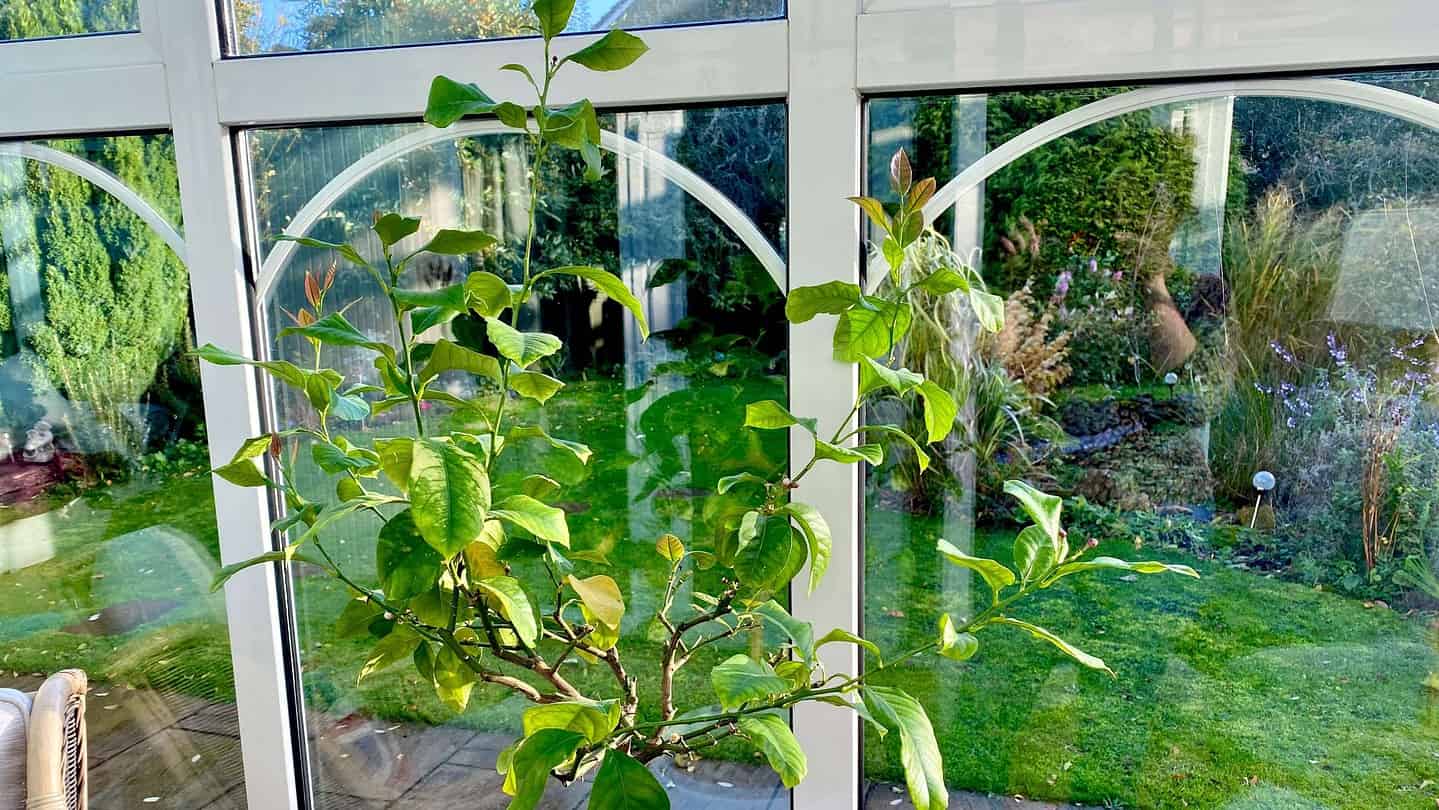
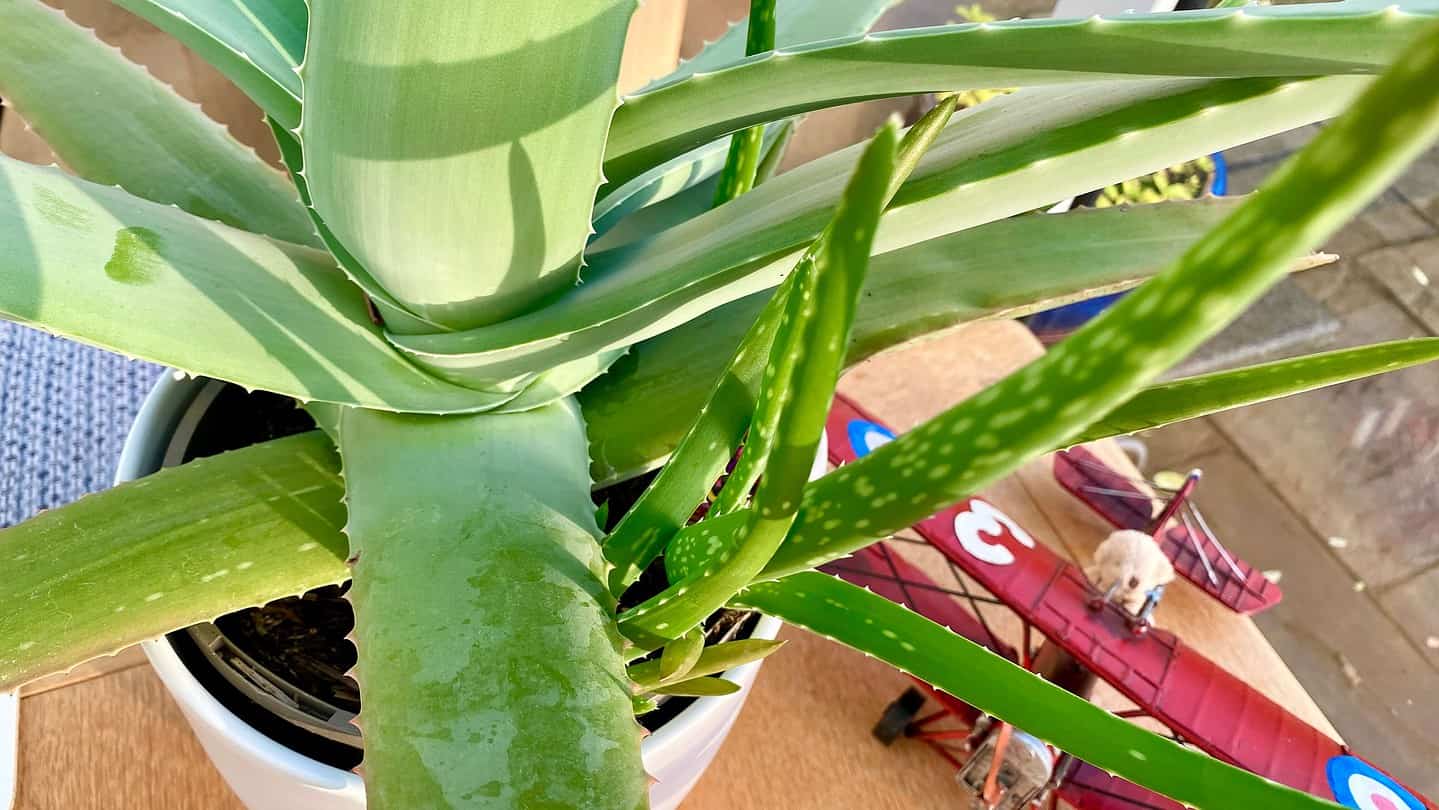
The growing season is slowing down so you should reduce watering for your indoor plants. That said, our weird little Lemon tree is growing new shoots and buds again, and our Aloe Vera has some pups that need transplanting to new homes. Plants for free, my favourite kind of November planting!
Lastly, remember, Black Friday is coming up and it’s a great opportunity to buy the perfect gifts for your gardener friends. 👋
November Gardening for Wildlife
Alan is keeping our garden bird feeders topped up with quality wild bird food* and high energy fat balls* on a daily basis, to build up the birds’ strength. And here are some other ways you can look after your garden birds during the Winter months.
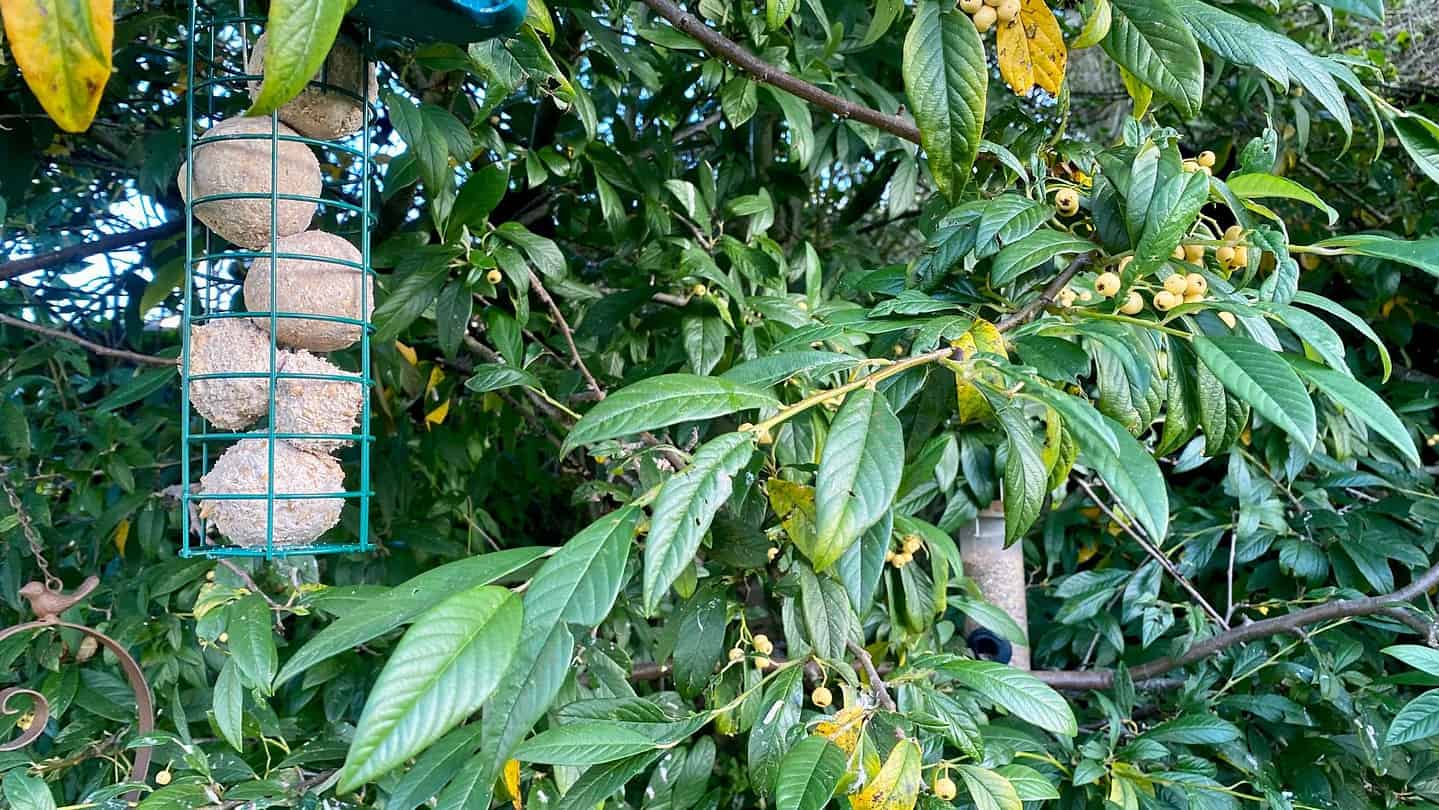
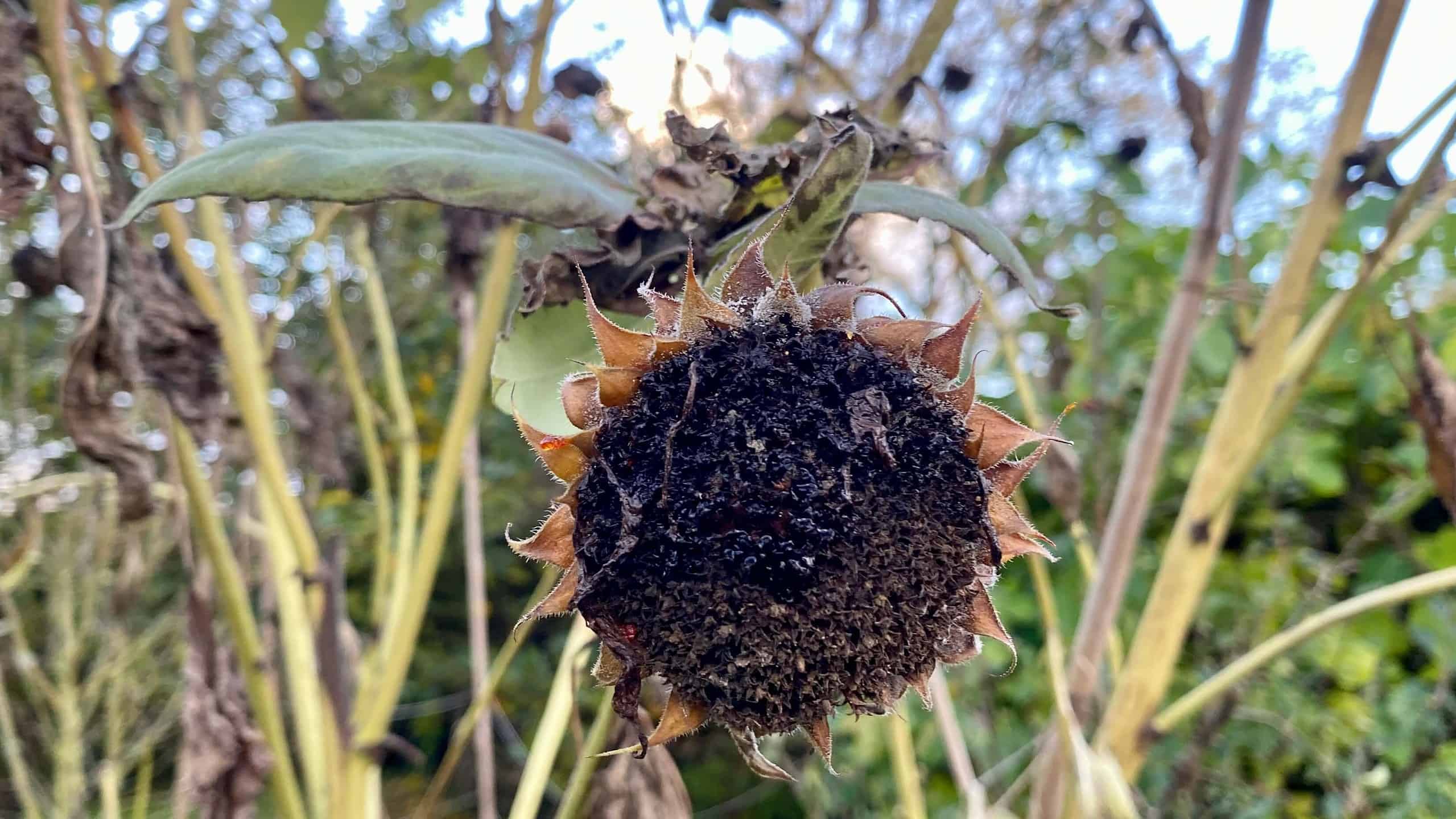
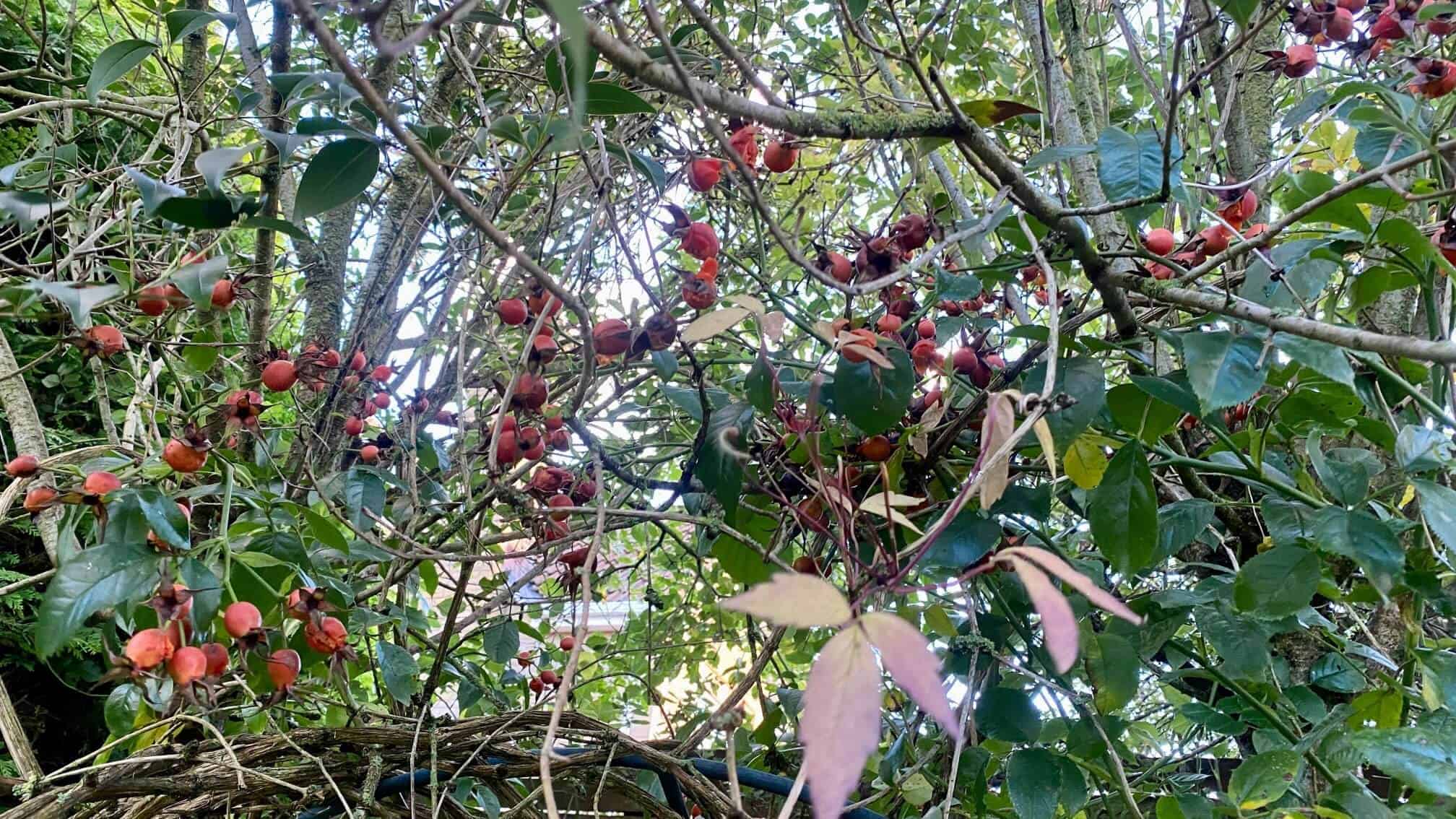
Although there are still plenty of grapes, rosehips, seeds, and berries in our garden for our birds to feast on too.
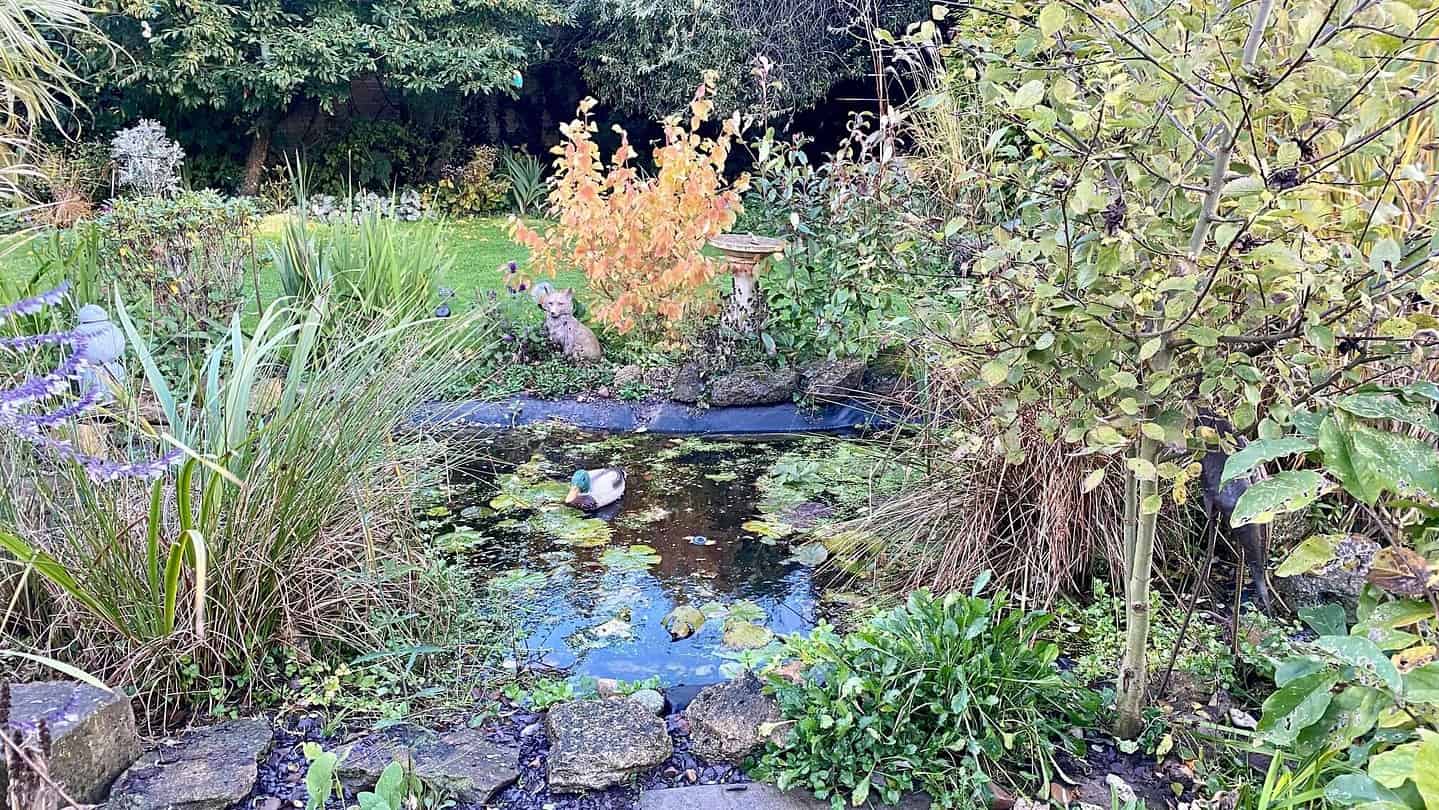
Thanks to all the rain, the water levels in all our ponds are high enough for wildlife to drink, with stones and vegetation for them to crawl up if they fall in. If you’re looking for ways to encourage and support wildlife, here are some easy tips to make your garden more wildlife friendly. In previous years we’ve placed footballs in the water to prevent a solid edge-to-edge ice sheet forming and suffocating all the fish, frogs, newts and other water denizens. But this year we have a plastic duck instead!
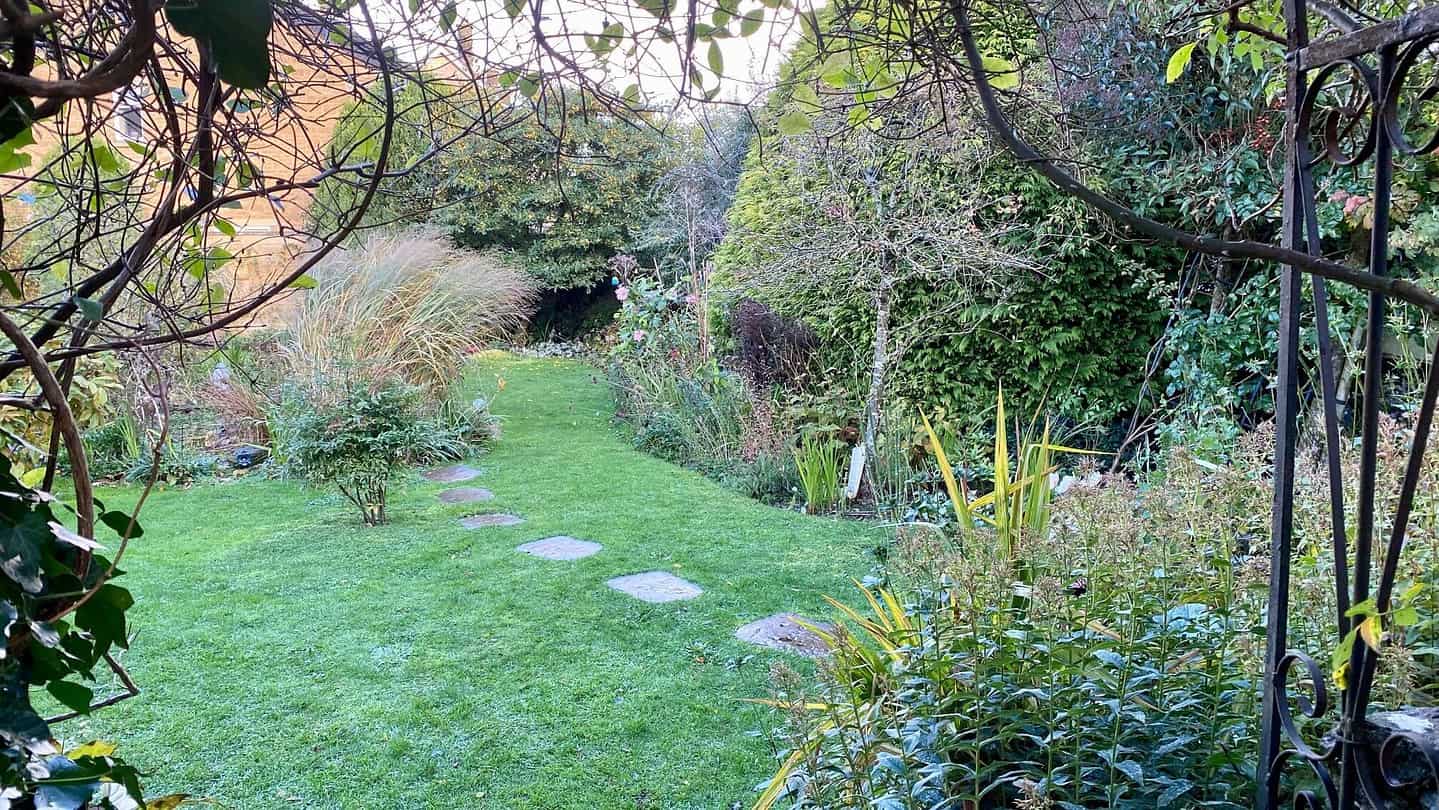
Our Garden in November
I can’t believe that’s the end of my 11th garden post of 2023 – only 5 weeks until Christmas now! As always, I hope you enjoyed the garden round up, and found it a useful reminder of jobs to do in your garden in November. Next month, in my December garden update, we’ll be finishing off getting our orchard and garden ready for Winter before the really freezing temperatures arrive.
Did you pick up any useful tips or pointers in this post? What did you like best about your virtual visit to our orchard and garden in November? Have you been enjoying getting outside this month too?
* This post features affiliate links but all opinions are my own (see my Disclaimer).

Good luck with your Penhill Watermelon dahlia. The temperatures dipped here, so all of my dahlias have been dug up and are now in the garage with my fingers crossed for flowering next year.
Lovely cat picture!
Thank you, Nikki! I’ve never dug up any of my dahlias, I’m too lazy, so fingers crossed for this year too. 😁
Love your cat in that photo! Also makes me miss having a trampoline when I was a kid – they were so much fun! Such beautiful flowers in your garden this month. I also didn’t know you could grow garlic, onion and shallots in the colder weather. Those are 3 of my fave ingredients for cooking, so I’d love to give that a go!
Oh definitely, if you love cooking with things then you should grow them too – especially now you have your own garden! x
I love looking at the dahlias that are planted in my local botanical garden, they stay hardy too like your lovely pink Penhill Watermelon one! It seems like things are going well overall in your garden at this time of year—wonderful!
Thank you Molly, not sure how much longer it will last but fingers crossed, and that we don’t get a hard Winter!
Woah!!! It’s good that flowers are still blooming in your garden in November. And they all look so lovely. Thank you for sharing.
We are very lucky, it’s all down to not having had a frost – yet!
That’s awesome how you have many plants in your garden and working on them monthly to ensure the best garden you have. Great work!!!
Thank you very much!
That’s a beautiful photo of your cat on the trampoline! I love how vibrant your garden looks even amid the cooler weather! x
Lucy | http://www.lucymary.co.uk
Ah thank you, she’s a sweetie. And yes, we’re very lucky this year! x
This is such a great article. As someone who is still learning about plants and gardening, this kind of post is super helpful to know what’s best to plant when! Love these suggestions!
Thank you, Andrea, I’m so pleased you found it helpful 🙂
I thoroughly enjoyed the virtual trip through your garden. I loved how you suggested gardeners get a cat to supervise them! Great humour!
Thank you so much – I’m sure our cats (all 4 of them) would appreciate your comment too!
Oh my, there’s still so much to do. Clearing up, planting for spring flowering, composting, dividing and transplanting. How do you keep up? But your garden is indeed beautiful. Currently looks more summer than autumnal
Yes, there is, but I do have some help now, a couple of hours once a fortnight, luckily 🙂 Thank you, Bev!