
Following on from our Book Group’s choice for last month, “Rebecca” this month’s choice was “Brighton Rock*” by Graham Greene, first published in 1938.
Brighton Rock
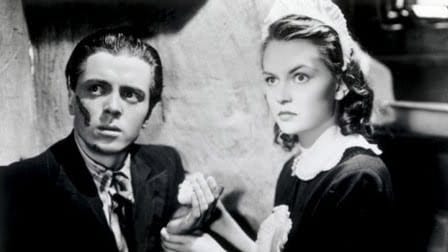
This is only the second Graham Greene I’ve read, I struggled with “Heart of the Matter” some years ago. So, I wasn’t really looking forward to “Brighton Rock” even after watching the 1947 film adaptation with Richard Attenborough as Pinkie, Carol Marsh as Rose, and Hermione Baddeley as Ida.
The book’s opening line – “Hale knew, before he had been in Brighton three hours, that they meant to murder him” – marks the tone immediately. Set in 1930’s Brighton among the razor gang wars and racetracks, the book is a thriller with an amoral, sociopathic anti-hero in Pinkie, aka the Boy, a seventeen year old gang leader.
Pinkie murders a journalist, Hale, and spends the rest of the book trying to cover his tracks and avoid arrest. He murders a fellow gang member, Spicer, in case Spicer informs on him. He marries Rose, a teenage waitress, to prevent her being able to testify against him. Rose knows what he is but falls in love with him anyway and Pinkie reluctantly comes to feel some tenderness for her, although he fights this.
But his nemesis is Ida Arnold, the cheerful, middle-aged lady who met Hale just before his murder. Ida decides to find out the truth of Hale’s death and, when she suspects Pinkie, becomes equally determined to save Rose from him.
Catholicism vs. superstition
Greene converted to Catholicism shortly before writing “Brighton Rock” and for him the real point of the novel was the contrast between the ethical mind (Ida and right/wrong) and the religious (Pinkie and Rose and good/evil).
The book compares Pinkie and Rose’s Roman Catholic attitudes towards sin and morality with Ida’s non-religious ideas and superstitious beliefs. Although I didn’t sense Greene coming down on either side with any especial favour. Pinkie firmly believes in hell and damnation so it’s poetic justice that he’s splashed by his own vitriol in the end. He quite literally suffers the fires of hell before dying, just as he always believed he would.
Films vs. book
At the end of the book Rose goes home and we’re left to imagine her reaction to hearing Pinkie’s message of hate on the record she begged him to make for her. In contrast, the 1947 film* tweaks the ending by having the record scratch and stick on the “I love you” phrase. Greene was happy with this revision though, as he astutely noted that those who wanted a happier ending would be content. Whereas others would realise that Rose could eventually move the needle and hear the full message anyway.
I haven’t seen the 2010 film* so I’m not sure if shifting forward 30 years to the 1960’s with the Mods and Rockers gangs would work or not. But I have to say that much as I love Helen Mirren, she’s not my idea of blowsy, pub-crawling Ida.
Would I recommend it?
I didn’t find this book an easy read and I really struggled to finish it. The descriptions of Brighton and the sense of menace and horror are excellent, as are the characterisations of the main characters. However, I didn’t connect with any of them: I wanted to feel sympathy for Pinkie because of his childhood, I wanted to be fearful for Rose, and I wanted to admire Ida, but I couldn’t.
It’s not my kind of book and I can’t honestly say I enjoyed it or would recommend it. But … that’s the joy of belonging to a Book Group. We often end up reading books we wouldn’t normally choose and they nearly always generate a good debate. It’s not all about the food and wine (honestly!) and we genuinely do enjoy sharing our impressions.
Have you read “Brighton Rock”? What did you think? Have you read any other Graham Greene books? If so, which ones would you recommend?
* This post features some affiliate links (please see my disclaimer).

Thanks for the summary Lisa! I wont now peruse finishing as their are other fish to fry! That was enough to fill me in!!
Haha, you’re welcome, glad you enjoyed the summary!