
I’m lucky to belong to a lovely Book Group of nine ladies – a mix of working mums and grandmothers – who meet once a month at each other’s houses. This year we’ve chosen our books by what was published in the year(s) in which we were born. And this month’s book choice was “Rebecca*” by Daphne du Maurier, first published in 1938.
Rebecca
To my surprise, I realised I’d never read “Rebecca“. I thought I had but in fact I’d only seen the original Hitchcock film* with Laurence Oliver and Joan Fontaine. As I began reading, I could hear Joan Fontaine’s voice in my head, narrating what must be one of the most famous opening lines ever: “Last night I dreamt I went to Manderley again …”
The book was billed as a gothic romance, with the young narrator marrying the much older Maxim de Winter and going to live at his mansion, Manderley. There she is haunted by the constant reminders of his drowned first wife, Rebecca, whom she believes was a perfect, beautiful, poised hostess and spouse.
This impression is furthered by Mrs Danvers, the malevolent housekeeper, who is clearly obsessed with Rebecca. As the new lady of the house, the narrator struggles to adjust to her new life and to find her own identity away from Rebecca’s legacy.
Nameless narrator
A striking feature of the book is that the young narrator remains nameless throughout, we never learn her first name. She begins the story as a paid companion to rich lady and then marries Maxim, becoming the (second) Mrs de Winter. In this way, she assumes a secondary, supporting role to Rebecca, even though the latter is dead.
The book reminded me of “Jane Eyre”* – there are some obvious parallels with Mr Rochester and his mad first wife. But in “Rebecca“, the narrator isn’t the main character; the ghost of Rebecca is dominant, even in the book title itself.
As the story progresses, the feeling of impending doom grows ever greater until the shocking fallout of the Manderley ball. The narrator is duped by Mrs Danvers into wearing a dress like Rebecca’s and after Maxim de Winter storms off, there comes news that Rebecca’s body has been found.
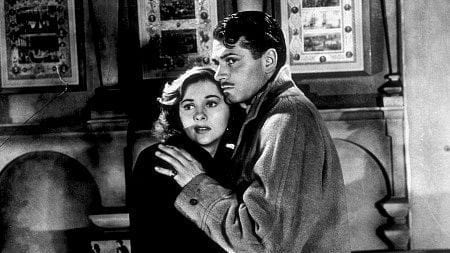
Film vs. book
Having seen the film with Rebecca goading Maxim into an argument then slipping and hitting her head, the fact that he confesses to shooting her in the book came as a shock. Hollywood couldn’t allow the “hero” to get away with murder, hence the rather contrived accidental death. Du Maurier’s skill in the book lies in making us, the readers, complicit in the cover up of Rebecca’s murder, along with the narrator.
It’s important to remember that the book was written in 1938 and while today we might get irritated with the passivity of the narrator and the attitude of Maxim, the characters are very much of their time. That said, the narrator does begin to stand up for herself at the end of the book.
And I find it hard to believe that we are not meant to admire some of Rebecca’s traits: her independence, her spirit, her refusal to obey convention. But within the confines of the society in which she lived, it was never going to work out for her.
Would I recommend Rebecca?
The book is an easy read with some lovely descriptions of Manderley and skilful character portraits. Du Maurier effortlessly ratchets up the tension and the pace as we come towards the denouement. It feels a very modern book in some ways, which is probably why it remains a popular read, although I think labelling it a gothic romance doesn’t do it justice.
Interestingly, du Maurier herself never viewed the book as a romance, rather a study in jealousy and reading it in this way makes much more sense. The themes of identity crisis and competition are as relevant today as they were in 1938. For me, that confirms “Rebecca” as an underrated classic, deserving of its place on any bookshelf.
Have you read “Rebecca”? What did you think? Have you read any other Daphne du Maurier books? If so, which ones would you recommend?
* This post features some affiliate links (please see my Disclaimer).

Leave a Reply