
AD – GIFTED | After all the challenges of homeschooling, how would you like to find something that’s not only educational, but hands on fun too? Enter the KS2 fun science experiments for kids subscription boxes from Letterbox Lab. Tailored to the KS2 National Curriculum for STEM and STEAM, these science subscription boxes have been a lifesaver during the pandemic. Learning outside the classroom and away from the laptop has never been so much entertaining. So much so, that Flora couldn’t wait to get stuck into Waste of Space*!
Letterbox Lab
For those who haven’t read our previous reviews, Letterbox Lab is a series of 12 linked science kits with full instructions and tools (you only need to add water for some of the experiments). Online resources and videos accompany every box, plus some suggestions for further fun science experiments and extension activities. The Explore box (for age 6+) and the Investigate box (for age 8+) both support the UK primary school curricula, and one off boxes start at £11.00 including P&P. And it’s a highly flexible subscription you can pause or cancel at any time.
Waste of Space
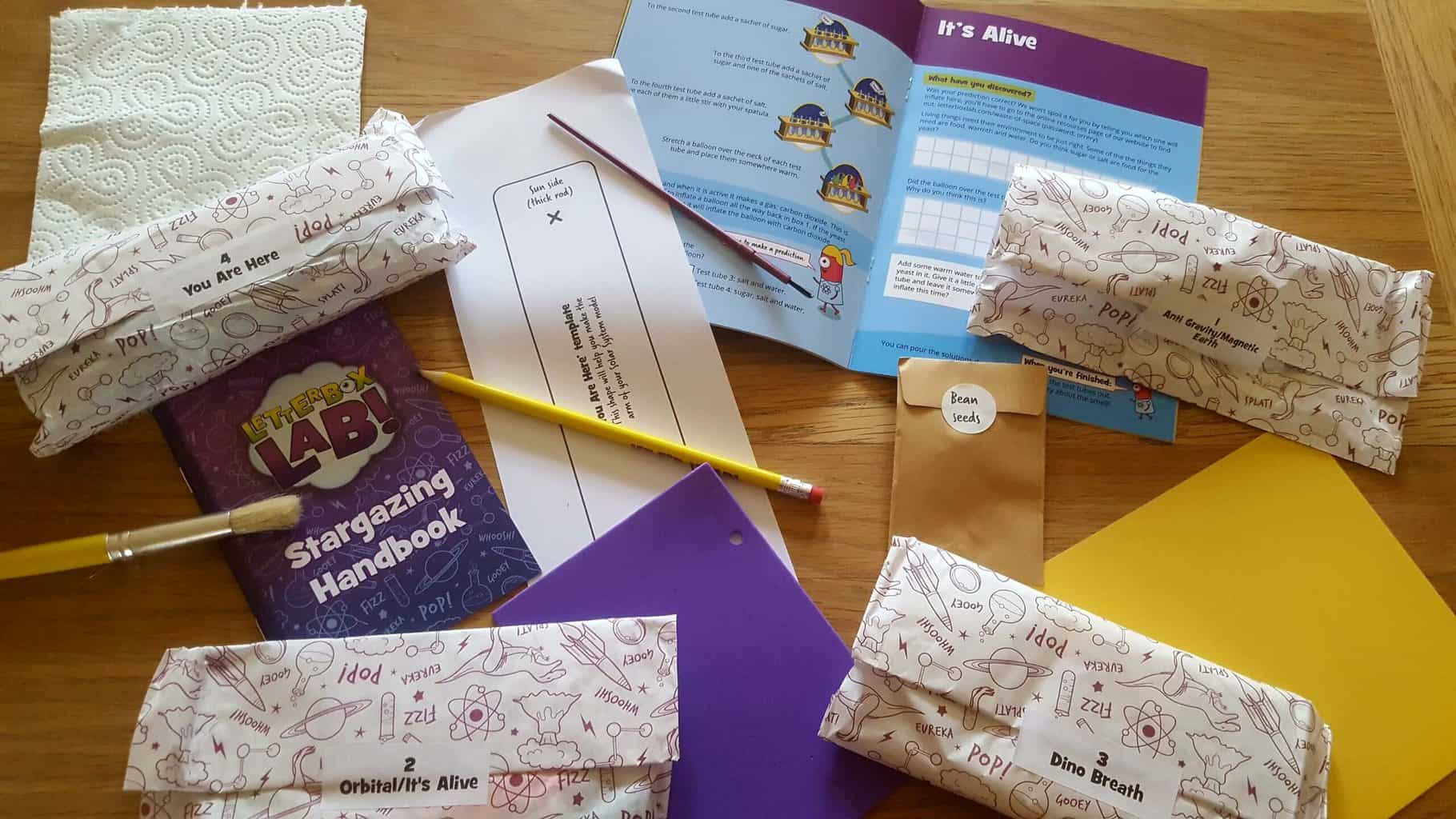
Waste of Space is the tenth in the Investigate box series, a reference to the suggestion that if there wasn’t life in the Universe, that would be a waste of space. There are eight different fun science activities, plus the usual Messiness star rating at the beginning of each one. The box looks at gravity, magnetism, orbits, the possibility of there being life beyond our planet, and building a model of the Earth, Sun and Moon. So, how did we get on?
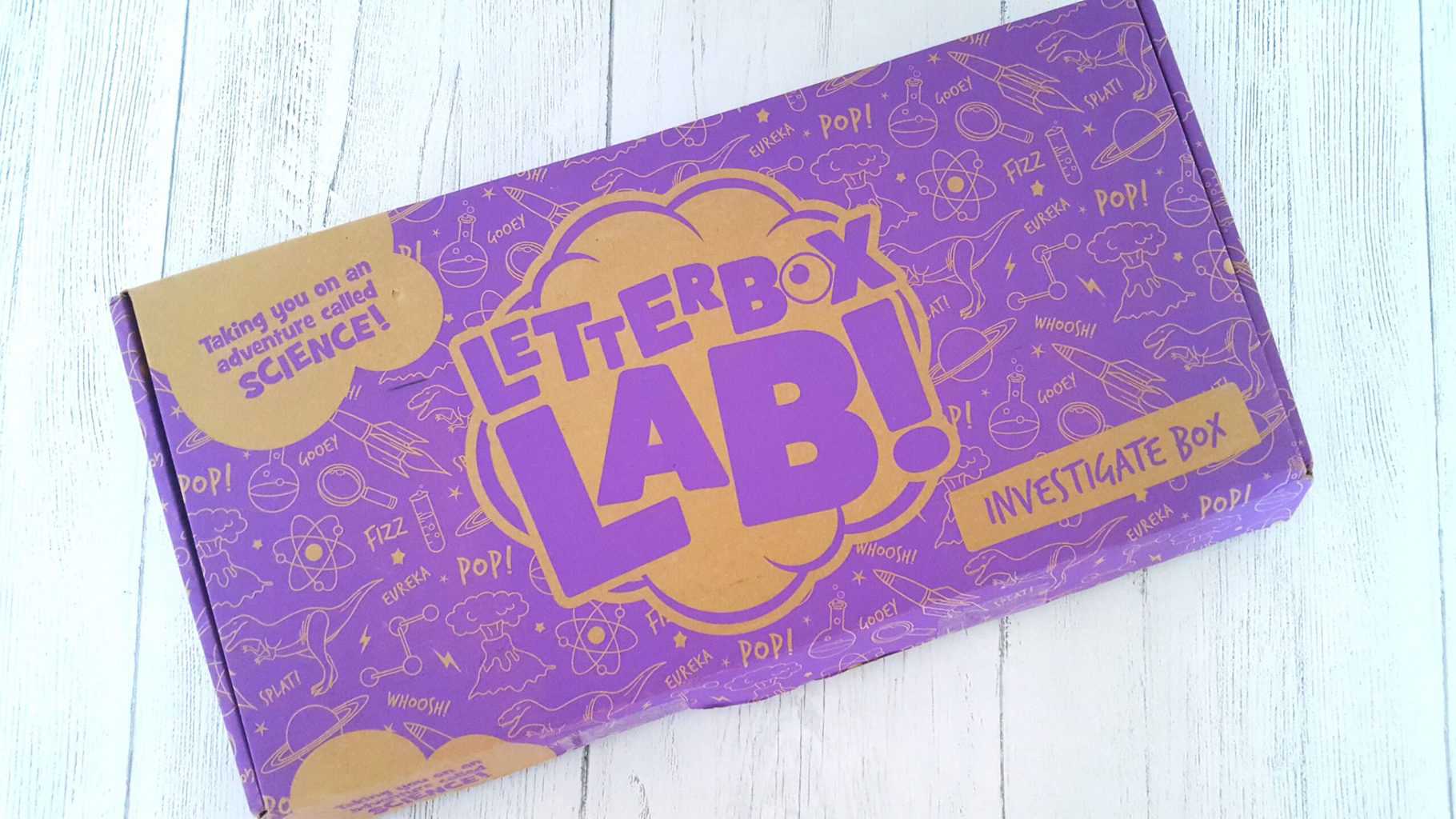
- Anti Gravity – 3 x magnets, wooden wheel, wooden rod, foam sheet, pencil, scissors.
- Magnetic Earth – sewing needle, piece of cork, magnet from Anti Gravity, bowl of water.
- Orbital – metal nut, balloon.
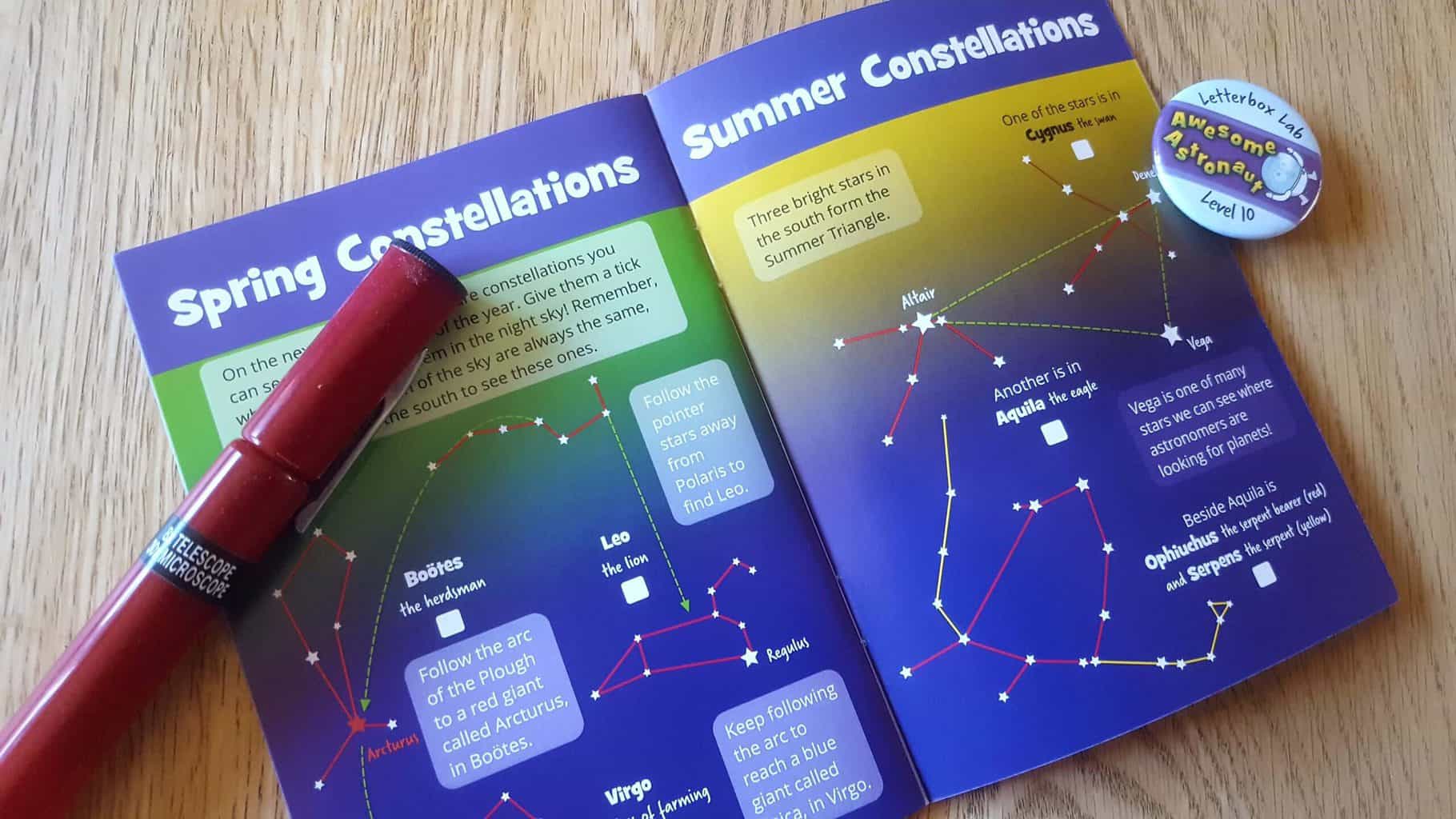
- Starry Skies – constellation booklet, pocket microscope/telescope from Box 6.
- It’s Alive – 3 x packets dried yeast, 3 x sachets sugar, 2 x sachets salt, 4 x balloons, the test tube rack and 4 x test tubes from Box 3, metal spatula from Box 6, and some warm water.
- Where No-One Has Bean Before – 3 x bean seeds, kitchen roll, a glass, some water.
- Dino Breath – 1 x calcium hydroxide, 1 x citric acid, piece of chalk, rubber tubing, lid with hole, safety gloves, the test tube rack and 3 x test tubes from Box 3, safety goggles from Box 1, and some water.
- You Are Here – 2 x polystyrene balls, 3 x grey pulleys, 2 x card wheels, elastic band, 2 x wooden rods, paper clip, 18 x glue dots, sticky label, 3 x paints, 2 x paintbrushes, template, yellow card, ruler, pencil, scissors, the subscription box.
- A 24-page instruction booklet, a safety sheet, and an Awesome Astronaut badge.
Anti-Gravity
Flora had to cut out six foam discs and stick them on the three magnets before threading them onto the wooden rod. After checking the north poles were facing each other and the south poles were facing each other as well. This was a throwback to the invisible force fields in Box 3, Magneto Slime. Normally, gravity pulls everything down towards the ground. But these magnetic force fields act as anti-gravity, making the magnets push away from each other, so they look like they’re floating.

Watch what happens when Flora lifted up the middle magnet and let it go again – spoiler: the Force is strong in these small magnets…
Magnetic Earth
One of the fun science experiments you might recall from your own school days is testing the Earth’s magnetic forces. (This is why we have a North pole and a South pole). Flora stroked the needle along the edge of a magnet in the same direction about 50 times. This forced all the tiny electrons inside it begin spinning fast in the same direction. So she effectively magnetised the needle. Then she floated it on a piece of cork in a bowl of water, to see if it would align itself along the north-west line of the Earth’s magnetic force 🙂
Fun fact: birds use the Earth’s magnetic force field to help them know which way to fly. They have some kinds of compass in their heads, although scientists aren’t exactly sure how it works.
Orbital
If you’ve ever wondered what keeps the Earth moving in a circle around the sun, this next experiment is for you. The Sun’s gravity uses centripetal forces, which keep things moving in circles, and towards the middle of the circles. To demonstrate this, we blew up a balloon and dropped the small metal nut inside before tying the balloon shut.
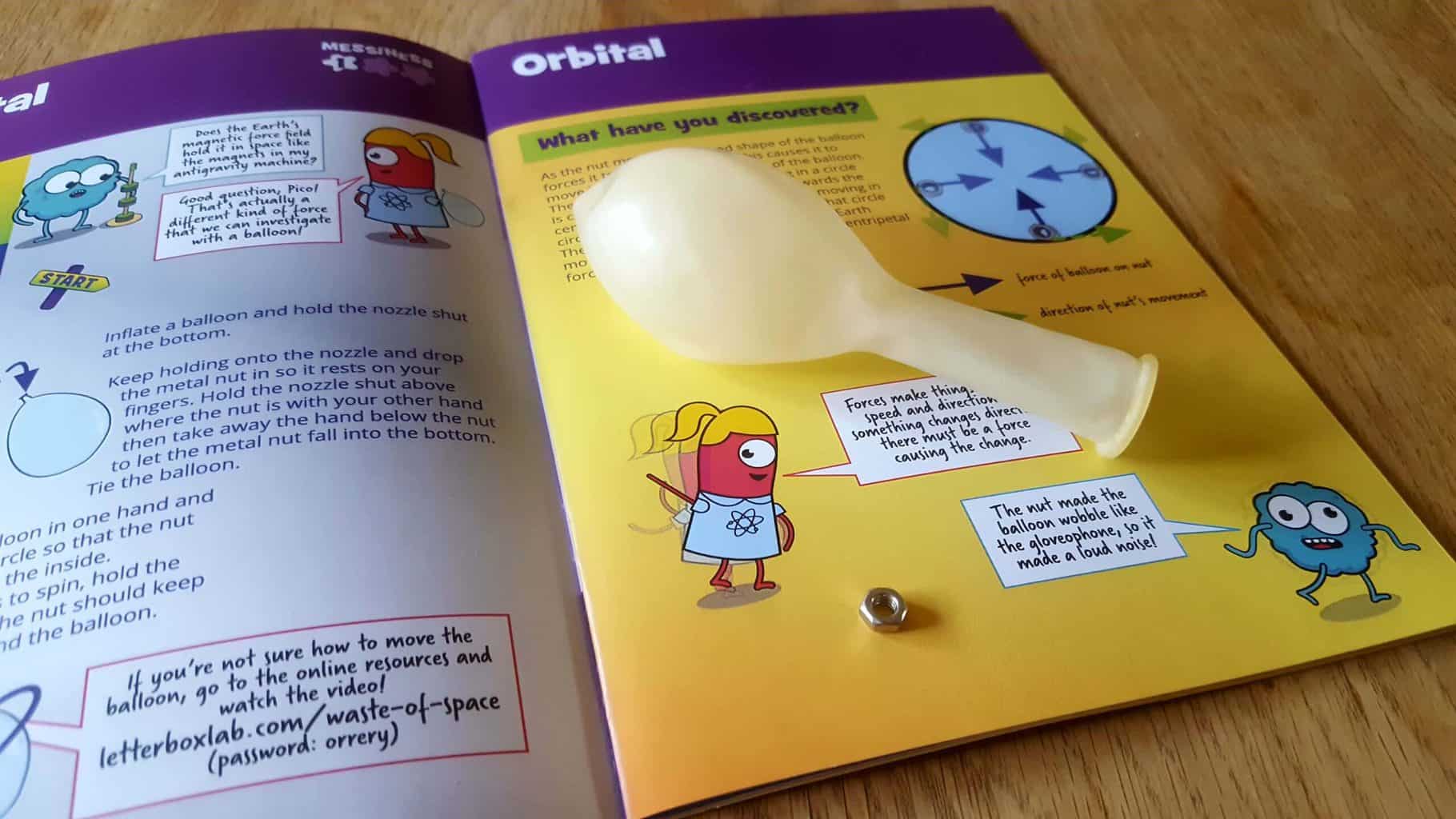
Apparently you’re supposed to swirl the balloon in a circle and then hold it still so you can see the nut still spinning inside. Flora (of course) decided to go off piste with her own way of agitating the balloon, for a more enthusiastic effect, reminiscent of the Gloveophone experiment in Box 7. Great fun, and it kept her amused for days afterwards (if not our cats…)
Starry Skies
As luck would have it, it was a clear night on the day we worked through Waste of Space, so Flora and Alan were able to go outside for some stargazing and planet hunting. It was too cold for me though, so I got to stay inside and make the hot chocolates instead 🙂
On the subject of planet hunting and stargazing, Flora has a LOT of Usborne books but one of her favourites is 100 Things To Know About Space* – check out the latest pricing on Amazon right now. Did you know that in about four billion years Andromeda and our Milky Way will meet and merge to form a super galaxy, “Milkdromeda”? Or that Rogue Planets could support life? Which leads me seamlessly onto the next of our fun science experiments…

It’s Alive
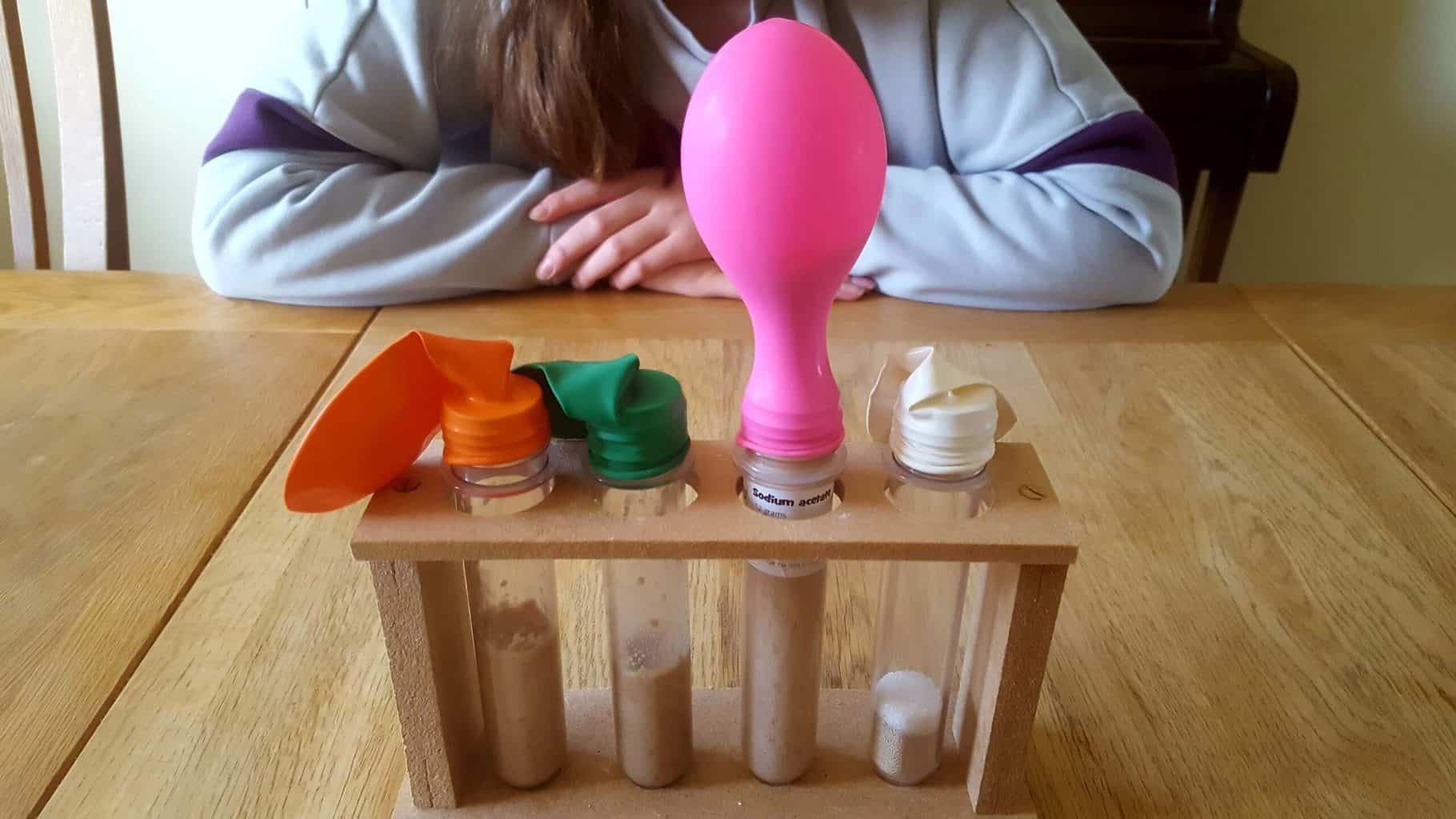
This experiment is all about looking for signs of life in something very small: yeast. Flora put six scoops of yeast into 4 empty test tubes. Looking right to left (our view), then she added sugar to tubes 1, 2 and 3, and salt to tubes 3 and 4. Next she added warm water to tubes 2, 3, and 4 before stirring each test tube a little. Finally, she stretched a balloon over the neck of each one and placed them (carefully!) in our warm airing cupboard for 20 minutes.
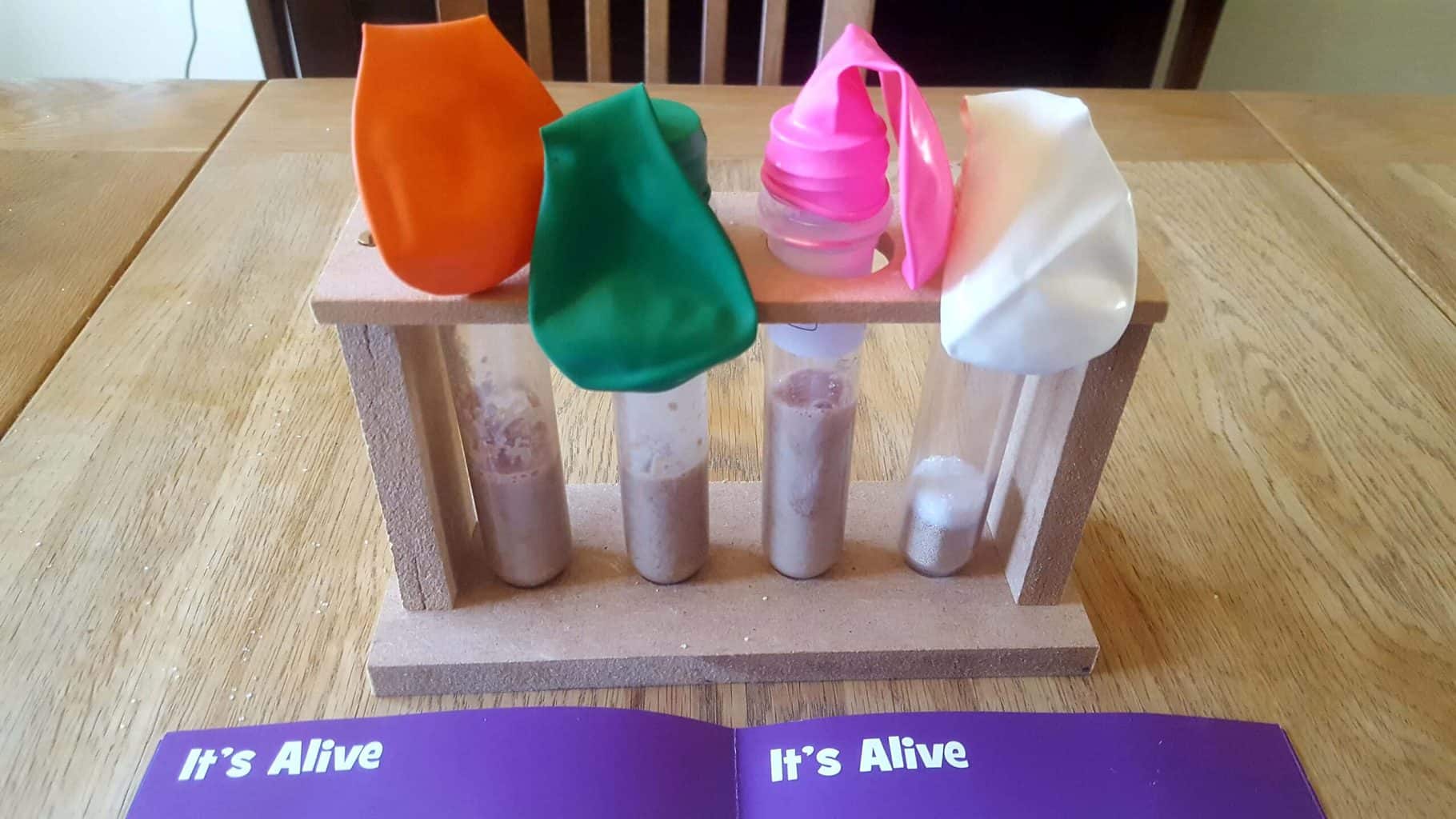
After 20 minutes, look what’s happened to the second test tube. The yeast has activated and is making carbon dioxide gas to inflate the balloon (like way back in Box 1, Marvellous Mixtures). Proving that living things (like yeast) need their environment to be just right, in this case with the correct food, warmth, and water. And yes, the mixture did smell like bread 🙂
Where No-One Has Bean Before
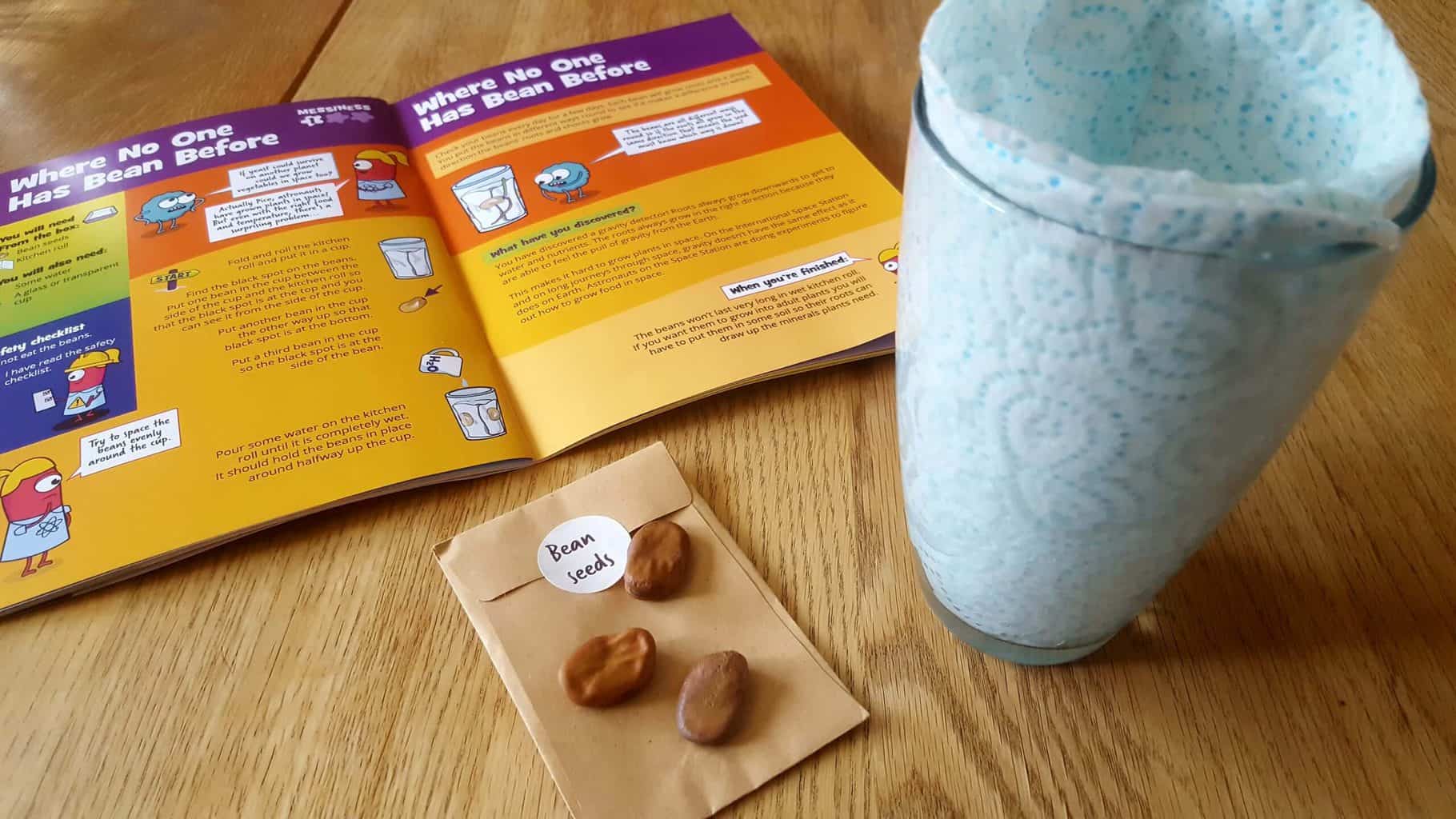
Time for another of our fun science experiments with gravity detectors that hark back to my school days – pink blotting paper, anyone?! Flora dampened some kitchen roll and folded it inside a glass. Then she took the three beans and placed them between the kitchen roll and glass. One bean had the black spot facing up, one facing to the side, and one facing down. Would each root grow in the same direction? We left them on a sunny windowsill for ten days (topping up the water occasionally) to find out.
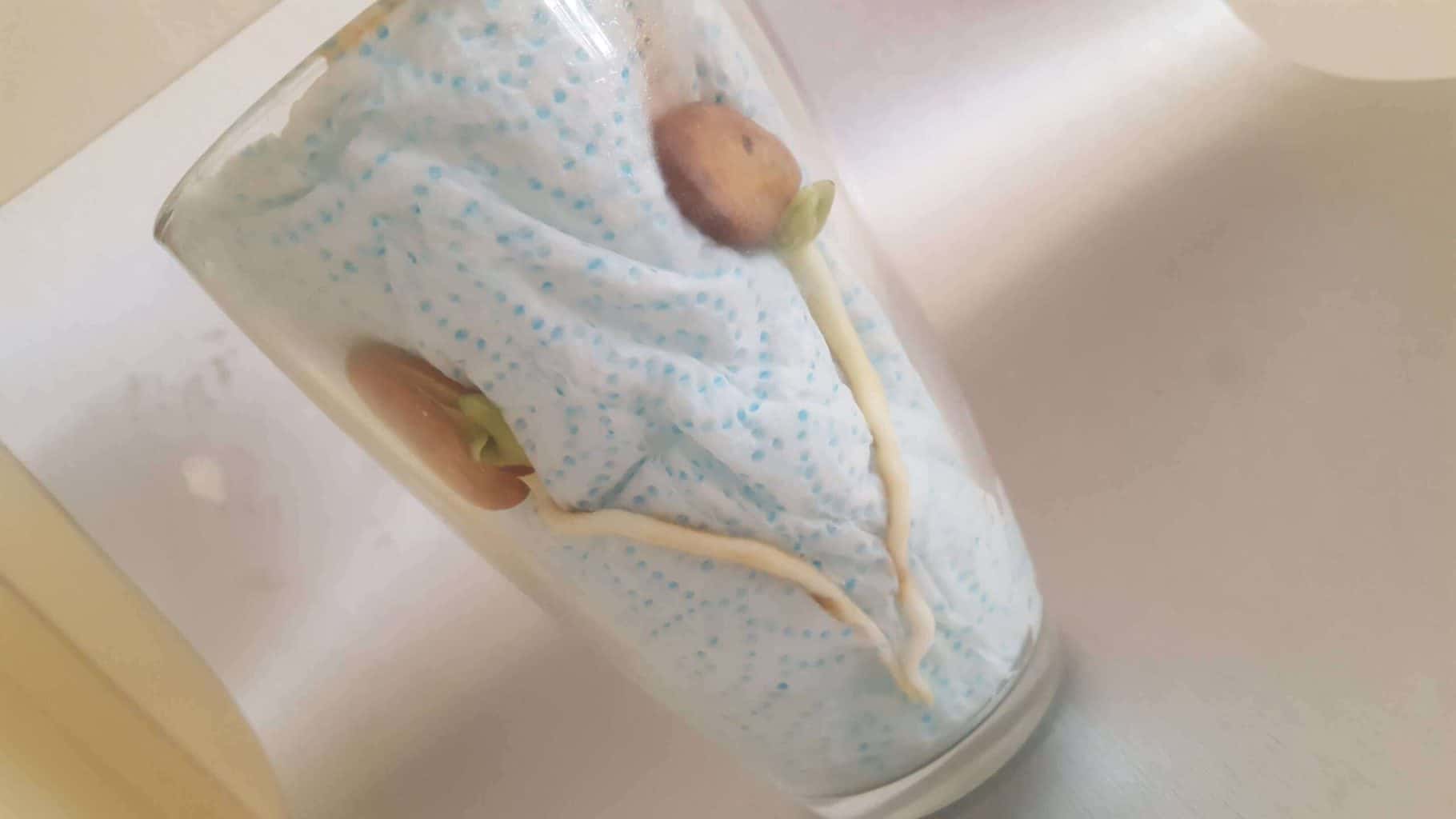
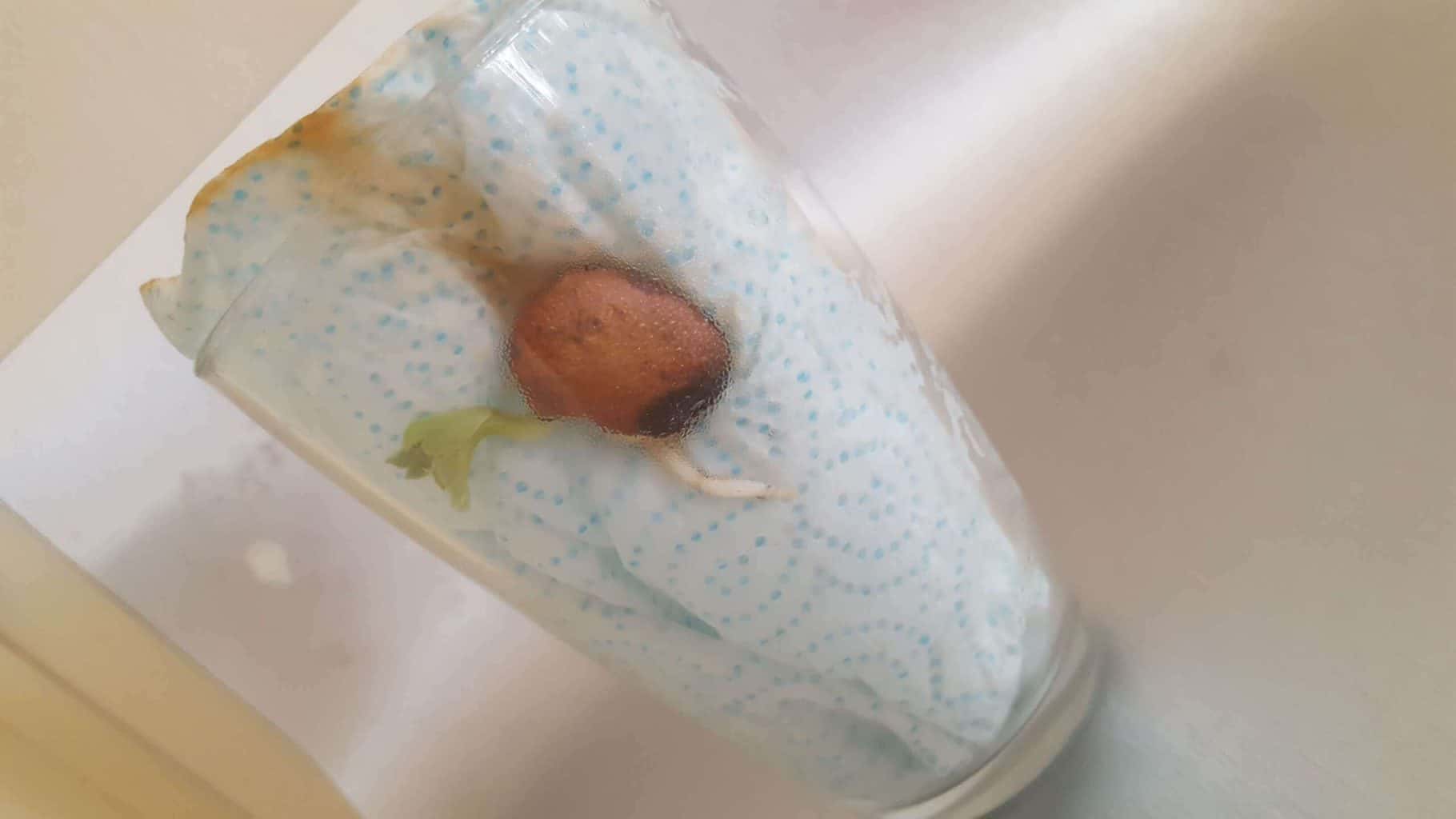
And these are the results after ten days – Ta Dah! The roots are all growing in the same direction so these very clever little beans not only understand gravity, they also know which way is down for water and nutrients. And yes, we’ll be planting them out in the garden shortly – we all love broad beans, yum. Fun fact: it’s hard to grow plants in space as gravity doesn’t work the same way as here on Earth. So astronauts in the International Space Station are doing experiments to try and crack growing food in space.
Dino Breath
Next up in the fun science experiments was looking for evidence of how long ago living beings have changed our Earth’s air and rocks. Millions of years ago, the dinosaurs breathed out carbon dioxide, which the oceans sucked up. Sea creatures then made shells from the carbon in the seas, which in turn became chalk in the ground. So carbon became a layer of rock (like the sedimentary rock in Box 9, Letterbox Rox). Here, Flora had to make her own limewater with some calcium hydroxide, and then see how citric acid and chalk would react with it to produce gas.

And as predicted, the chalk reacts with the citric acid in the same way that the sodium bicarbonate reacts with acid. Namely, producing carbon dioxide gas that bubbles through the limewater. So we have released Dino Breath, aka carbon dioxide that was breathed out by animals millions of years ago. How’s that for some epic recycling?!
You Are Here
This was the last experiment because we had to cut up the box to make our very own orrery – a model of the Earth, Moon, and Sun. As it’s a model, some things aren’t quite accurate (of course) but it’s a fun and interactive display of our Earth, Moon, and Sun position and movements.
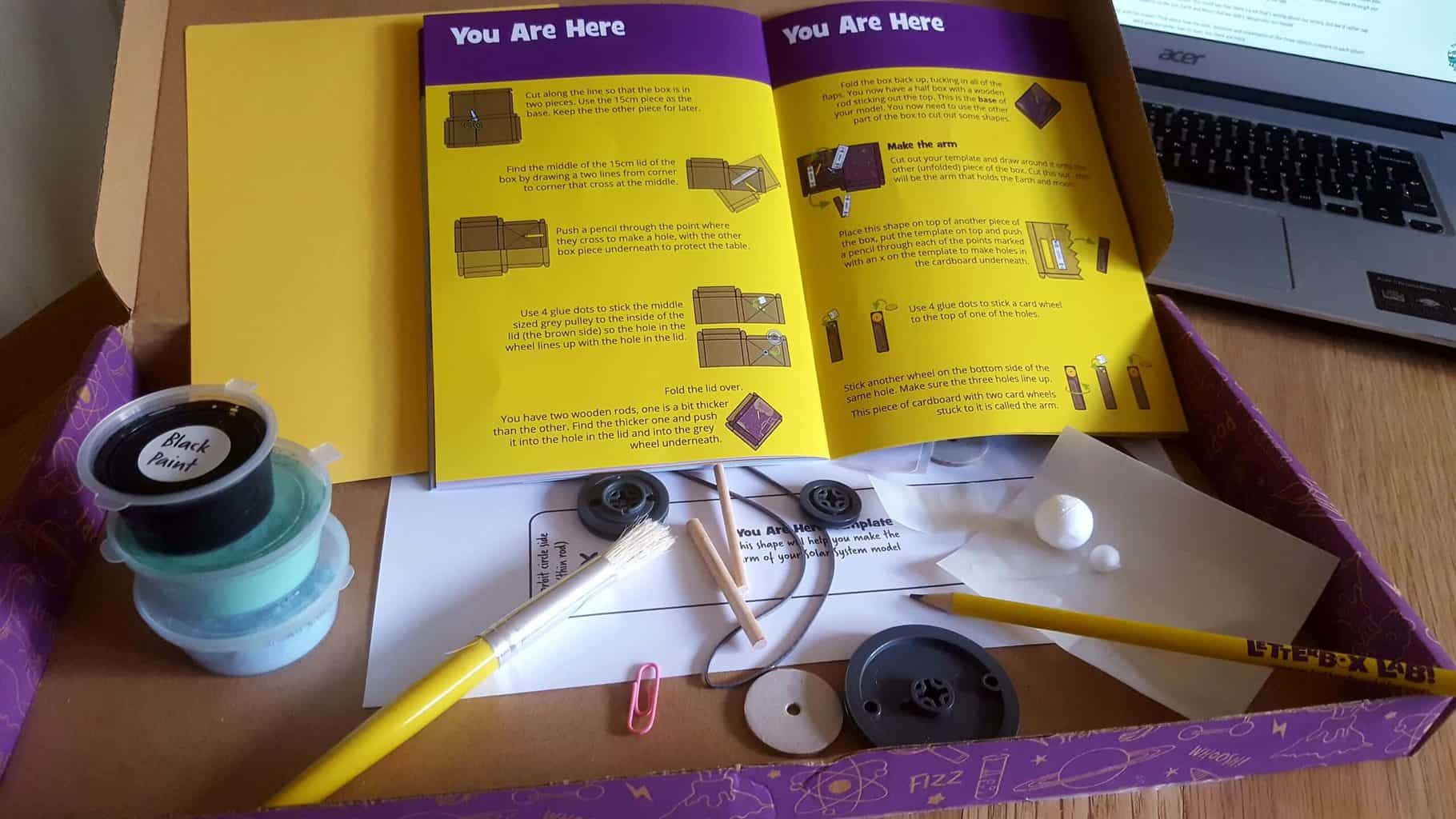
The booklet had some very detailed instructions laid out over seven pages but, after looking through everything, we decided to watch the video, just to make sure we did things right. I don’t think I’ve mentioned this before but every box also has a corresponding series of helpful”How to” videos on the Letterbox Lab website. The videos are password-protected according to which box you’re investigating. Clever, no? Anyway, here’s our finished orrery in action. If you watch closely, you’ll see the Moon move around Earth as the Earth moves around the Sun.
Final thoughts on these fun science experiments
This time we carried out all the experiments in 24 hours – with the exception of the beans, which took ten days from insertion to final sprouting. Flora’s favourite fun science experiments were Orbital and the Orrery (as were mine). Big thank you again to Letterbox Lab for our tenth Investigate box, it’s been a blast. And Flora and I are both looking very much forward to learning how to make invisible things visible with Top Secret next time.
Did you enjoy learning more about magnets, centripetal forces, gravity, and signs of life? Which experiment is your favourite? Do you know any kids who’d love to try Waste of Space – or discover more about science in general – with one of these fabulous subscription boxes?
* This post features gifted items but all opinions are our own, and also contains affiliate links (please see my Disclaimer).


This is amazing Lisa, wow! How cool!
I’m defo getting something like this when I get a kid someday, how interesting – I’m completely in love (I actually think I want one for myself).
Ana C
Thank you, Ana – and yes, I feel very lucky I have Flora so I have a reason to enjoy them too!
I love the idea of Orbital, it is so cool.
Really nice post. Thanks for sharing
https://uncuaderno4cero.wordpress.com/
Glad you enjoyed it, thank you 🙂
This would have been my highlight to have when I was a kid! I will surely get one when I will have kids and probably enjoy it more than them! Love the yeast experiment and used to do the bean while in school! Seems like Flora loved them, thanks for sharing x
They are such fun to do, it doesn’t seem like learning at all (in a good way!) – glad to know you did the beans at school too x
Wow!!! These are all so cooool and amazing (not to mention educational)! I thought the anti-gravity was the coolest but the other experiments were cooler! I would personally enjoy this, not only my nieces and nephews. Always been a fan of Science experiments. Thank you for sharing this!
They are fab, I’m so lucky I have a daughter who’s into science so I can enjoy them too!
I think this is my favourite yet of these posts and experiments Lisa because I am a sucker for anything space related. I’m always and have always been SO fascinated by it. I don’t know how anyone can’t be! The Dino Breath experiment sounds funny and very different! I’d have been straight outside stargazing too. I remember my old best friend when I was young, her Dad had a great telescope and he got us up in the middle of the night because you could very clearly see the milky way, it was incredible ! xxx
This one is one of my favourite boxes too – it was just so much fun to do and we learned so much. The names of the experiments always make me laugh and yes, you’re right, who couldn’t be fascinated by space? When you finally come for your visit, I promise we’ll get the telescopes out again! xxx
Well, this is the coolest thing ever. I want one for myself and I’m 28! My nephews would love this in the summer holidays. I love how accessible this kind of thing is now for little ones!
Rosie
isn’t it just? Flora is a lucky girl (as am I, I love them too!)
I don’t have any children and I don’t teach children anymore, but these are some great ideas! Especially if children are at home more and to catch up on learning too but in a fun way ☺️ X
Thank you so much – that’s really good to hear from an ex-teacher! x
This looks like a great box. I love the floating magnet video. And of course the balloon shaking.
I think £11 is great value. I might order one for the Easter holidays, the kids will love it! And we won’t be able to get out much still x
It’s such good value and it really doesn’t seem like learning or schoolwork. Let me know if you do order one, and what your kids think – we still have fond memories of Marvellous Mixtures, our first box! x
Oh wow, these experiments seemed really cool this time!
Indeed they are 🙂
That’s a very educational collection of scientific experience for kids. Will try them with my kids.
Thank you, hope they enjoy them too 🙂
I wish we had stuff like this when I was at school, maybe I would have been a bit more interested in science 🙂
All the best, Michelle (michellesclutterbox.com)
I know, right? I’m sure I missed my calling, haha!
How fun!!!! These all look so cool! Definitely a great activity to do. Thanks for sharing with us
You’re welcome, glad you enjoyed them 🙂
I love this post, and it must be so helpful for parents or those just wanting to add a bit of fun to their child’s science understanding outside of the classroom x
Thank you so much – and yes, they’re really good for learning outside the classroom (also for parents!) x
Aww, I love it. I would buy it if I had a child, that’s for sure. There are so many different experiments, it’s fantastic.
TBH, I would buy it even if we didn’t have Flora, they are SO much fun!
This is so cool and I bet your children love trying these science experiments! x
Lucy | http://www.lucymary.co.uk
Not just for kids, I love them just as much as Flora! z
I think my favorite part of this entire kit is that the box goes into the final experiment! What a great way to help promote zero waste and utilize everything in the package creatively. Love that you include some video clips here to really bring the experiments to life.
That bit about the Milky Way and Andromeda is something I did not know about, but the poetess in me is itching to muse over it in writing. Thanks so much for sharing!
It’s clever, isn’t it? So well thought out. And I can’t wait to see what you make of Milkdromeda in due course, Jaya, so happy you took some inspo from this!
Forget the kids Lisa! Haha, id reverse roles and actually get stuck in with these myself.
Really Cool and fun!
I know, they’re amazing boxes, so much fun 🙂
That’s so cool, I wish I’d had fun science experiments I could have done as a kid. I really loved science as a kid but my undiagnosed dyslexia and racial abuse I endured at school got in the way of it
Ah, I’m so sorry to hear about your school experiences. But thank you, and I agree, I wish I’d had something like this too!
This is a cool fun-at-home experiment for kids. Adults can enjoy it too. Thank you for sharing.
You are spot on, adults (me) love these boxes too!
Great ideas Lisa! My kids would love these experiments. They have a couple of kids science books from that Usborne series and they are so popular. Will check this one out too xx
Thank you, Jenni – these boxes are so good for kids, aren’t they? xx
This sounds like a great educational box and I love how it makes science fun (for all of us)! Thanks for sharing.
It’s a great box, perfect for kids of all ages 🙂
These look like so much fun. Get kids off tech and actually learn something.
Absolutely, they’re great for this!
These look like a ton of fun! We’ve done a few science experiments since doing our schooling from home but nothing this extravagant. I think all four of my kids would enjoy these!
They are so much fun – not just for kids, all the adults love them too!
My nephew would absolutely love this, and I think I would too! He loves all things space.
It looks like excellent fun, and I love how even the box itself is used.
Cora | https://www.teapartyprincess.co.uk/
It’s such a good resource, literally hours of fun and learning too 🙂
These sound so fun! I love all the cute names haha. Dino Breath is a favourite.
The names are great, aren’t they!
I absolutely love the idea of encouraging children to explore science, making it fun with experiments like this at home. Far too often, you see talk of children spending all of their time in front of a computer or television, getting lost in a virtual world and missing out on the incredible opportunities her in real life. A box like this is a great way to not only introduce science to children but also to help parents get involved in their child’s education.
Absolutely, Britt, these boxes are SUCH a great, hands on way of getting Flora off the computer (a necessary evil with homeschool). And for some quality time with me too – win, win.
I enjoy seeing the different experiments in these boxes & I love the space/Earth theme of this one! The orrery looks so cool!
Thank you, we’re rather proud of our Orrery too 🙂
Oooh the Waste of Space letterbox lab looks pretty cool! Love that there are lots of activities from the box. Great learning experience for children, especially if they’re learning from home now. So important to have some hands-on experience. Thanks for sharing about this!
Nancy ✨
It was so much fun, one of my favourite boxes so far, I think. And yes, hands on and away from the computer rocks!
Wow! This is such a great idea for kids staying home. Will definitely be looking into this for my little brother. Thank you for sharing!!
xoxo Olivia | http://www.oliviaandbeauty.com
Yay, I hope he loves it as much as we do!
These are amazing! They look like so much fun and so educational as well (I swear I’m learning just reading your posts on them!) Something I might look into for my nieces, although think they might be a touch too young right now. Looks like you both had fun!
They are SUCH good value and so much fun too – I don’t known how old your nieces are but Letterbox Lab do an Explore box for younger kids so that might be worth looking into!
Wow these look so much fun! I can’t wait until my son is older so I can do things like this with him!
Corinne x
They are definitely a bi-monthly highlight, so much fun for both of us 🙂 x
My niece and nephew would love this… I would have loved it as a kid too (Don’t tell anyone, but I’d probably still enjoy it now!).
And that’s why I’m glad I have Flora – I love them too!
Thanks for sharing, this box looks great for kids to learn about space 🙂
It really is, and great fun too 🙂