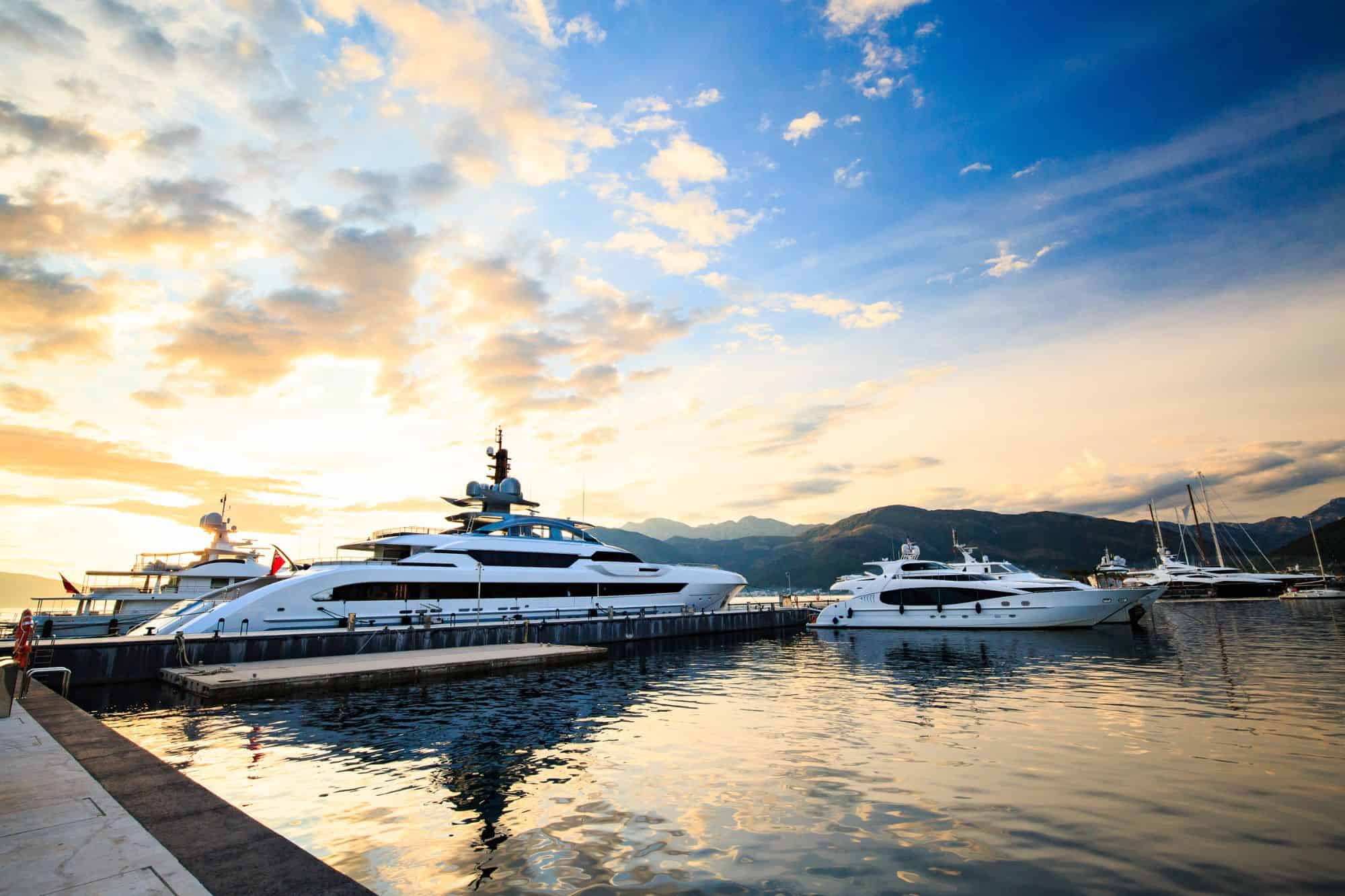
AD | In the marine industry, durability isn’t optional, it’s essential. Every vessel, from a small fishing trawler to a high-speed passenger ferry, operates in one of the most corrosive, demanding environments on our planet. Saltwater and turbid, sediment-rich waters can quickly corrode metals and gum up the moving parts of even the hardiest tools and machinery.
This is where durable marine wear solutions come in. Thanks to breakthroughs in materials science and composite engineering, the latest generation of advanced materials are redefining performance and reliability at sea. But how do they work, and what makes the new marine materials different from traditional types?
Why Marine Durability Matters
The ocean environment subjects mechanical components to constant attack. Saline water accelerates metal corrosion, while sediment-rich waters cause abrasion and clogging. Even robust alloys and flexible elastomers that perform well on land often fail prematurely at sea.
For engineers and operators, failure is inconvenient, costly, and can be dangerous. Replacing worn-out bearings or propeller shafts at sea can mean downtime, lost revenue, and increased maintenance budgets. Hence the need for durable marine wear materials that can resist corrosion, manage friction, and withstand pressure.
Composite Materials: The New Standard in Marine Engineering
Materials science has made significant advances in recent decades. Gone are the days when marine designers had to choose between elastomeric (rubber) or metal (steel, Babbitt alloys) for parts like stern tube and rudder bearings. Now, they have a host of woven composite fibre materials at their disposal
Composite fibre materials combine the tensile strength of woven fibres with the resilience of thermoset resins. The result is a high-performance material that provides exceptional load-bearing capacity, without the weight penalties associated with metal.
Because these fibres are arranged in a reticulated (network-like) structure, they distribute stress more efficiently and allow for better flexibility under strain. This means that composite marine bearings can often support similar loads to their metal counterparts, but at a fraction of the weight. A huge plus for high-speed vessels such as yachts, ferries, liners, and naval craft, which translates directly into improved efficiency and fuel savings.

Thermal Stability and Longevity
One of the key benefits of modern composite systems is thermal stability. Marine components operate under fluctuating temperatures, and excessive heat can lead to deformation, expansion, and premature failure.
To combat this, manufacturers cure composite matrices with thermosetting resins such as epoxy, phenolic, or polyester. These resins harden into a rigid, load-bearing matrix structure that resists both thermal expansion and water ingress. The result is a material that maintains its shape and strength, even when exposed to high temperatures, cold water, or repeated heating cycles.
This adds to the durability and service life of marine wear components, reducing the frequency of replacements and contributing to a more sustainable lifecycle – a key consideration for modern ship operators looking to minimise waste and downtime.
The Power of Friction Modifiers
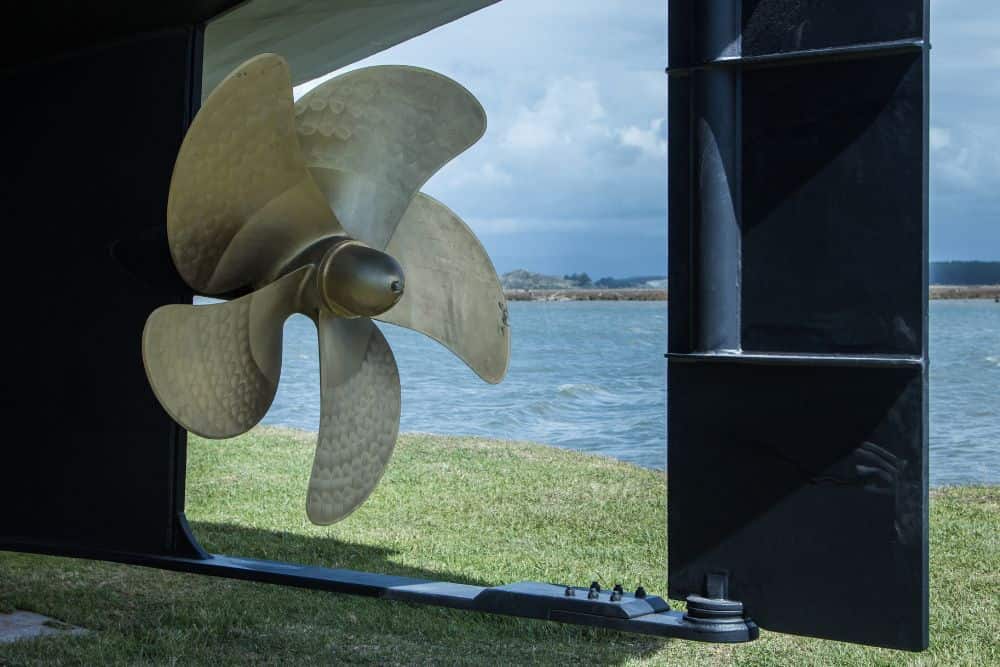
Friction is one of the main causes of mechanical wear, especially in rotating marine components like propeller shafts and rudder bearings. These systems often rely on external lubricants such as oil or water. However, when speeds drop below around 10 RPM, traditional water-lubricated bearings can fail due to inadequate viscous shear at low rotation speeds, causing friction, abrasion and general wear.
The latest durable marine wear composites overcome this by embedding solid lubricants directly into the mix. Materials like molybdenum disulfide (MoS₂) act as embedded friction modifiers, providing continuous low-friction performance even during boundary or mixed-film conditions.
These newer composites, with their inbuilt friction-reducing properties that lessen the need for external lubricants like oil and water, can provide the frictionless effect when viscous shear is insufficient, for example, when a boat’s propeller is idling or speeding down.
The Bottom Line: Smarter, Stronger, More Durable Marine Wear
Composites are a godsend for anyone working in harsh marine environments. In the past, it was often a trade-off between heavy-duty but hefty metal parts and lightweight plastic elastomeric equivalents that wore out quickly. But the evolution of durable marine wear materials combines the best aspects of metals and polymers to deliver systems with lightweight strength, superior corrosion resistance, and long-term stability.
Today, marine engineers have the best of both worlds thanks to the new composites’ novel materials, clever reticulated structure, and friction-reducing additives. It means new design freedom and more reliable performance under extreme conditions. And more uptime, reduced maintenance costs, and improved energy efficiency for vessel operators.
* This is a collaborative post – please see my Disclaimer.

As much as I love and adore those old wooden boats, these new boats with modern composite materials are definitely much easier to live with. And these advanced composites are further proof that new is definitely better!
New is certainly more durable and needs less maintenance for sure!