Growing your own vegetables and fruits sounds like the dream, doesn’t it? But creating a productive kitchen garden requires some forethought too. It needs to balance variety with quantity, match planting schedules to eating habits, and produce consistently throughout the growing season, wherever you live. Unfortunately, many kitchen gardens fall short of their potential. Random vegetable selections and odd spacing lead to feast-or-famine harvests, wasted space, and unnecessary work.
Planning a Kitchen Garden To Feed Your Family in 9 Easy Steps
When planned thoughtfully, even modest gardens can significantly reduce your grocery bills as well as provide fresher, more nutritious, and completely delicious food. The key differences between gardens that occasionally supplement meals and those that substantially feed families lie in the planning stage – long before your first seed ever goes into the ground.
Start With What You Actually Eat
The foundation of a successful kitchen garden is growing what your family genuinely enjoys eating. Try keeping a food diary for a few weeks or a month, tracking which fruit and vegetables appear most frequently in your meals. This then becomes your priority planting list. For my family, this assessment revealed we use tomatoes, cucumbers, lettuce, green beans, sugar snap peas, broccoli, potatoes, and herbs on a regular weekly basis, whereas we only occasionally eat aubergines and sweetcorn.
Quantity matters as much as variety. If your family eats salad every day, you’ll need succession plantings of lettuce and salad greens throughout the season rather than a single Spring planting. Similarly, if you make tomato sauce regularly, paste varieties should dominate your tomato beds rather than slicing types or salad types.
And this is also relevant to your storage crops. If your family loves potatoes with most meals, dedicating significant garden space to growing storage potatoes makes sense. If you rarely eat beetroot, growing just enough for occasional fresh eating is more practical.
Calculate Your Garden Space Needs
Garden space calculations begin with knowing how much your family eats. For a family of four, for example, this might include:
- 8 tomato plants (yields around 35kg over the season)
- 3m of beans (produces about 9kg)
- 6 m2 of salad greens (provides daily salads through Spring and Autumn)
- 6 m2 of cooking greens like kale or chard
- 2-3 courgette/summer squash plants (more than enough for most families)
- 3-5 winter squash plants (provides 12-18 squashes for storage)
These estimates vary based on eating habits and preservation plans. For example, if you want to cook and preserve tomato sauce for the year, you’ll need more like 15-18 plants instead of 8. And families who eat more vegetables should increase these numbers accordingly too.
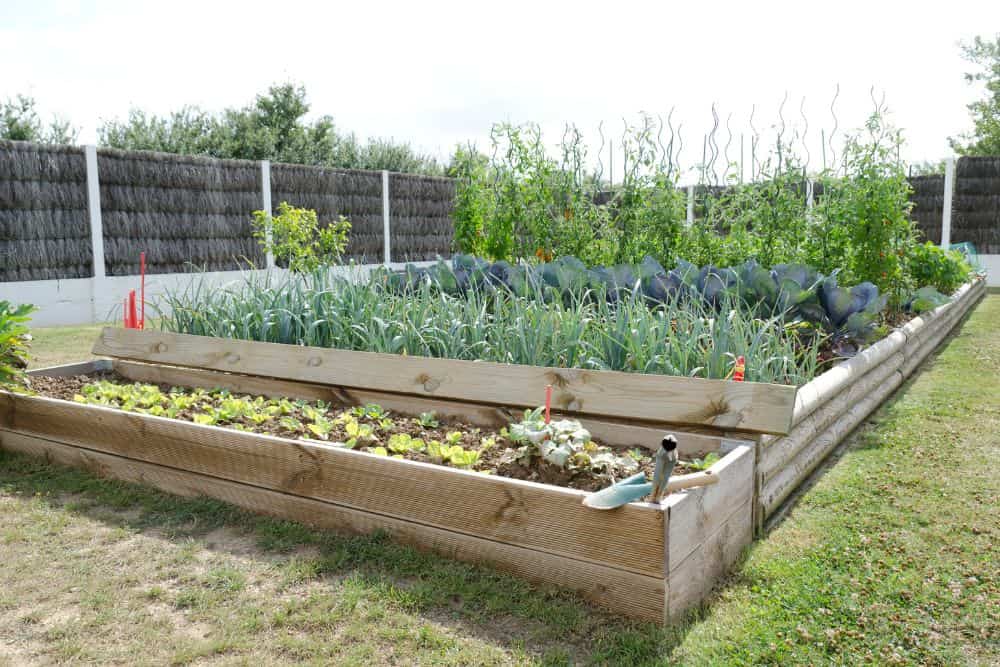
Garden beds typically produce more per square metre than row gardens. A well-managed 1.5 x 3m raised bed can grow significantly more food than the same amount of space in traditional rows. Intensive planting methods like square metre gardening and companion planting can further increase yields in limited spaces.
Design for Time Efficiency
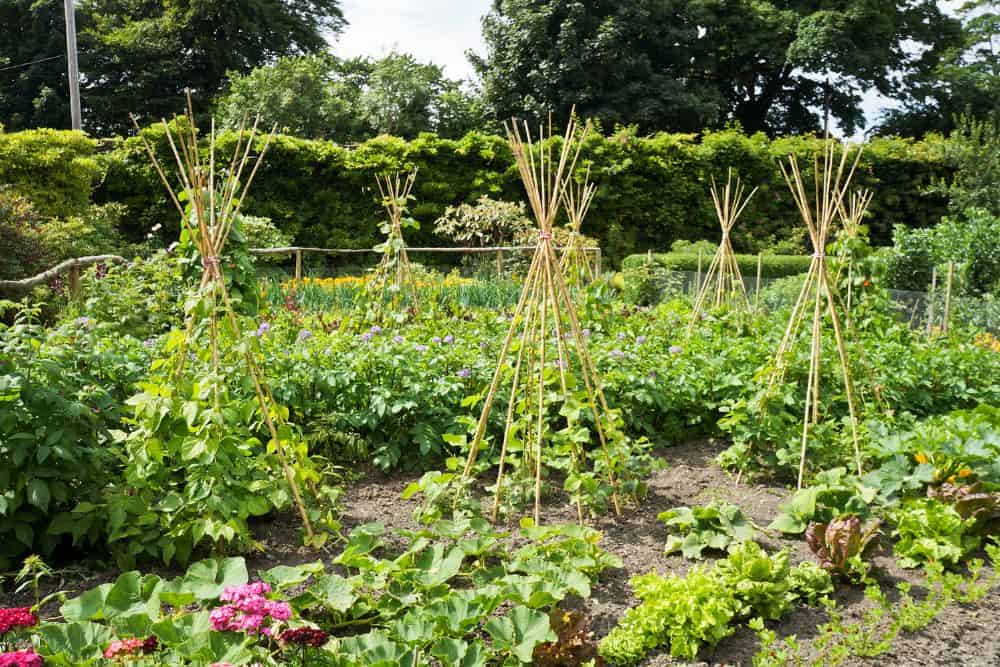
A kitchen garden should fit your lifestyle, not become a burden. You want to minimise maintenance time while maximising productivity. So, plant frequently harvested items like herbs and salad greens closest to the kitchen door. Even better if this “kitchen zone” or potager garden (an ornamental kitchen garden combining vegetables, herbs, fruit, and flowers) is just steps from your kitchen, making it easy to harvest while preparing meals.
Organise plants by watering needs to be more efficient. Drought-tolerant herbs and Mediterranean vegetables like tomatoes and peppers can be grouped together, while moisture-loving greens and root vegetables make good companions. This prevents both over and under-watering as well as making life easier.
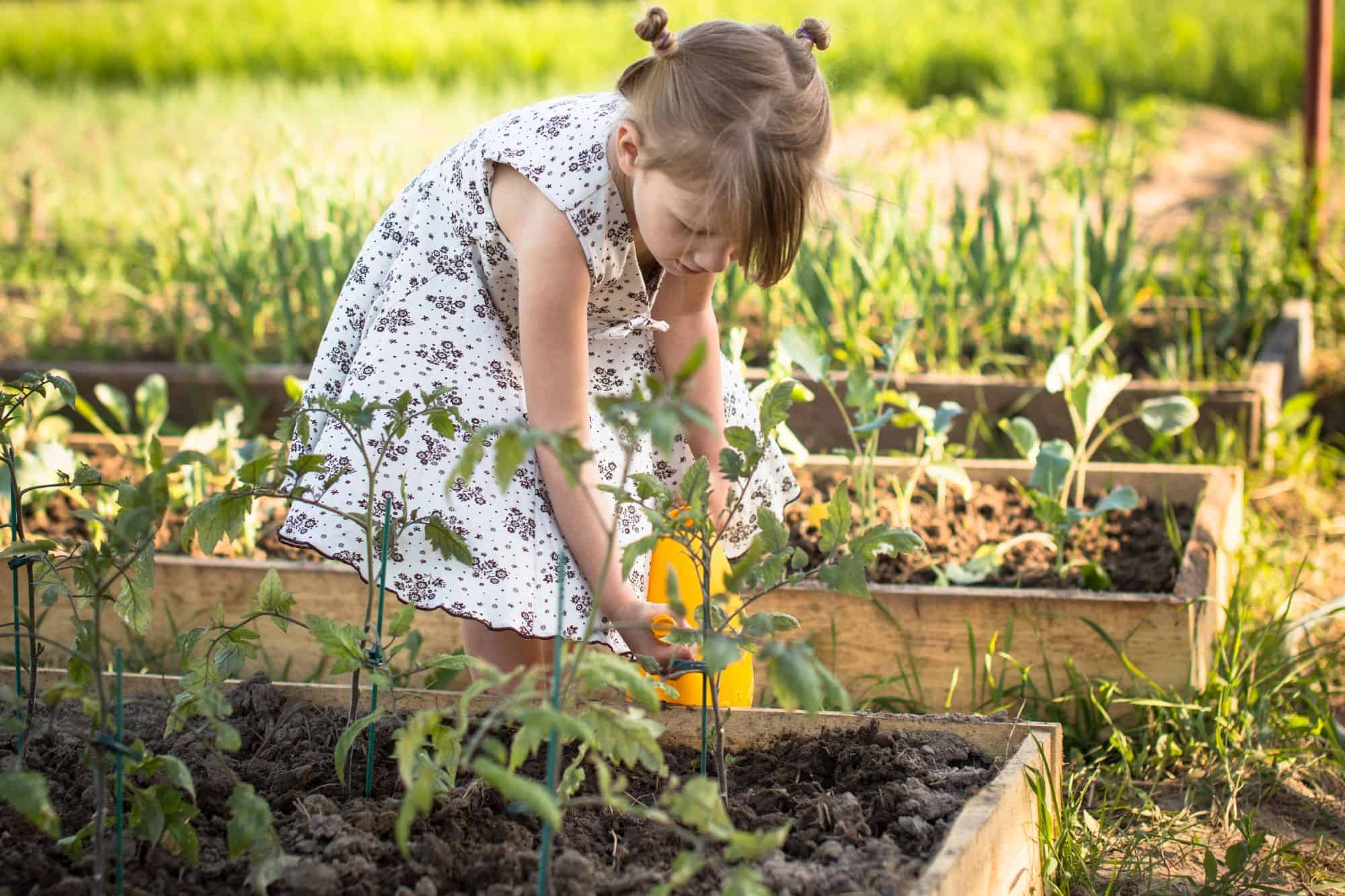
Be realistic about how much time you can devote to your kitchen garden too. If weekday garden time is limited, focus on low-maintenance crops and save more intensive vegetables for another season. Even busy gardeners can successfully grow cherry tomatoes, herbs, lettuce, courgettes, and kale with minimal weekday attention. And don’t forget to get the kids involved too – they’ll be much more likely to eat something they’ve had a hand in growing themselves.
Plan for Season-Long Harvests
A well-designed kitchen garden produces food continuously through the growing season rather than creating feast-or-famine cycles. But this requires careful succession planting and selecting varieties with different maturation times.
For lettuces and salad greens, plant small amounts every 2-3 weeks rather than an entire bed at once. This ensures continuous harvests and prevents overwhelming amounts at any single time. Cool-season crops like peas and spinach can be succession-planted in early Spring and again in late Summer for Autumn harvests.
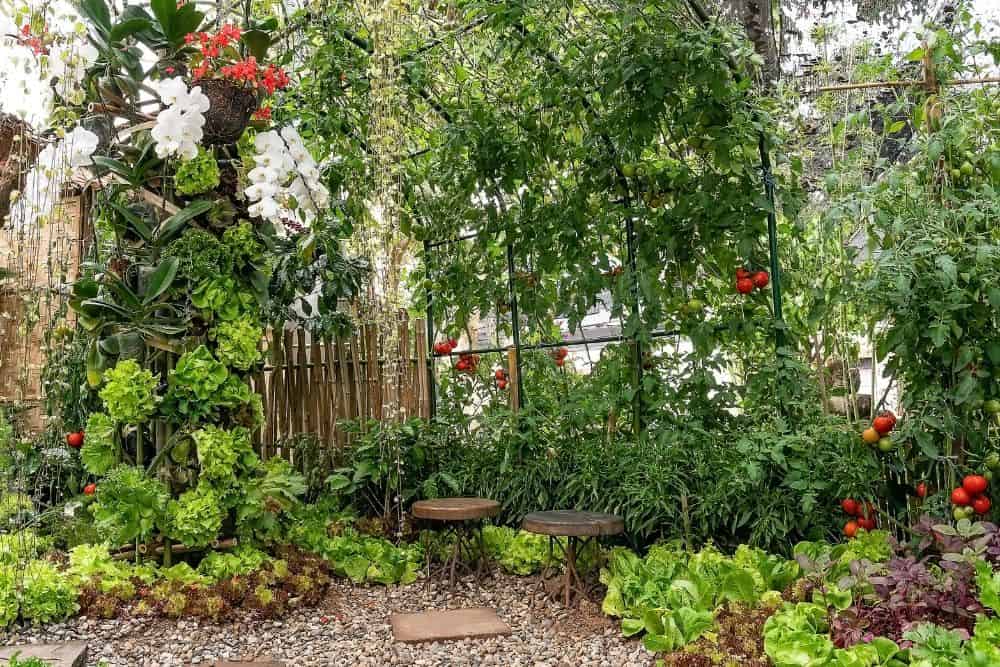
With tomatoes, plant a mix of early, mid-season, and late varieties. Early producers like ‘Gardener’s Delight’ or ‘Tumbling Tom’ bridge the gap until main-season tomatoes reach their peak. Determinate varieties (compact, bush-like plants) produce most of their crop at once and are ideal for canning, whereas indeterminate types (vines that require support) will provide steady harvests over many weeks.
Companion planting fast-growing crops between slower-developing vegetables maximises space efficiency. For example, radishes mature in just 3-4 weeks, so can be planted between cabbage or broccoli rows, and harvested long before the larger plants need the space.
Create Practical Garden Beds
The physical layout of garden beds significantly impacts both productivity and maintenance requirements. After experimenting over the years, I’ve found that beds no wider than 1.2m allow easy access from both sides without stepping on and compacting the soil.
Permanent pathways between beds, covered with wood chips or straw, help with seasonally muddy conditions and clearly define your growing areas. These pathways should be wide enough for comfortable movement – at least 75cm for main pathways and 50cm for secondary access – or as wide as your wheelbarrow requires.
Raised beds offer numerous advantages for kitchen gardens, particularly improved drainage and earlier Spring soil warming. However, the downside is they dry out more quickly in the intense Summer heat, requiring more consistent watering. Otherwise, in-ground beds with clearly defined edges work well, without the initial construction costs of raised beds.
Angle any rows North to South where possible, to ensure even sun exposure for all your plants. This becomes increasingly important as your plants grow taller and cast shadows. That said, this can offer another good companion planting opportunity – when your sweetcorn grow larger, they’ll shade your courgettes, for example.
Plan for Soil Health
Productive kitchen gardens depend on soil that improves year after year. It’s a good idea to dedicate some space in your garden plan for cover crops that build soil fertility and organic matter. Even small gardens benefit from rotating sections through cover crops like clover or buckwheat.
And, to break any pest and disease cycles and balance nutrient demands on your soil, you shouldn’t plant the same family of vegetables in the same place for at least three years. A simple 4-year crop rotation system might move through:
- Fruiting crops (tomatoes, peppers, aubergines)
- Legumes (beans, peas)
- Leafy crops (lettuce, spinach, cabbage)
- Root crops (carrots, beets, onions)
Compost production should also be integrated into your kitchen garden planning. A well-managed compost system converts garden waste and kitchen scraps into valuable fertiliser for future plantings and best of all, it’s free! Set aside some space near but not in your kitchen garden for compost production to make this process more convenient.
Include Perennial Vegetables and Herbs
Perennial vegetables and herbs reduce annual planting work while providing early harvests when the rest of the garden is just getting started. Asparagus, rhubarb, horseradish, and many herbs return reliably each year with minimal care once established.
Dedicate some permanent areas around the edges of your kitchen garden for these long-lived plants. Asparagus beds produce for 20+ years when properly maintained, making them valuable garden investments. Herbs like thyme, oregano, sage, and chives form attractive, functional borders that also attract pollinators while providing kitchen essentials.
Perennial vegetables typically take 2-3 years to reach full production, so incorporate them into long-term garden planning rather than expecting immediate results. Once established, they often provide the earliest Spring harvests, filling the gap before annual vegetables begin producing.
Plan for Preservation
A truly productive kitchen garden grows enough to extend beyond the fresh eating season. It generally includes fruit and vegetables specifically intended for preservation through freezing, canning, pickling, dehydration, or storage.
Planting bush tomatoes in blocks makes it easy to harvest large quantities for sauce-making all at once. Similarly, planting extra beans, peas, and sweetcorn provides sufficient quantities for freezing or canning.
Storage crops like Winter squash, onions, garlic, and potatoes extend your kitchen garden’s feeding capacity well into Winter. These crops usually need a lot of space but they’re great value due to their long storage life. Even small gardens can incorporate some storage crops by choosing compact varieties like bushy Winter squash that require less space than traditional vine plants.
Adapt to Your Climate Reality
If you want to avoid the frustration of regular crop failure, you need to be realistic about your growing season length, temperature ranges, and rainfall patterns when choosing your fruit and vegetable varieties and working out their planting schedules.
In colder Northern areas, go for quick-maturing varieties and use greenhouses, cold frames, and fleece or cloche covers to stretch the productive period. Those of us in the South should think about more heat-tolerant varieties and plan for Summer crop slowdowns or gaps during the most intense heatwaves.
Rainfall patterns impact both watering needs and disease. Areas with humid Summers should go for disease-resistant varieties and provide plenty of space for air circulation around your plants. Dry-climate gardens need more efficient watering systems, including water butts, and mulching to conserve moisture.
The kitchen garden that feeds your family evolves over seasons. Each year’s experience will help you plan better for the next year, so you’ll gradually end up creating a garden that aligns with your family’s food needs, climate conditions, and available time. The most successful kitchen gardens balance enthusiasm with practicality, producing plenty of food without becoming too overwhelming. Note to self: never plant 6 courgette plants for a family of 3 again…
Have you ever planned a kitchen garden? What were your successes and failures? Any lessons learned that you could share in the comments?


I love your very practical approach to planning a garden that will actually produce items we want, when we need them. So often in my garden, everything is ready all at the same time. So your idea to have succession plantings of lettuce and other frequently used items is absolutely brilliant!
Succession planting is something that it took me a while to get the hang of to be honest, but once you do, it’s really useful!
Adapting to the climate reality is the best advice. I grew some tomatoes, but without a greenhouse the yield wasn’t spectacular. I had more luck with potatoes.
Oh interesting – there are outdoor varieties of tomatoes but I’ve always had more luck in our greenhouse too. Cucumbers seem to do better outside, on a sheltered, sunny wall, though.
Love this guide! It’s so inspiring to think about growing your own food and feeding your family straight from the garden. The steps are easy to follow, and I’m excited to start planning my own kitchen garden!
That’s great to hear, thank you, Thomas, happy planting and harvesting!
My adult son is a beginner at vegetable gardening I’ll send him this wonderful helpful post. Thanks
That’s wonderful, I’m so pleased it was helpful – I hope he enjoys his new veg garden!
You,ve got a treasure trove here, Lisa. The process is approachable even for a non-starter such as myself. Because as you know, my fingers are excellent in every other colour but green. I do however remain inspired by your gardening insights.
Ah, thank you so much, Bev, that’s so kind, I’m thrilled you found it helpful!