AD – GIFTED | Some of the biggest hits of homeschooling have been Flora’s KS2 fun science experiments for kids subscription boxes from Letterbox Lab. Tailored to the KS2 National Curriculum for STEM and STEAM, these science subscription boxes really are making learning outside the classroom so much fun. And although it’s been a while since our last box review (my bad), at long last we’ve completed the next box in the series, Letterbox Rox*.
Letterbox Lab
For those who haven’t read our previous reviews, Letterbox Lab is a series of 12 linked science kits with full instructions and tools (you only need to add water for some of the experiments). Online resources and videos accompany every box, plus some suggestions for further fun science experiments and extension activities. The Explore box (for age 6+) and the Investigate box (for age 8+) both support the UK primary school curricula, and one off boxes start at £11.00 including P&P. And it’s a highly flexible subscription you can pause or cancel at any time.
Letterbox Rox
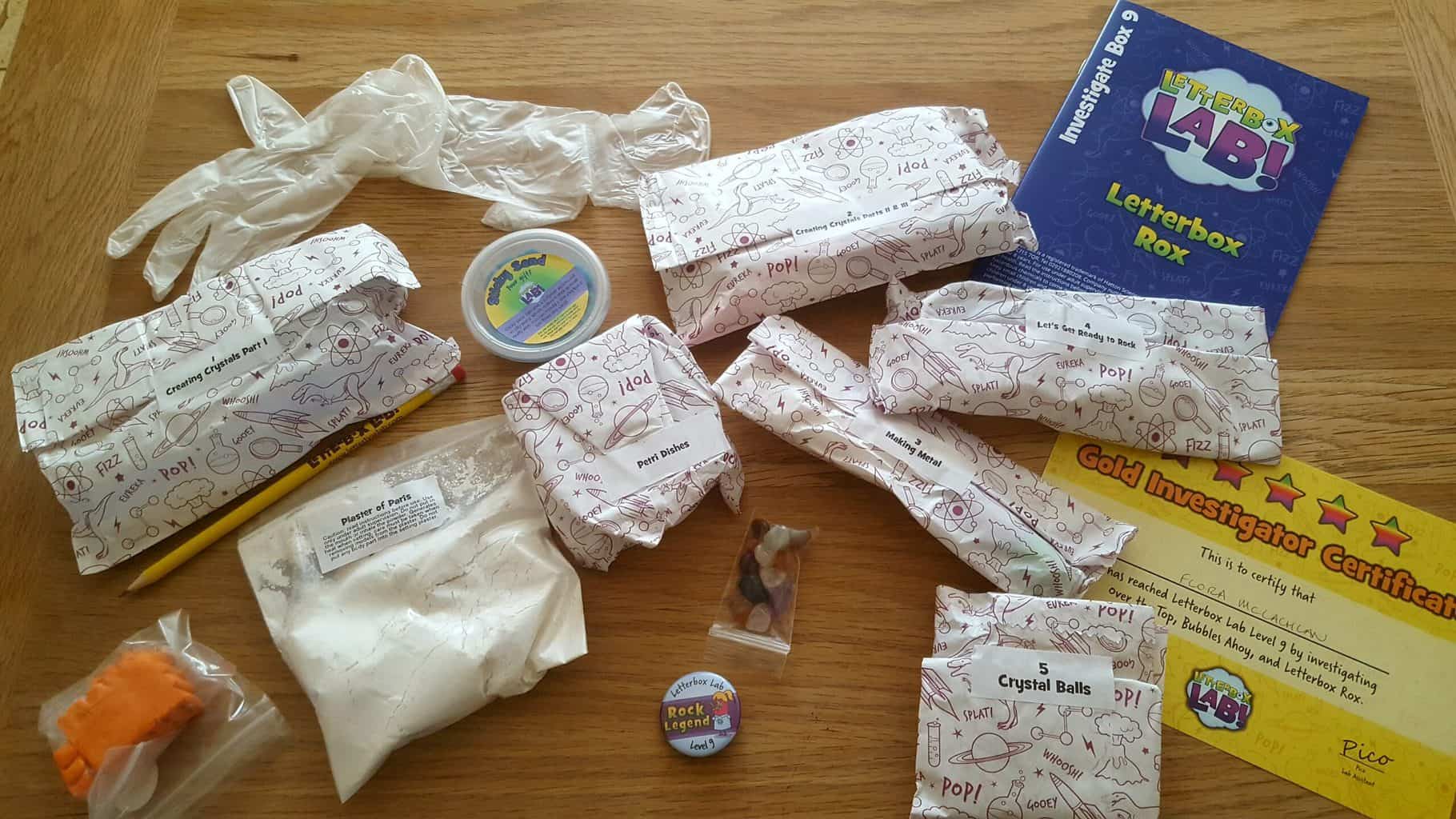
Letterbox Rox is the ninth in the Investigate box series, looking at the science of making crystals, sedimentary rock, and the rock cycle. This time we had seven different fun science activities, with the usual Messiness star rating at the beginning of each one. Flora’s favourite box so far was her previous box, Bubbles Ahoy, because of all the BUBBLES! So how did Letterbox Rox (including Dino Poo!) measure up?
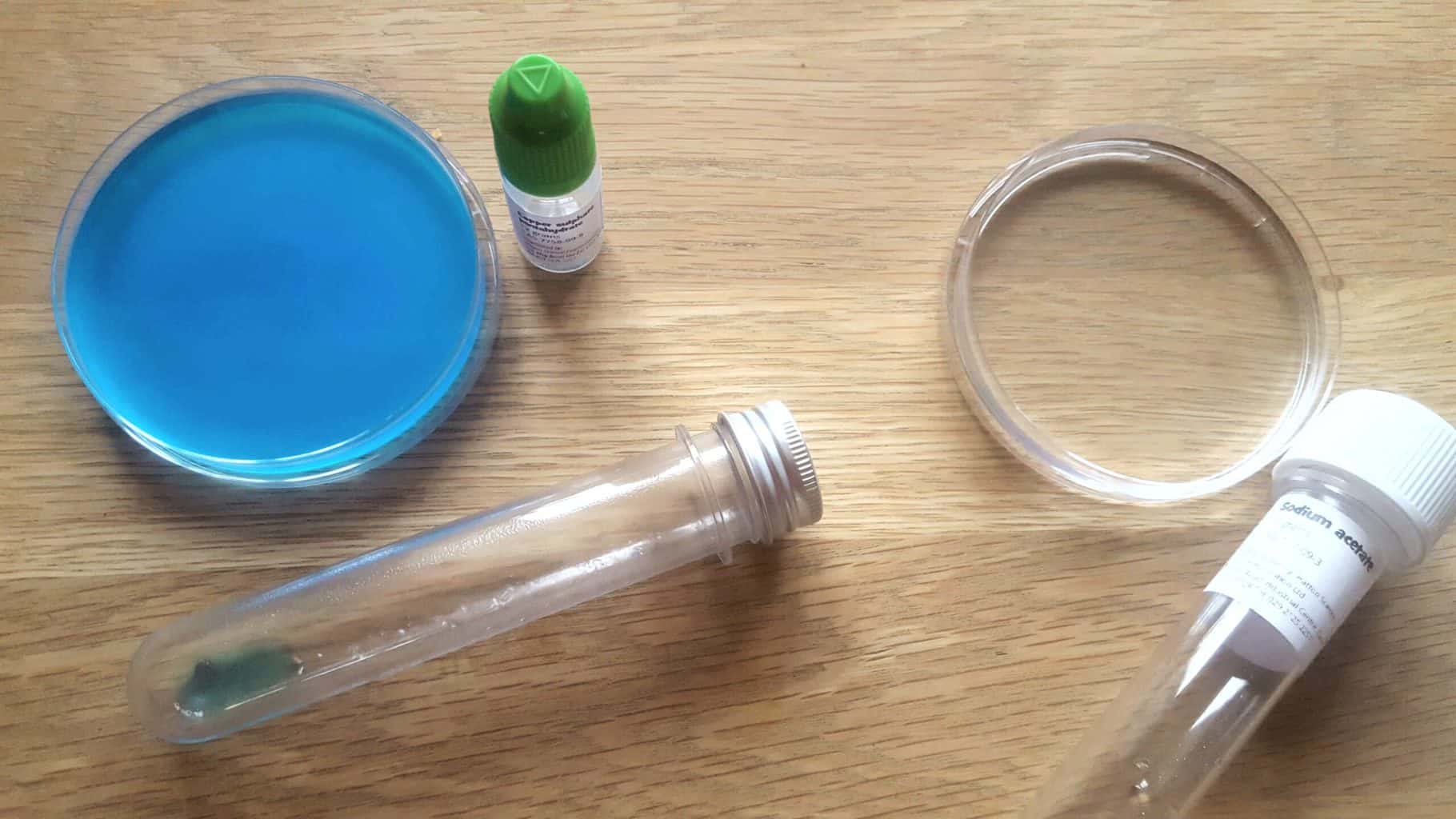
- Creating Crystals Part I – 1 x bottle of copper sulphate, 1 x test tube of sodium acetate, the test tube rack from Box 3, safety gloves, 2 x petri dishes, pocket microscope from Box 6, safety goggles from Box 1, and some hot water.
- Creating Crystals Part II – 1 x test tube of aluminium potassium sulphate, the test tube rack from Box 3, safety gloves, pipe cleaner, cocktail stick, pocket microscope from Box 6, safety goggles from Box 1, and some hot water.
- Creating Crystals Part III – 1 x bottle of vinegar, plastic tub, limestone rock, pocket microscope from Box 6, and the safety goggles from Box 1.
- Making Metal – 1 x bottle of copper sulphate, 1 x metal nut, piece of string, cocktail stick, 1 x test tube and the test tube rack from Box 3, safety gloves, pocket microscope from Box 6, safety goggles from Box 1, and some cold water.
- Let’s Get Ready To Rock – 1 x blue mica powder, 1 x red food colouring, 1 x green food colouring, 1 x sand, 1 x salt, 1 x bag of pyrite, 2 x shark teeth, 1 x lolly stick, 1 x plastic tub, 1 x bag of Plaster of Paris, 1 x bag of plasticine, safety gloves, spatula and pocket microscope from Box 6, safety goggles and measuring cylinder from Box 1, some cold water, some cardboard and some sticky tape.
- Dino Droppings – 1 x coprolite, 1 x bag of gemstones, and pocket microscope from Box 6.
- Crystal Balls – 1 x bag of water beads, 1 x food colouring, 1 x salt, some cold water and a glass.
- A 24-page instruction booklet, a safety sheet, a Gold Investigator Certificate, and a Rock Legend badge.
Creating Crystals Part I
As a keen crystal and ammonite collector, I knew Flora would love this box. Growing her own crystals? How could that fail to delight? For the first of her fun science experiments, she mixed hot water and copper sulphate and poured it into a petri dish. And then mixed hot water and sodium acetate and poured that into a second petri dish. We had to leave them in a safe place for a few days. (Actually this was the hardest part of the activity, as our new cat climbs EVERYTHING…)
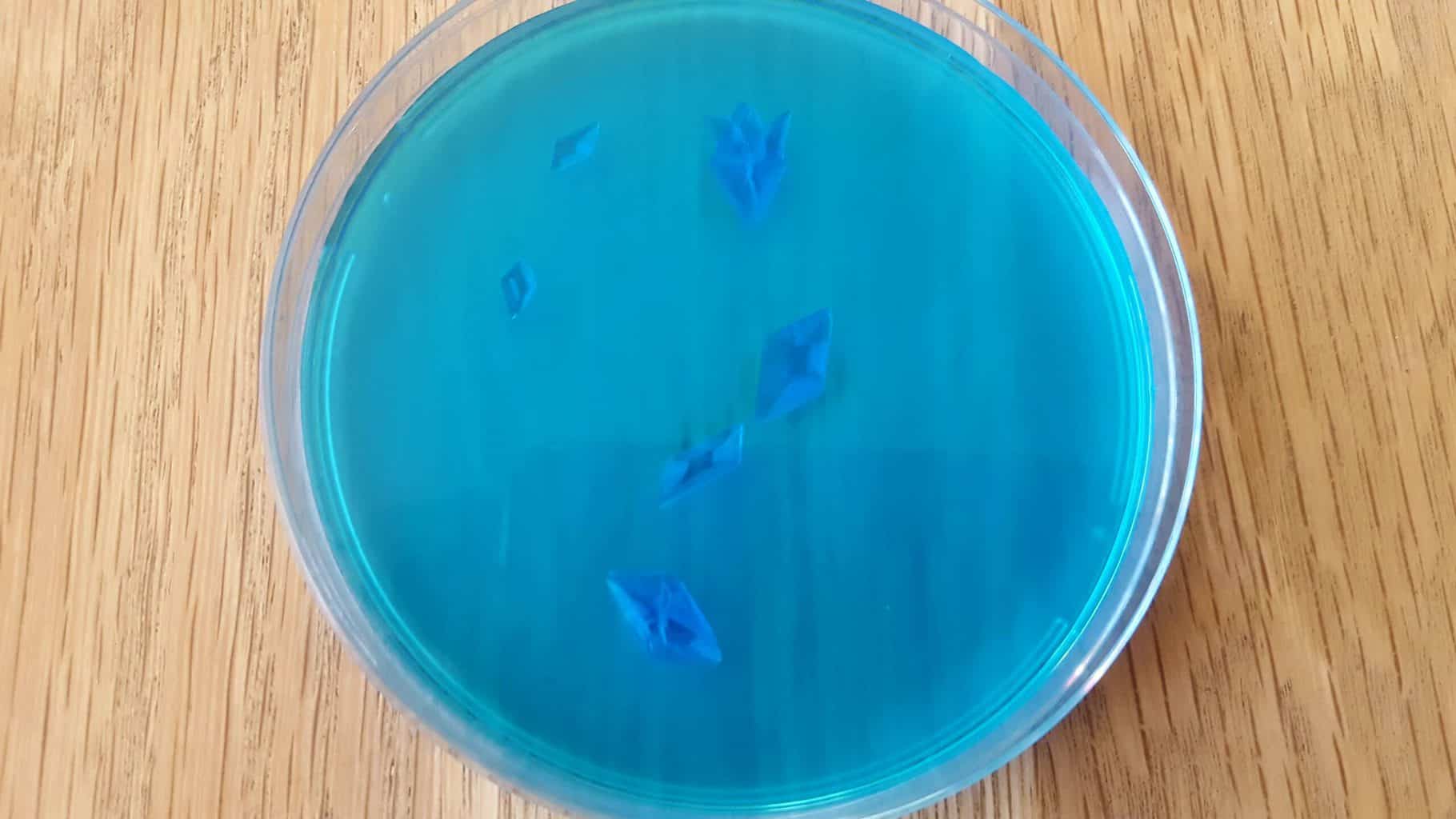
And after three days, Ta-Dah, the copper sulphate had started to form some pretty blue crystals, including one that looked like a duck’s foot! Sadly, nothing has happened with the sodium acetate as yet though. Basically, when you mix certain chemicals with water they dissolve. And as the water evaporates, the some of the chemical atoms stick together, creating crystals.
Creating Crystals Part II
The second activity involved making a crystal wand inside a test tube. Flora had to dissolve some aluminium potassium sulphate in hot water and suspend a pipe cleaner inside the mixture.
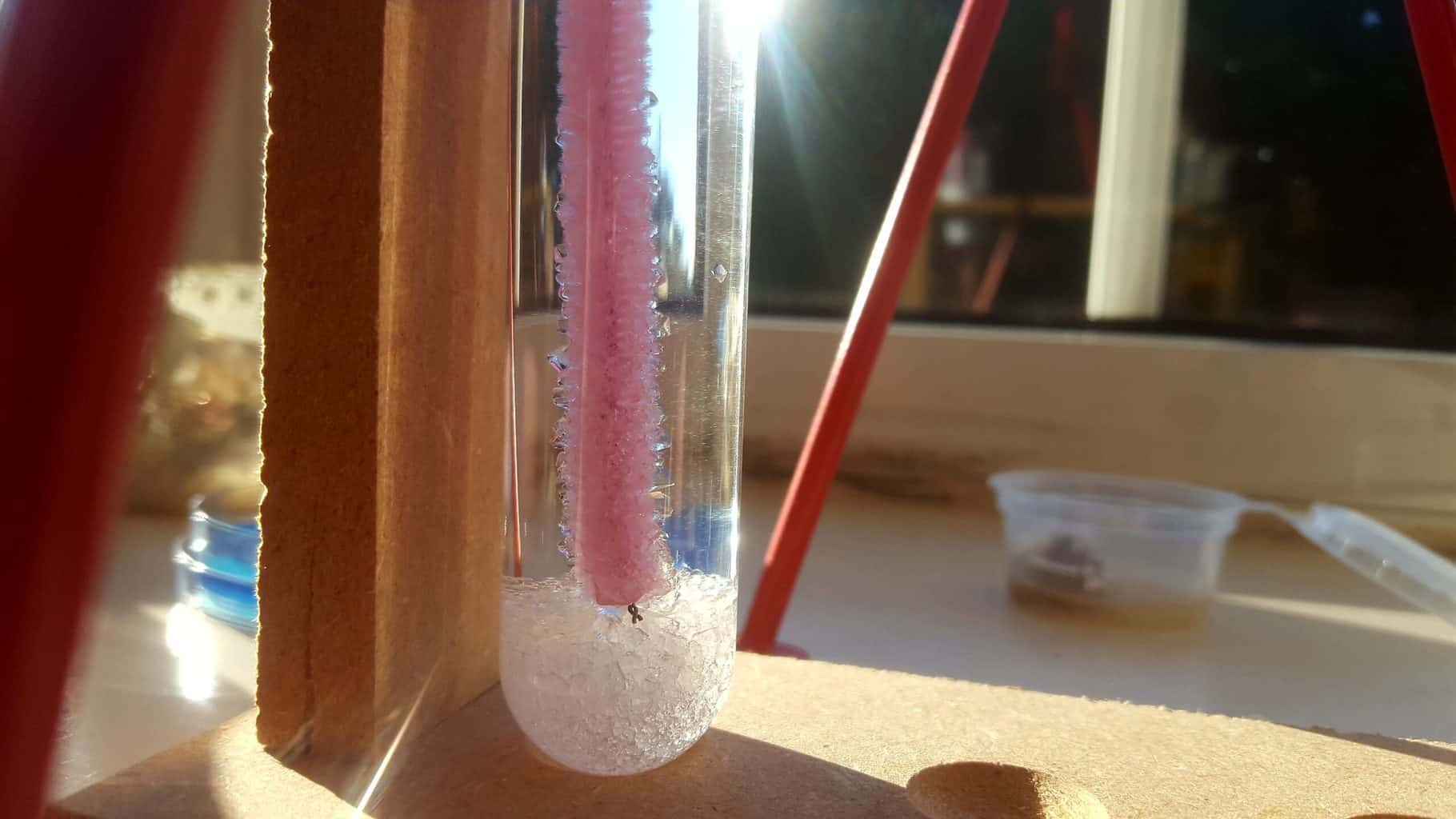
While we didn’t manage to dissolve all those stubborn aluminium potassium sulphate granules, after three days we could see some definite crystals growing up the pipe cleaner. In a similar way to Part I, when the water cooled down, the chemical atoms formed crystals again.
Creating Crystals Part III
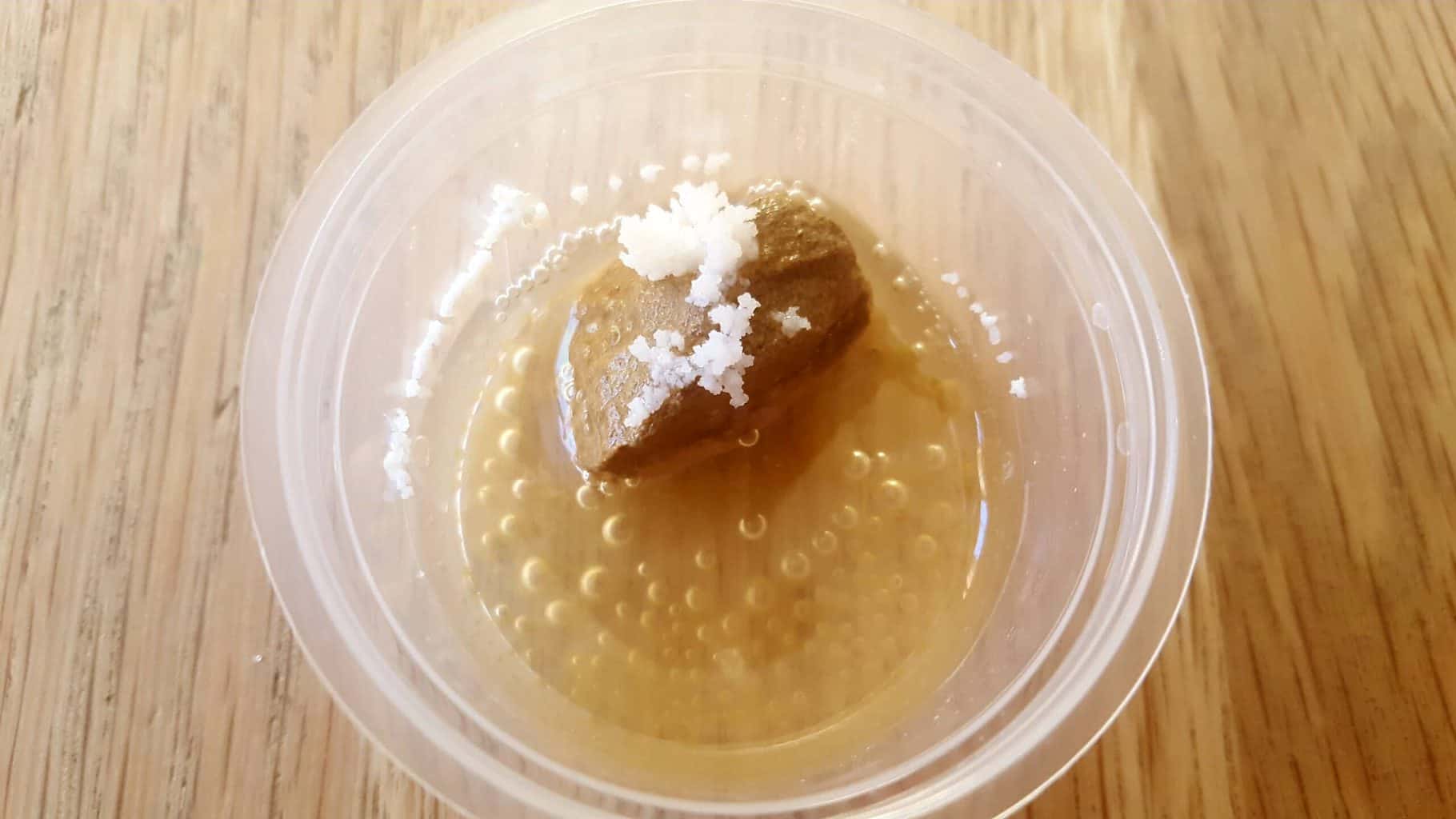
Onto the third (and for me the most fun) crystal growing activity. Flora had to pour some vinegar over a piece of limestone rock in a tub, leaving a little of the rock sticking out of the vinegar. The resulting rush of carbon dioxide bubbles made us both giggle, and henceforth this activity will always be referred to as the Farting Rock experiment.
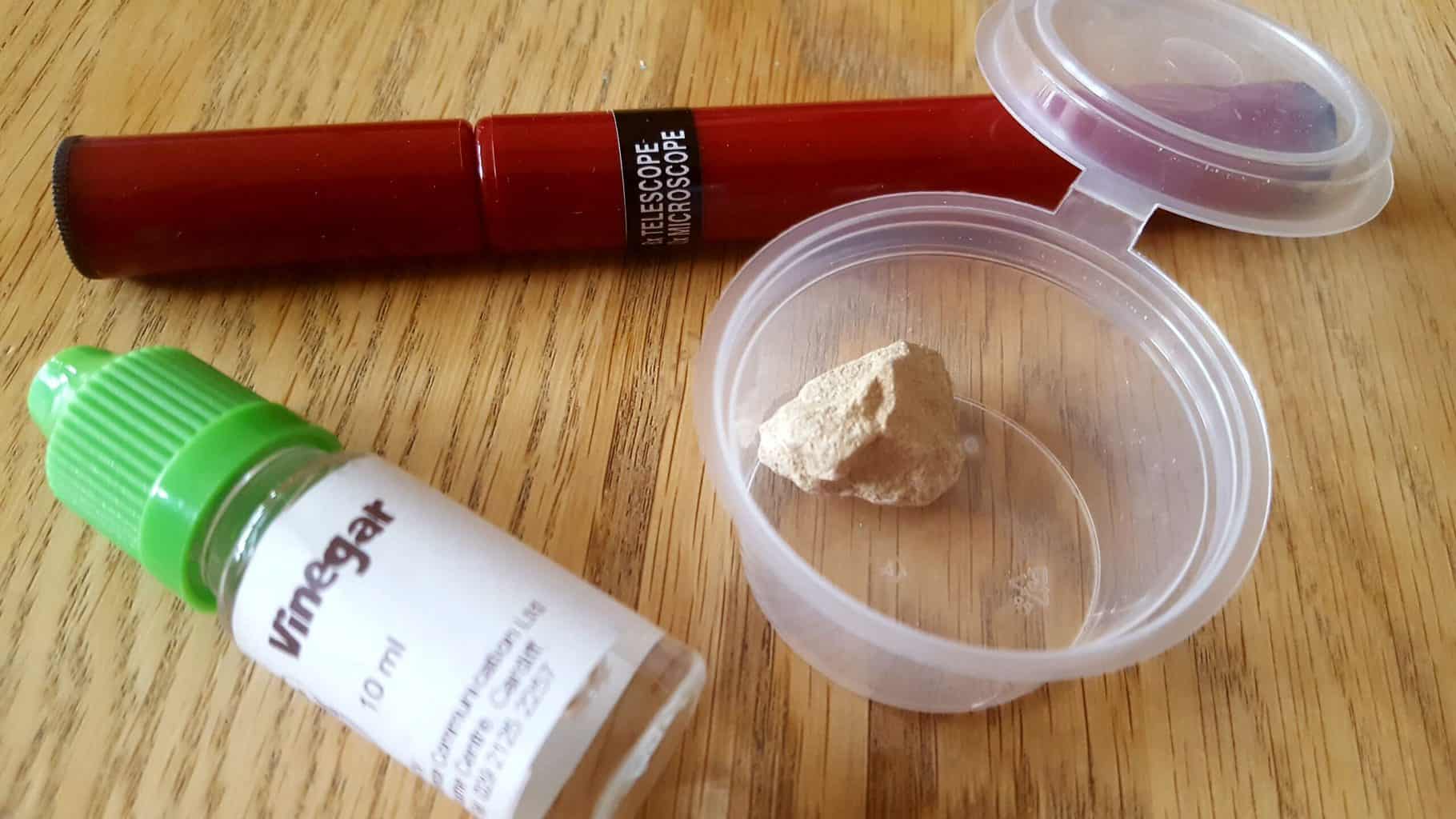
Anyway, after three days we could see proper crystals forming on top of the rock. The vinegar reacted to the calcium carbonate (limestone) to produce calcium acetate crystals as it evaporated.
Making Metal
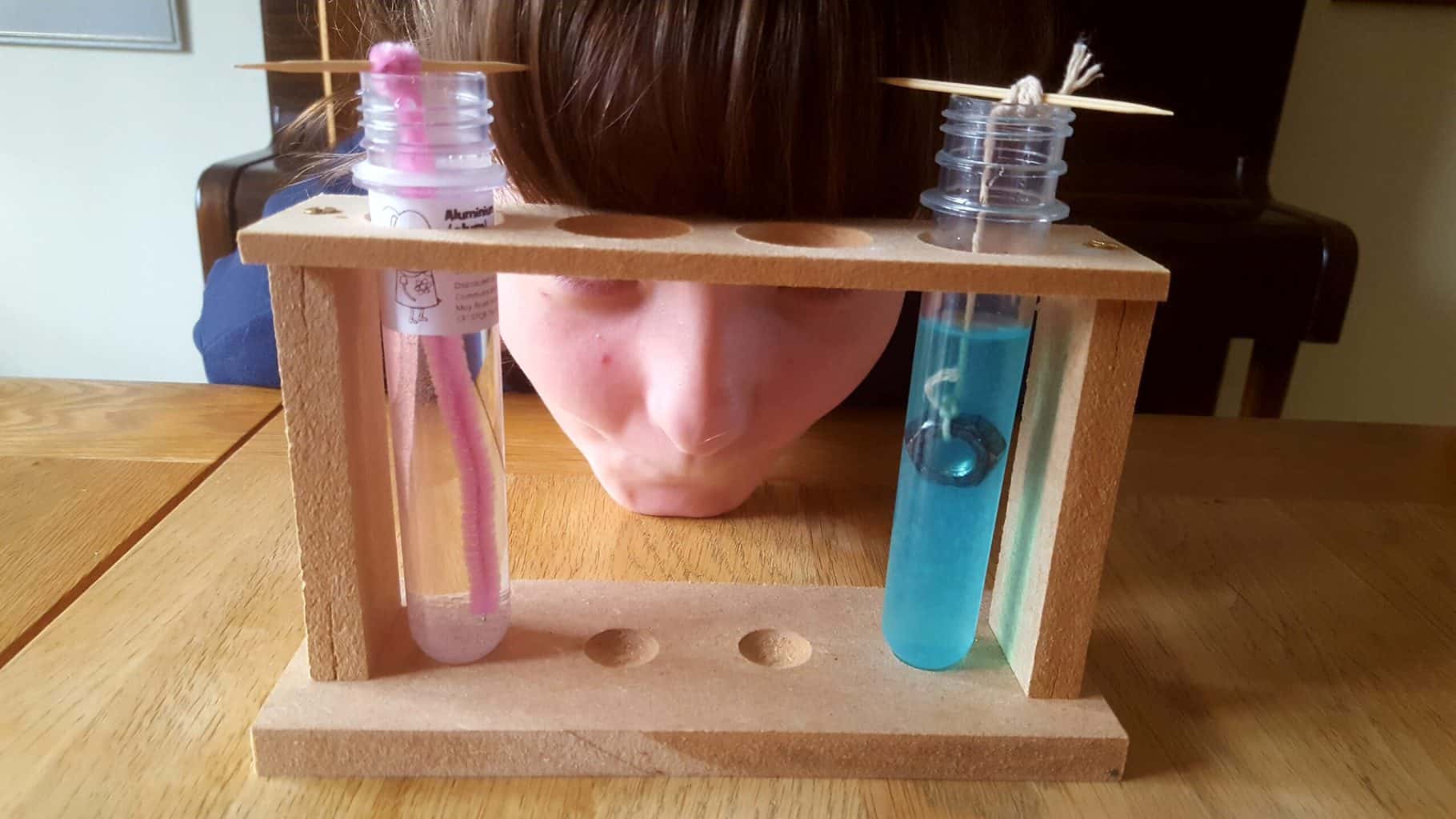
Next up in Flora’s fun science experiments was learning how to make metal. She suspended a metal wing nut in a test tube mixture of cold water and dissolved copper sulphate. The metal nut began to change almost immediately, looking slightly furry. After three days, the water was almost completely clear too.
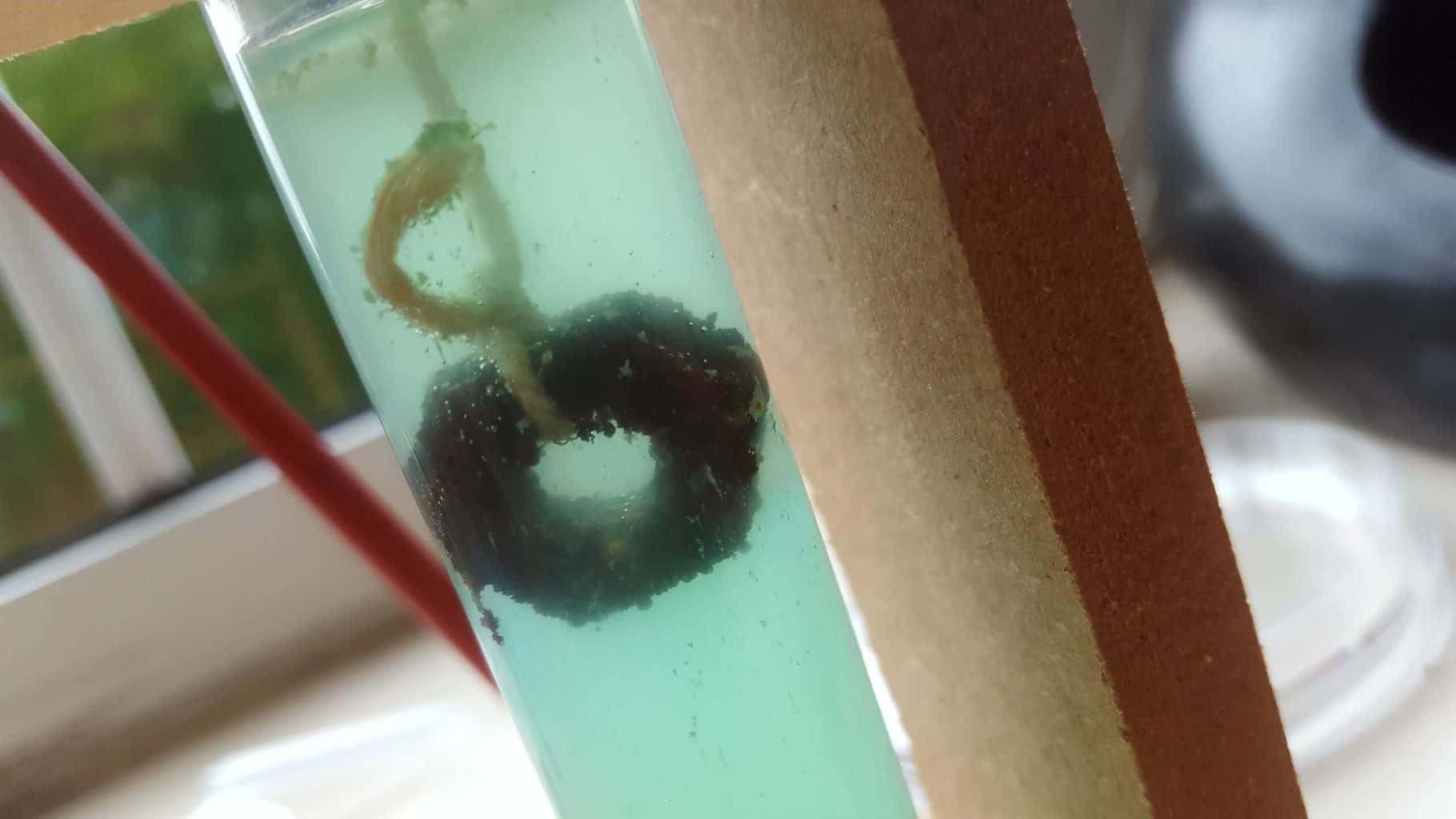
This is because the electrons in the chemicals affect colour. Copper in copper sulphate is missing electrons so it’s blue. The metal nut is coated in zinc, which gives electrons to copper, turning it into copper metal, and the blue colour disappears too.
Let’s Get Ready To Rock
Did you ever get one of those multi-layered, coloured sand tube souvenirs on holiday? This is the same sort of idea, learning how sedimentary rocks are formed by lots of layers of tiny pieces of rock on top of each other. After rolling out some plasticine and pressing her sharks teeth into it, Flora drew some pretend dinosaur footprints too. Then we took a piece of card and taped it into a tube, pressing it into the plasticine to form a column.
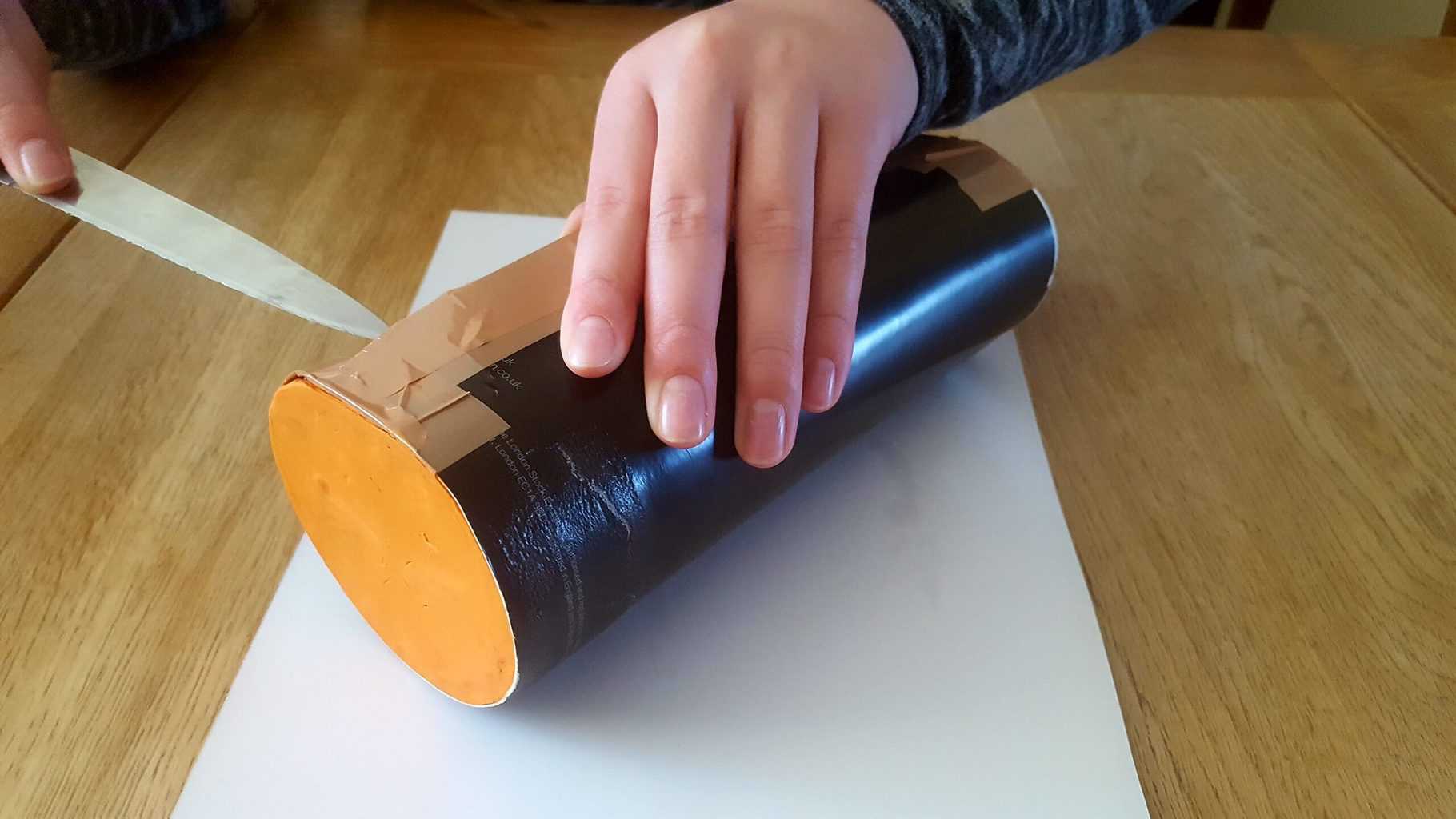
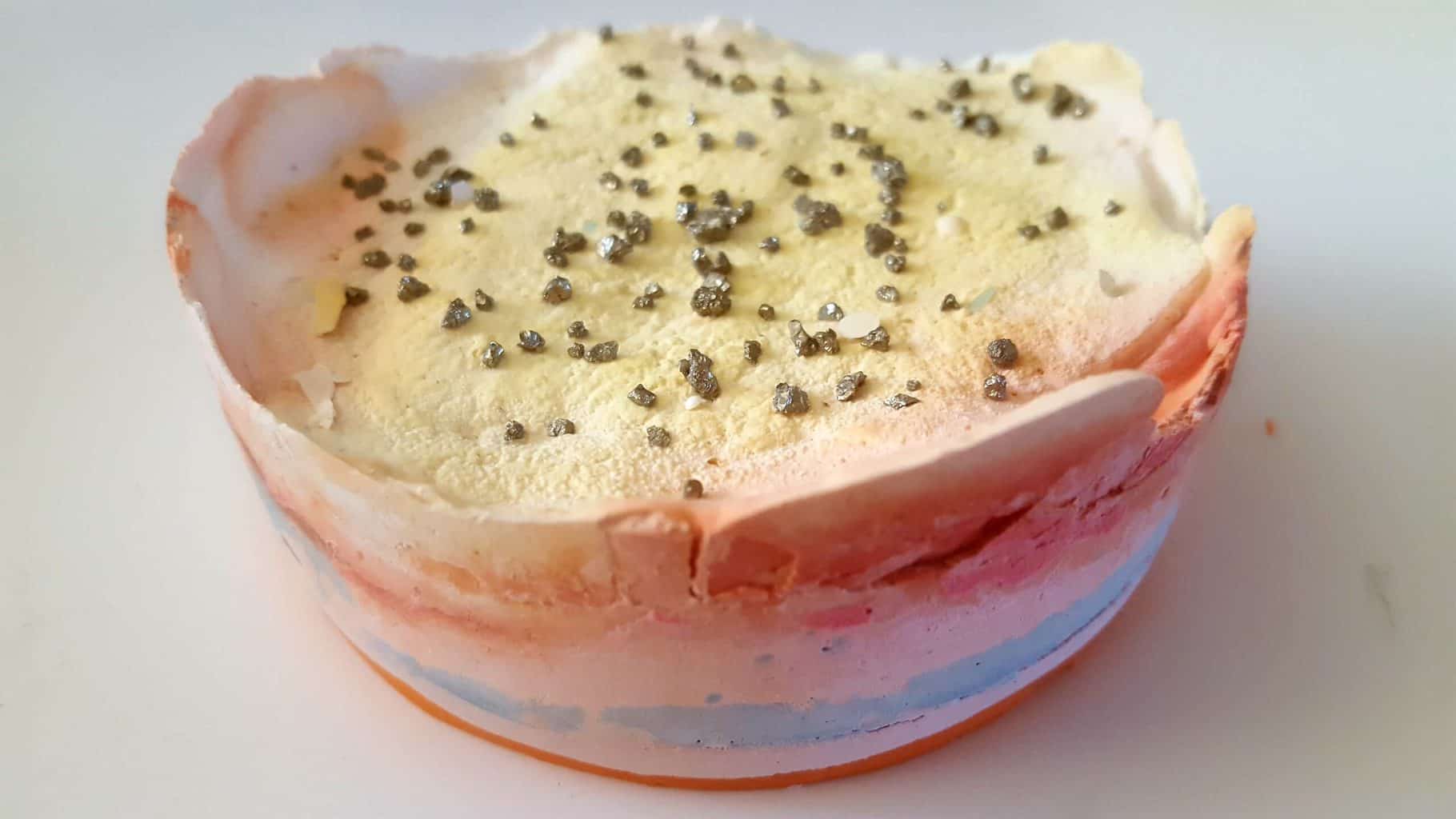
Next, Flora had to mix up seven Plaster of Paris layers, one after the other, some with additional colours, some with salt, some with sand, and pour them all into our cylinder. Once each layer was dry, she could add the next one, and so on until the last plaster layer, onto which she sprinkled some pyrite (fools gold) too. Then we had to wait for two days for everything to dry and harden. Side note: the Plaster of Paris was extremely dusty and we had to put our COVID masks on to stop the powder going up our noses – an unexpected COVID-19 silver lining!
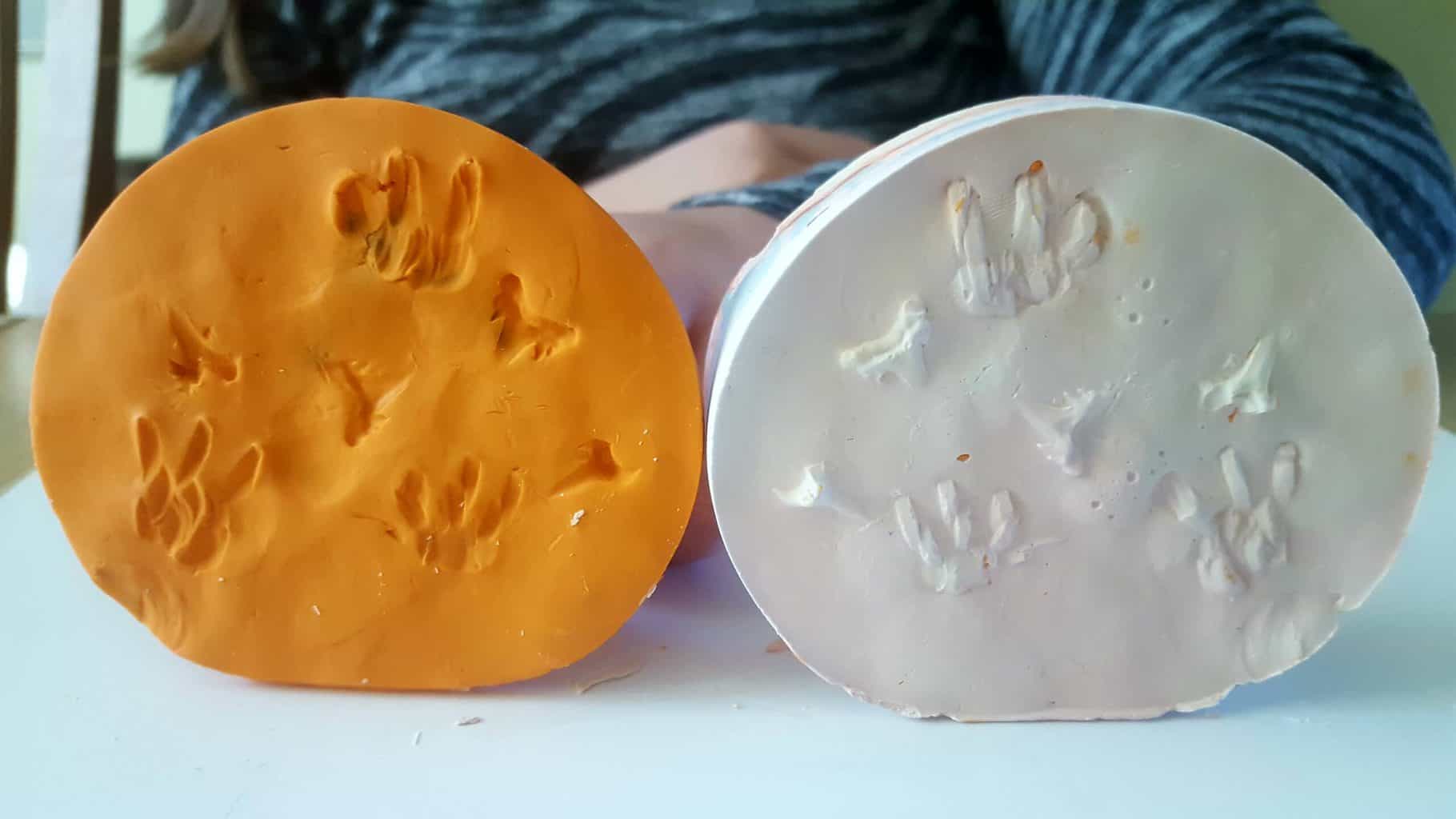
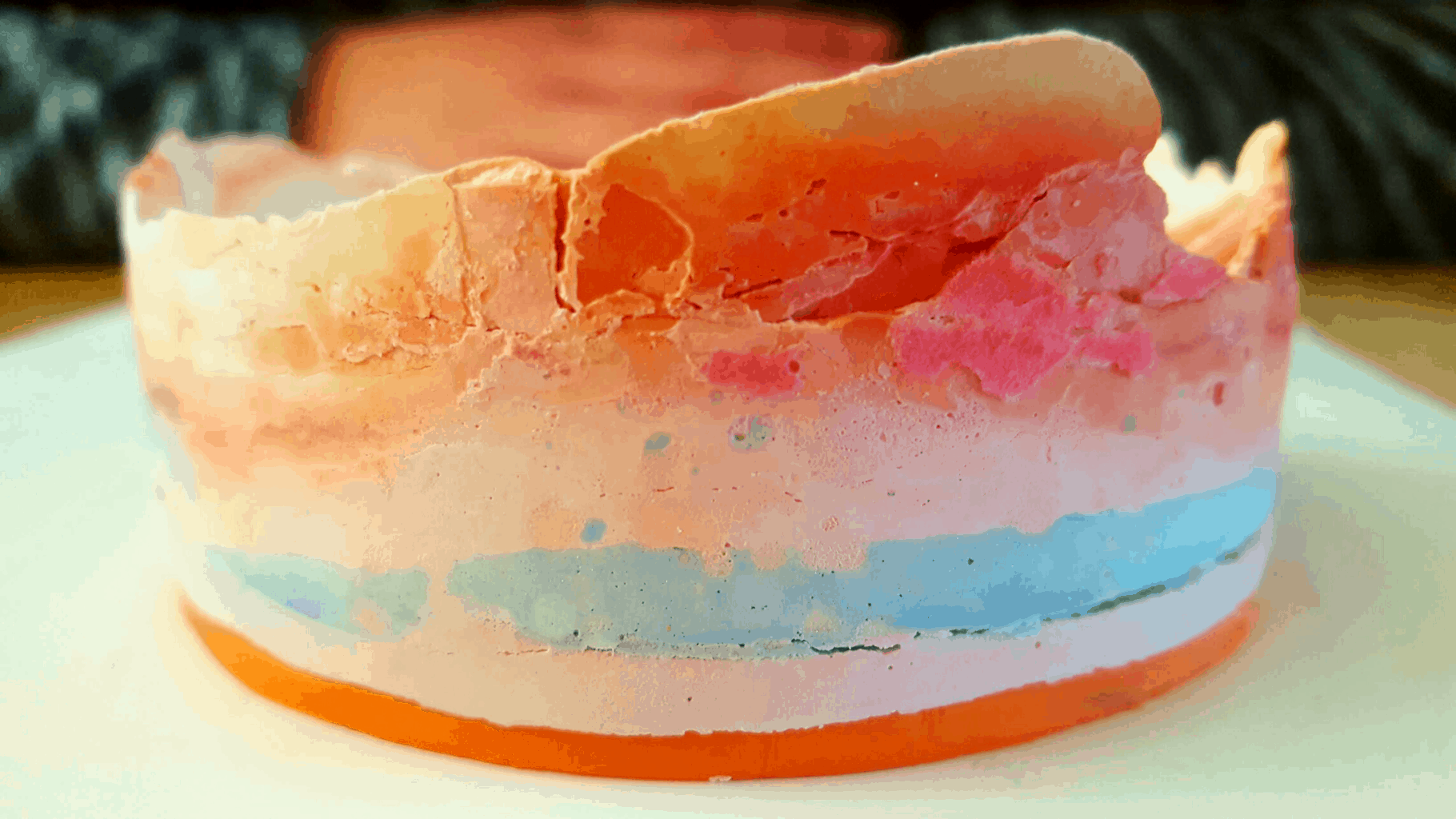
After two days, it was time for the big reveal. And Flora is now the proud owner of a multi-layered rock with fossils at the bottom and fake gold at the top! It looks good enough to eat, don’t you think? 🙂
Dino Droppings
It’s hard to believe that this rock is actually fossilised dinosaur poo, isn’t it? Coprolite forms when the original droppings absorb chemicals and turn into stone over millions of years. And no, fortunately it doesn’t smell 🙂
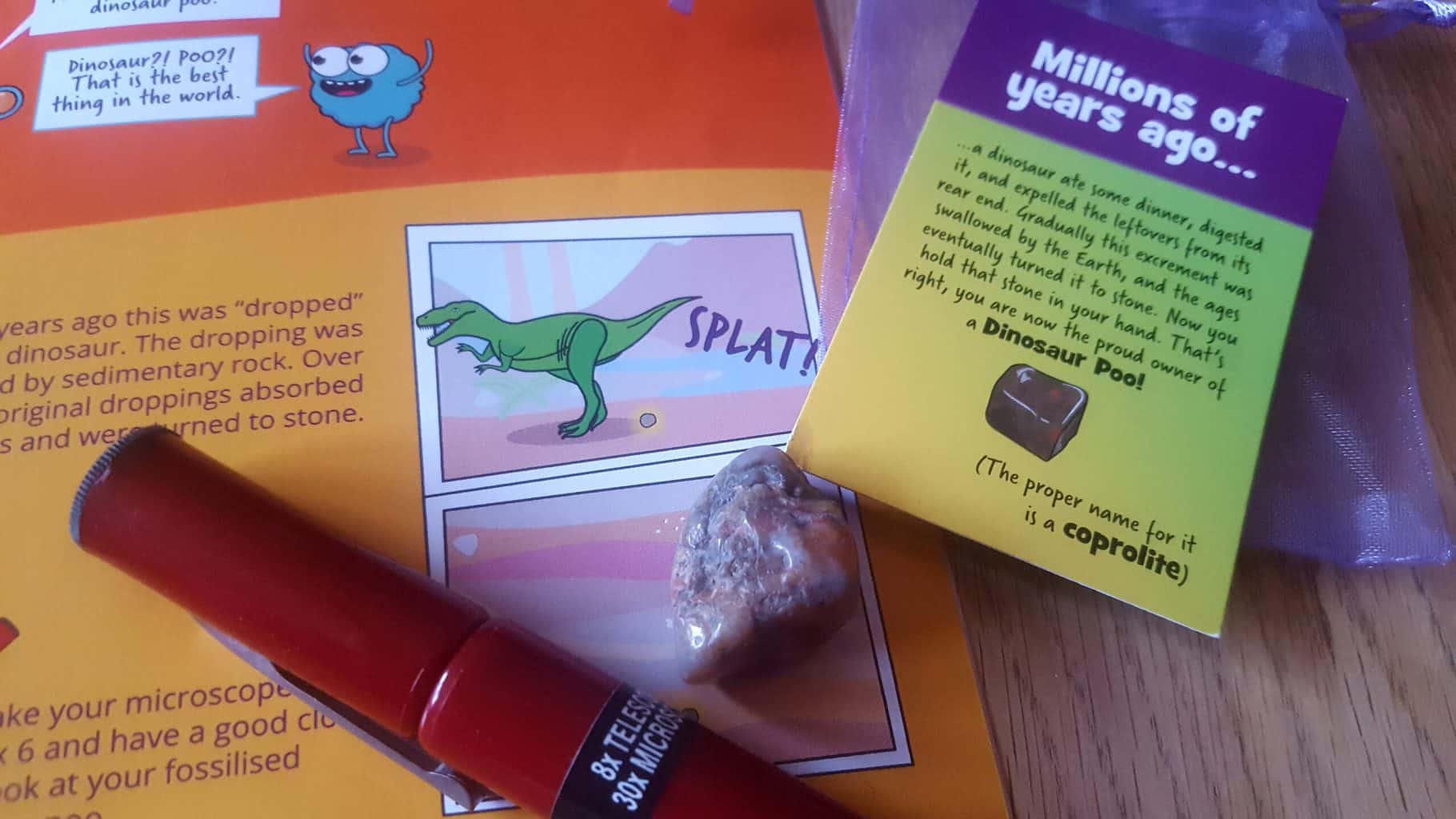
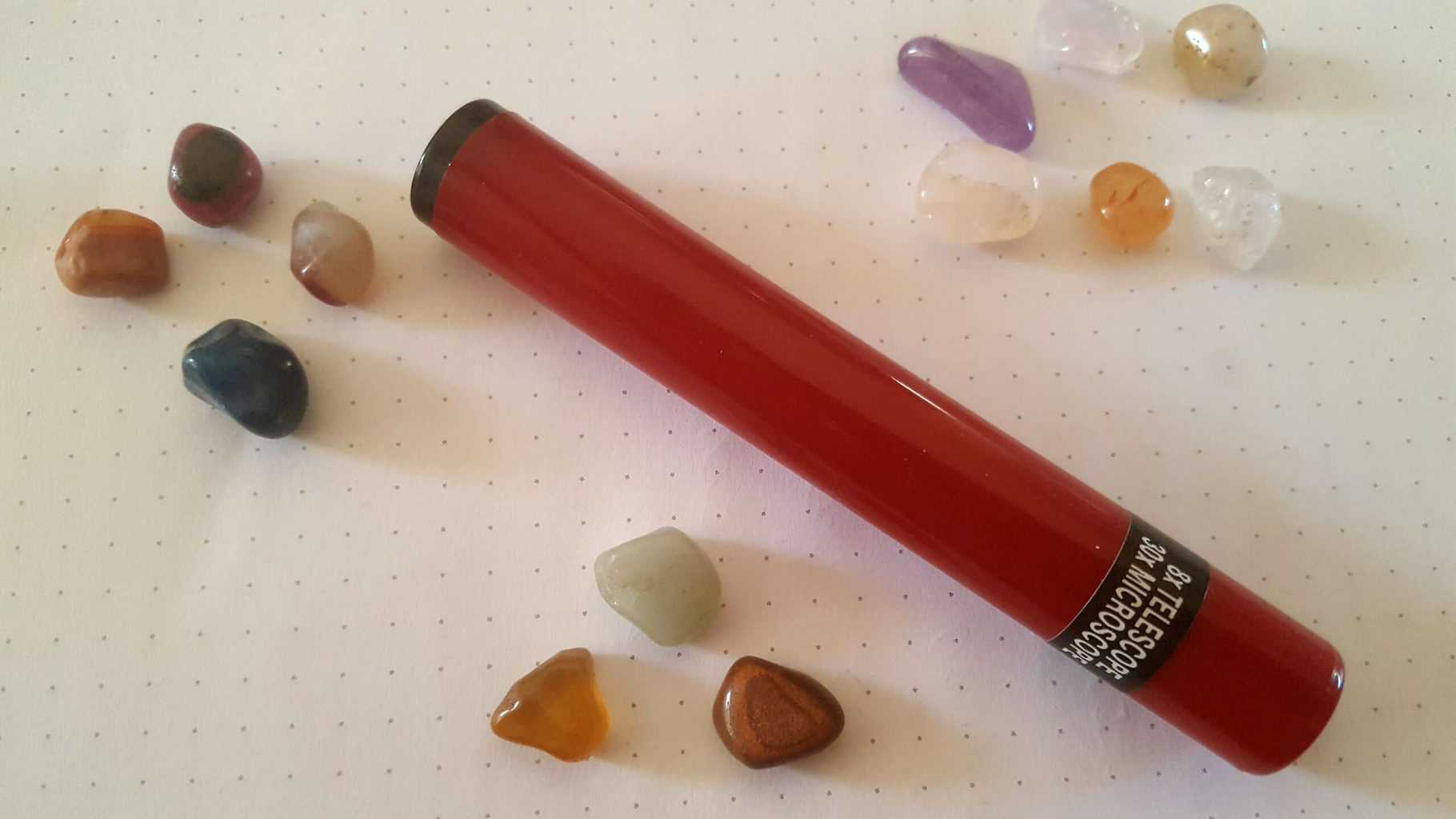
Flora also got a bag of gemstones in different colours, according to the different number of atoms in each one. These contain both crystals and layers, and are evidence of the rock cycle. The Earth is always changing and over time all rocks are recycled by rock layer pressure and heat. They come to the surface via volcanoes and cool down to form crystals, returning to the layers of the Earth to begin the rock cycle all over again.
Crystal Balls
Flora was very much looking forward to to this activity because of one of her favourite TinTin books 🙂 Anyway, she added some sodium polyacrylate beads to a cup of cold water and left them for an hour.
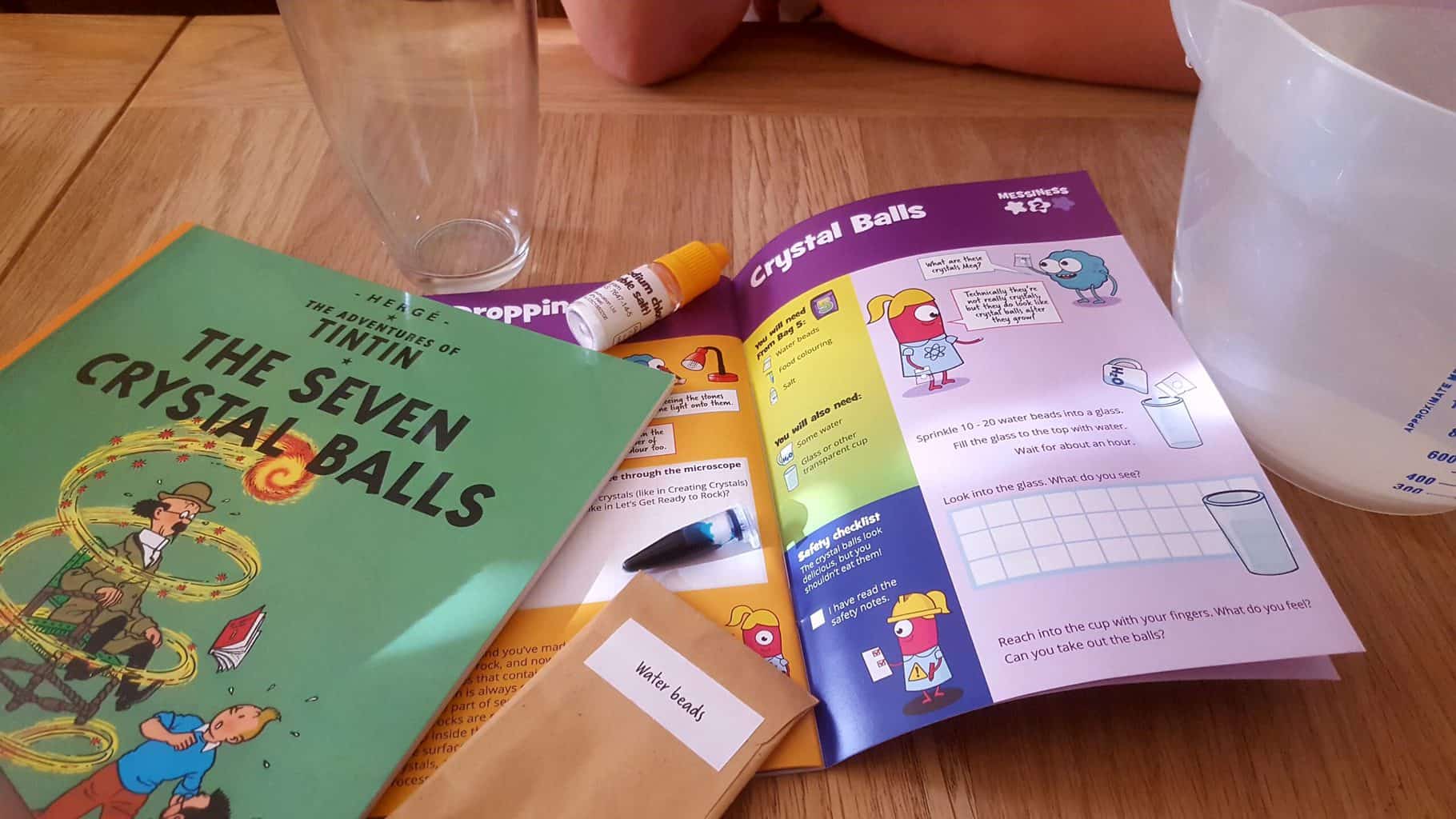
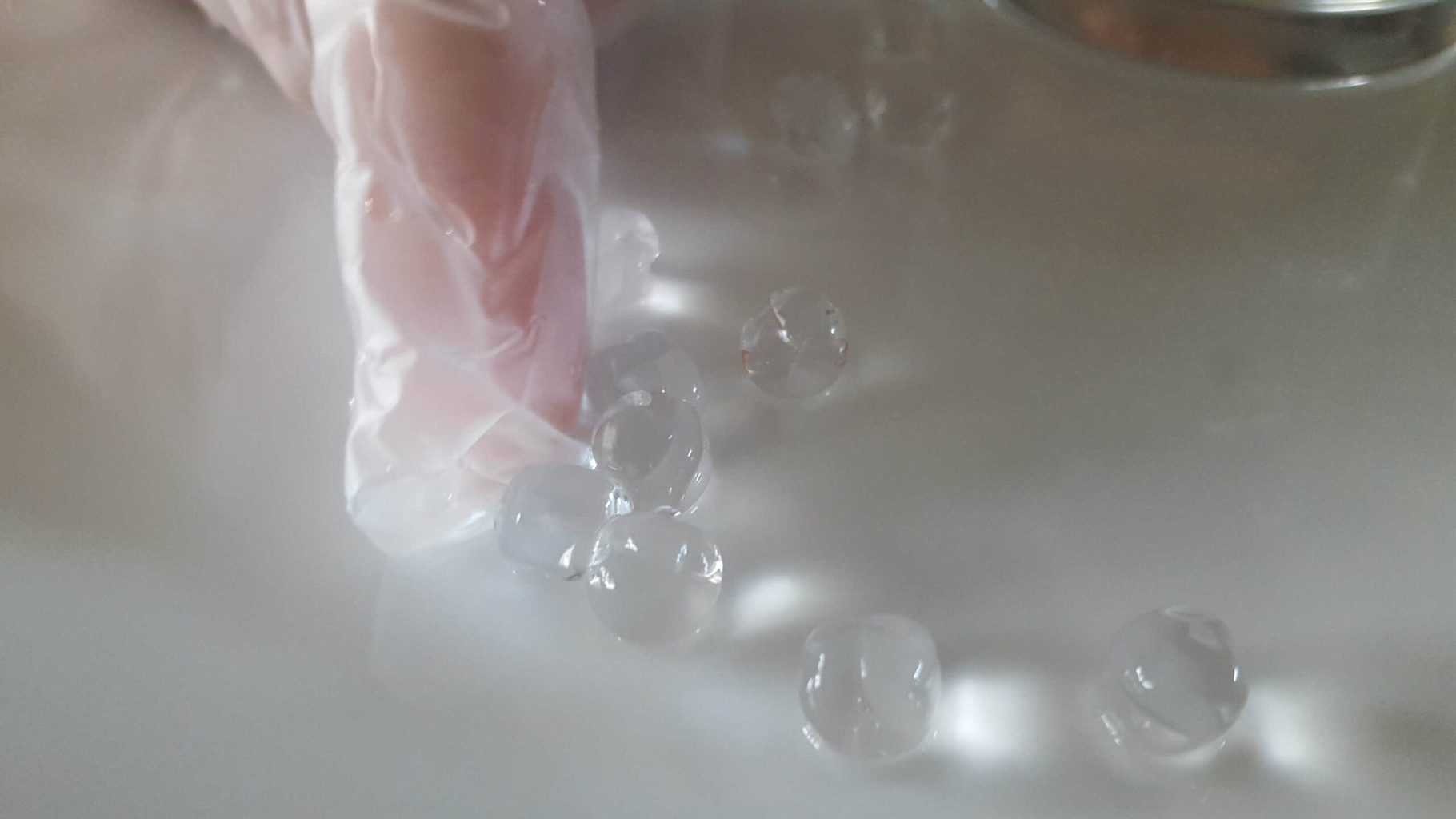
When we checked on them later, we thought they’d vanished. But when she reached into the cup she found them – apparently they felt, “Squishy, smooth, slippery, and relaxing.” (I have a strange child). So why couldn’t we see the balls? Well, they soak up water (much like the fake snow activity in Box 2). Because of this, light travels straight through them, rather than reflecting off a surface (such as a spoon) thus rendering them almost invisible.
Next, she repeated the experiment but added some blue food colouring, which made it easier to see the balls at the bottom of another glass of water.
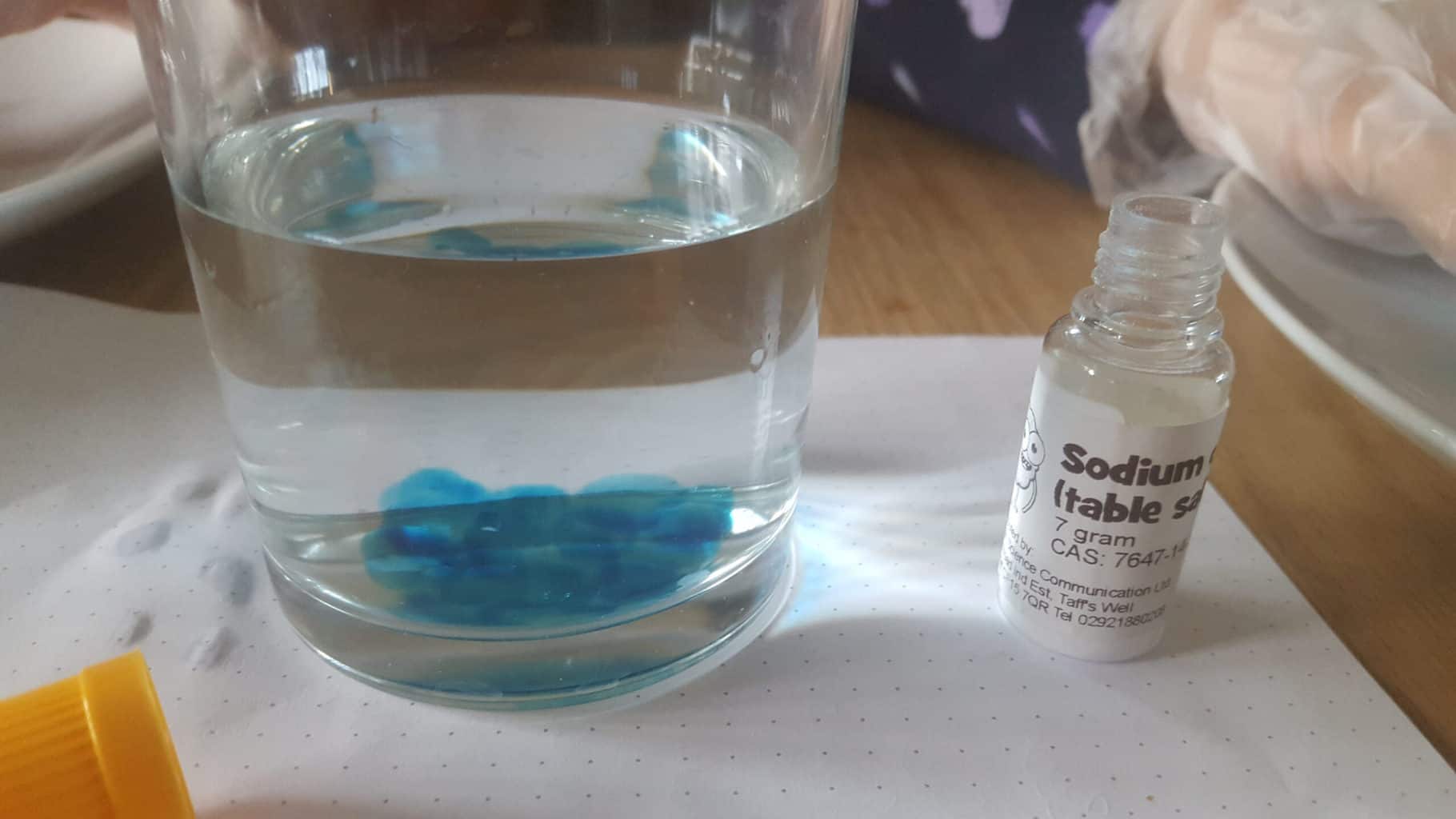
However, what happened when she added some salt? Do you think they would stay at the bottom or start floating?
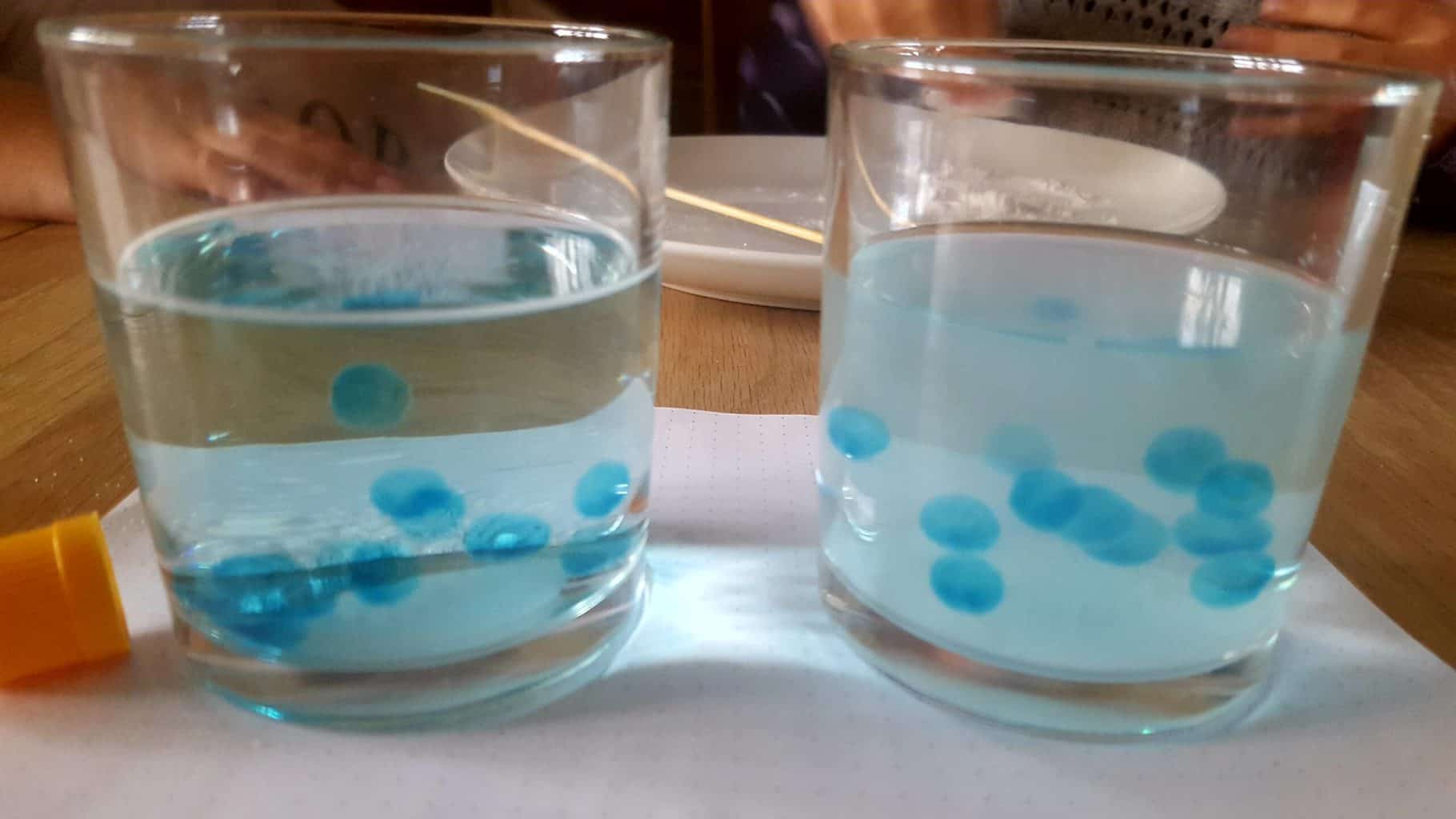
If you guessed they’d float, you’re right! This is because salt pulls the water out of the beads, making them smaller. And salt water is denser, so things float better – just Google the “Dead Sea” and you’ll see what I mean 🙂
Final thoughts on these fun science experiments
This time we carried out the experiments over the course of three months – yes, I’m hugely embarrassed to confirm that you read that right. We started at the end of September and then life got in the way. So we completed her ninth box at the end of December. However, Flora’s favourite fun science experiments were the Crystal Balls, the ones we did back in September. Mine was Let’s Get Ready To Rock, not that my opinion is terribly important… But big thanks to Letterbox Lab for our ninth Investigate box, it’s been another huge hit. And as a keen space fan, Flora’s excited to learn more about gravity, space, and make her own orrery with Waste of Space next time.
Did you enjoy learning how to make crystals and more about the rock cycle? Which experiment is your favourite? Do you know any kids who’d love to try Letterbox Rox – or discover more about science in general – with one of these fabulous subscription boxes?
* This post features gifted items but all opinions are our own.

These boxes look like so much fun and are so educational too. Its even more perfect at the moment when you don’t know if the schools will close. I remember making crystals when I was younger and I had so much fun.
They are absolutely perfect for homeschooling, as well as learning outside the classroom, Flora is a lucky girl!
These look great! My kids love stuff like this.
Thanks for sharing
Glad you enjoyed the post!
These experiments sounds cool! Fun way to engage kids!
xoxo
Lovely
http://www.mynameislovely.com
Yes, they are great fun 🙂
Tbis is so cool will have to try with the kids thanks
Hope they enjoy it as much as Flora 🙂
WOW! I’ve always wanted to do something fun with my nieces and nephews and science experiments just might be the perfect one! Cool fun activity for kids. Thanks for sharing!
I’m sure they’d love this – and you’ll be a super cool aunt too!
Such an interesting idea. I love it when kids can both have fun and learn while playing.
Antonia || Sweet Passions
It’s the perfect win-win scenario 🙂
I think it’s fantastic that there are educational boxes like these ones. £11 is great value for money too. The experiments are fun and I like that some of them take a few days to complete, hence they keep the child entertained and curious about it for longer. You’ve made a great review too.
Thank you, Anca! Yes, I agree, spreading out the results over a few days teaches patience (not only to Flora!) and they are really brilliant value for money 🙂
My nephews would loooove this!
Rosie
I’m sure they would 🙂
I don’t have kids, but hands down I would try them anyway! They all sounded like great fun to make and learn from. I guess my favourite would be Dino’s! Thanks for sharing x
That’s the benefit of having Flora, I have a bona fide reason to try these fun activities!
These sound so good! I cant wait to try them
I’m sure Harry will love them too!
Okay this box sounds like it would be right up my street haha! So glad you both enjoyed this one. Letterbox Lab always looks so fun and I can imagine they’re very useful resources to have during 2020 and this year with children not being at school or their schooling being so disrupted! When I finally come to visit you I want to do one of these! x
They are a complete godsend, never more so than at the moment. I think you’d love making your own crystals too! And yes, WHEN you come to us, we will have to try some sort of similar activity 🙂 x
This looks like a “blast” – I always found experiments to be so fun
Haha, very good! 🙂
That looks like so much fun! It reminded me of the chemistry set I got when I was twelve. A decade later, I was a research chemist for the company that invented clumping cat litter and superabsorbent polymers. No wonder my favorite experiment was the polyacrylate balls. 😊
Oh wow, that is amazing – best comment of the day! From tiny acorns… this just shows how awesome the right LOTC activities can be 🙂
I don’t have children — I’ll be passing this on to friends who do — but I think I’d enjoy doing these myself, haha!
TBH I love them just as much as Flora!
This looks ~amazing~ and I think my nephew would love it! He’s going through a little science phase at the moment that we’re trying to nurture, although lockdown makes it hard. These kits look excellent.
Cora | https://www.teapartyprincess.co.uk/
They are fabulous kits, so much fun. Flora was already into science but I think they’d be great for any child, whether or not they love science!
I have seen you review these before and I think it’s such an incredible idea! I had something similar as a kid and I loved it so much. It’s also the perfect idea for families stuck in lockdown right now! 🙂
Ashleigh
Thank you, Ashleigh – I do wish I’d had something like this when I was Flora’s age – but hopefully Alexis will love them when she’s a little older!
These science experiments look fun to do, I bet your kids loved doing them! x
Lucy | http://www.lucymary.co.uk
They are great fun, Flora absolutely loves them! x
Is there one for grow ups too? Haha these sound like fun activities! I think Let’s Get Ready To Rock and Creating Crystals Part 1 would be the most enjoyable for me. I’m a science girl, fortunately and I grew up loving mini experiments. 😂 haha I enjoyed readint this post! Thank you! xx
Well, I guess there’s no reason why you couldn’t subscribe – I think these are great for big kids too! x
The crystals are so cool! I wish I had something like that when I was a kid
I know, Flora is so lucky 🙂
Just reading the post makes it sound so much fun haha. This is awesome and would love to go back and read all previous parts. My little brother would definitely love trying them.
That’s great to hear, thank you, Jack 🙂
My son would love these! He’s a big science fan and always enjoys doing experiments. I love that it’s a sneaky way to get some education in too! I wouldn’t be surprised if the schools in England close tonight, so something like this is a great addition to home schooling. Thank you so much for a fantastic review of them x
Thank you, Jaclyn – sadly, you’re right, we’re back in lockdown again. But hopefully activities like these will help everyone who’s back into homeschooling again x
This looks like it would be so fun for kids, especially now since schools will probably be closed soon. I’m going to pass this on to my mum and see if my sister who’s 10 would enjoy it! X
They are such fun and, sadly, as we’re back in lockdown, perfect for right now. I hope you sister enjoys them! x
oooh i want to try the crystal one myself! 🙂 Great post!
Thank you so much 🙂
These boxes seem like an easy way to do a fun activity and learn about science. I love crystals, too! Thanks for sharing your experience with them.
They are a lot of fun, the perfect intro to a lot of science 🙂
Loved this post!! All of these experiments are great. .y favourite is the creating crystals (both of them). My step kids will love them so I’ll be trying them out with them. Thank you for sharing this ❤️
Thank you so much – I hope you and your step kids love them as much as we do!
This is so much fun! I love that each of the activities included is entertaining but also educational. It’s the perfect mix, isn’t it? I mean, who wants to learn at that age if they aren’t having fun doing it… My nieces get a similar box here in Canada (different company) and they get SO excited when they know that it’s time for the next box to arrive lol
Oh yes, they are – that’s great to hear you have something similar in Canada – science rocks!
It is always a joy seeing what new thing you have uncovered to test and learn with. I love the looks of the crystal experiments and “Squishy, smooth, slippery, and relaxing” sounds like an apt way of describing the results of the crystal balls lesson!
I do not mind admitting my eye immediately zoomed in on the Tintin book too; such great comics. 🙂
Thanks for sharing!
Thank you so much, Jaya! And Flora will be chuffed to find a fellow TinTin fan too 🙂
This looks like so much fun! I can’t wait until my son is a little older and we can try some of these. Thanks for sharing!
They really are – I hope your son loves them as much as Flora 🙂
This look brilliant and a lot of fun. And given the latest announcement, probably needed more now than ever.
I will have to check this out as I know my Kids (and fiancé!) would absolutely love it x
I think activities like these are going to be lifesavers for lots of us – I hope you family love them as much as us! x
I love the concept of this and it looks like great fun too as well as being educational! I think my nephews would absolutely love this!
I’m sure they would – anything that gets them hands on is a winner too!
These boxes look like so much fun, I would have loved this as a child…well who am I kidding, I’d love it now as an adult! I think my young cousin would really enjoy this, it’s so educational but fun at the same time!
Ha, I know, I’m lucky I have Flora so that means I can have fun with the boxes too!
I work in a kindergarten and we often to these kind of experiments too and even if I am not a kind anymore I am too excited for the results. always!
Lovely post xx
Thank you so much – and lucky you to do these experiments so often 🙂 x
Wow this looks like a lot of fun- and educational too! With children finding it difficult to be out of school atm I think it’s great that you’re coming up with fun ways to keep them learning- and entertained x
Thank you, Eleanor, these are really great boxes though, they make home learning easy and fun! x
These look like a lot of fun Lisa!
Indeed they are 🙂
Wow! What a cool science kit for kids to enjoy. I used enjoyed doing this kinda experiment with my Mom when I was a kid. I always learnt new things from it.
It really is, Flora always looks forward to these boxes!
I love these types of science experiments! I find them quite fascinating and the kids always learn from them and enjoy them. Thanks for sharing!
So do I, I feel very lucky that Flora loves them and I can share 🙂
I bought my niece a crystal kit a couple of years back, but it didn’t seem as fun as this one! What a great idea 🙂
Thank you, Nikki, these are great kits 🙂
Thanks for sharing, this one that you have received this time looks really fun 🙂
It really was, we loved it 🙂
My daughter loves collecting rocks so I can imagine she would love the coprolite and gemstones and to grow her own crystals! Denmark is currently in lockdown 2.0 so this box would’ve been great to have!
I think Letterbox Lab do ship overseas so maybe it’s not too late to get one – anything to help with lockdown homeschool!
These boxes must be such a helpful tool in home schooling. These boxes you share are always so interactive and it is great because children are learning and most of the time they don’t even realise that they are. Science was always better in school when it was interactive, it was easier to understand and made it fun. Flora should be very proud they look like great fossils. Thank you for sharing Lisa. I hope home schooling is going well, I hope this year is a really successful one for you. Let’s hope it will be a lot safer and happier for us all.
Lauren
They are SUCH a help with homeschool – although to be fair we tend to do them outside of school hours at the moment. But the hands on learning element and interactivity is a bonus. They complement and enhance Flora’s learning and she absolutely loves them. Honestly can’t recommend them highly enough. And thank you, fingers crossed for 2021, and for your lovely comment xx